10 Essential Vehicle Transmission Repair Tips
Dealing with transmission problems can be frustrating, and you’re not alone if you’ve faced issues like slipping gears or strange noises while driving. Many people struggle with maintaining their vehicle’s transmission, unsure of when to take action or how to keep it running smoothly.
That’s why we’ve put together these 10 essential vehicle transmission repair tips to help you avoid costly repairs and keep your car in top shape.
You should watch for warning signs like slipping gears, strange noises, or burning smells and check your transmission fluid regularly. Bright red and smooth fluid means your system’s healthy.
Change fluid and filters every 30,000 to 60,000 miles to avoid damage and overheating.
Drive smoothly, avoid abrupt shifts, and never ride the clutch.
If issues persist, get a pro to inspect your transmission early.
Keep these tips in mind to maintain reliability and extend your transmission’s life.
Key Takeaways
- Regularly check and maintain transmission fluid levels and quality to prevent overheating and wear.
- Address unusual noises, slipping gears, or leaks immediately to avoid costly transmission damage.
- Avoid aggressive driving habits like abrupt starts and rapid gear shifts to reduce transmission strain.
- Replace transmission fluid and filters according to manufacturer guidelines to ensure smooth operation.
- Schedule routine professional inspections for early detection and timely transmission repairs.
Warning Signs Your Transmission Needs Help Now
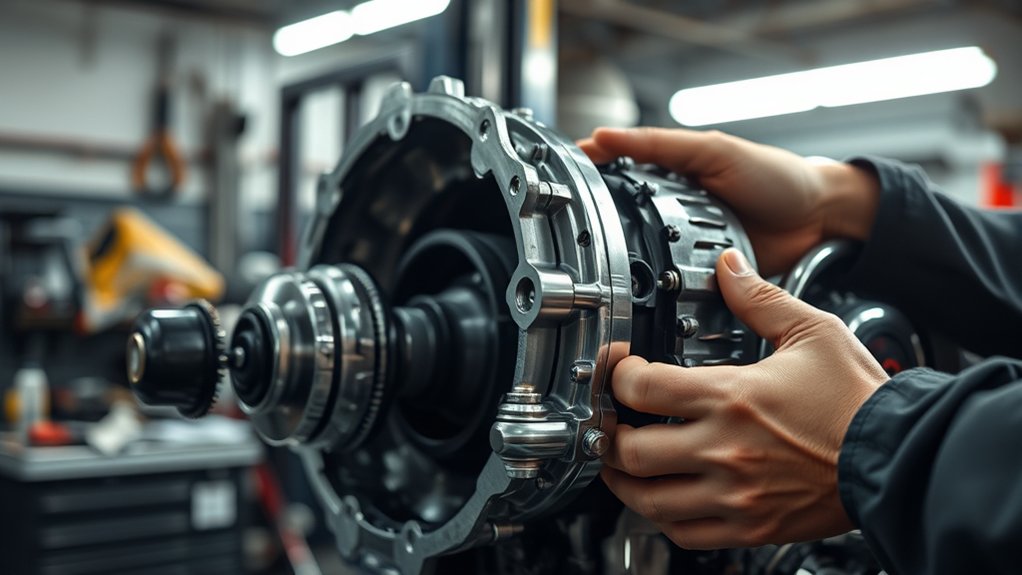
If your vehicle starts slipping gears, making strange noises, or hesitating when you accelerate, it’s a clear sign your transmission needs immediate attention. Ignoring these symptoms can lead to costly repairs or complete transmission failure.
One common cause is using the wrong transmission fluid types, which can affect shifting smoothness and damage internal components. Make sure you’re using the fluid specified by your manufacturer to avoid these issues.
Furthermore, if you drive a manual transmission, you might need a clutch adjustment. A poorly adjusted clutch can cause slipping or difficulty changing gears, further stressing the transmission. Pay attention to any grinding sounds or a spongy clutch pedal, as these are warning signs.
Addressing these problems early by checking your transmission fluid and clutch condition can save you from more extensive damage and expensive repairs down the road. Don’t wait until your transmission fails completely; act as soon as you notice these signs.
How to Check Your Transmission Fluid
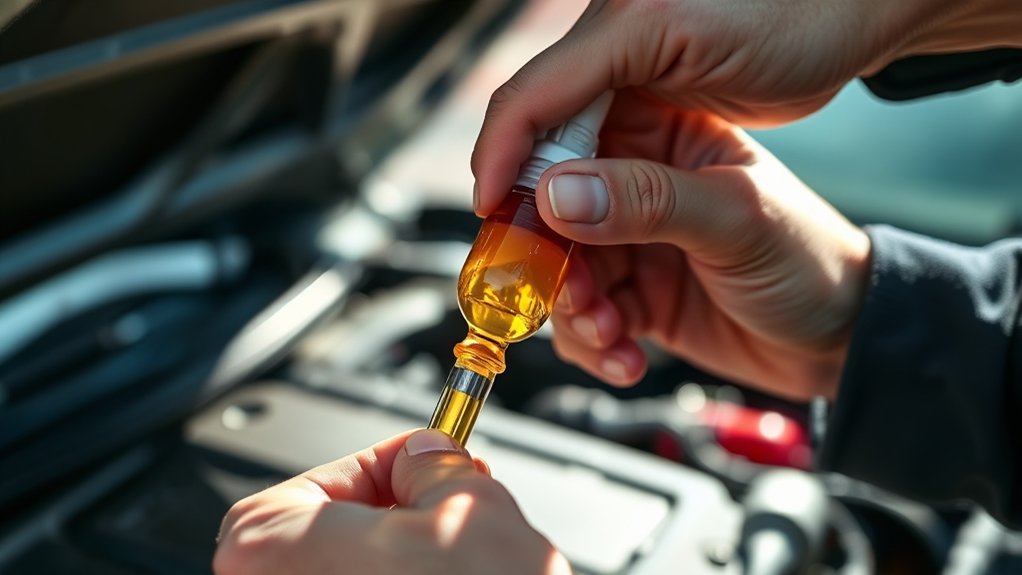
First, locate the transmission dipstick under your hood—it’s usually near the back of the engine. Go ahead and pull it out, then wipe it clean. After that, pop it back in and pull it out again to check the fluid level. When you do, take a good look at the fluid’s color and give it a quick sniff. Healthy transmission fluid is typically bright red and has a slightly sweet scent.
Locating The Dipstick
Although locating the transmission dipstick might seem tricky at first, you can usually find it under the hood near the engine. Look for a small, often brightly colored handle, commonly red or yellow, that stands out against the engine components.
The dipstick location varies by vehicle, so check your owner’s manual if you’re unsure. Once you spot it, pull it out carefully to check the transmission fluid color later.
The fluid should be clear or slightly reddish. Murky or dark fluid signals potential issues. Remember, locating the dipstick is the first step in maintaining your transmission’s health.
Knowing exactly where the dipstick is saves you time and helps you monitor your vehicle’s transmission fluid color regularly, preventing costly repairs down the line.
Assessing Fluid Condition
Once you’ve located and removed the dipstick, you’ll want to evaluate the condition of your transmission fluid by checking its color, consistency, and smell. Healthy transmission fluid typically has a bright red or pink transmission fluid color.
If you notice a dark brown or black shade, it’s a sign the fluid is old or burnt, indicating contamination. Next, perform a contamination assessment by feeling the fluid. It should be smooth and slippery, not gritty or thick.
A burnt or sour smell also signals that the fluid has deteriorated. If you detect any of these issues, consider changing the fluid or consulting a professional. Regularly assessing fluid condition helps prevent transmission damage and keeps your vehicle running smoothly.
When and How to Change Your Transmission Fluid
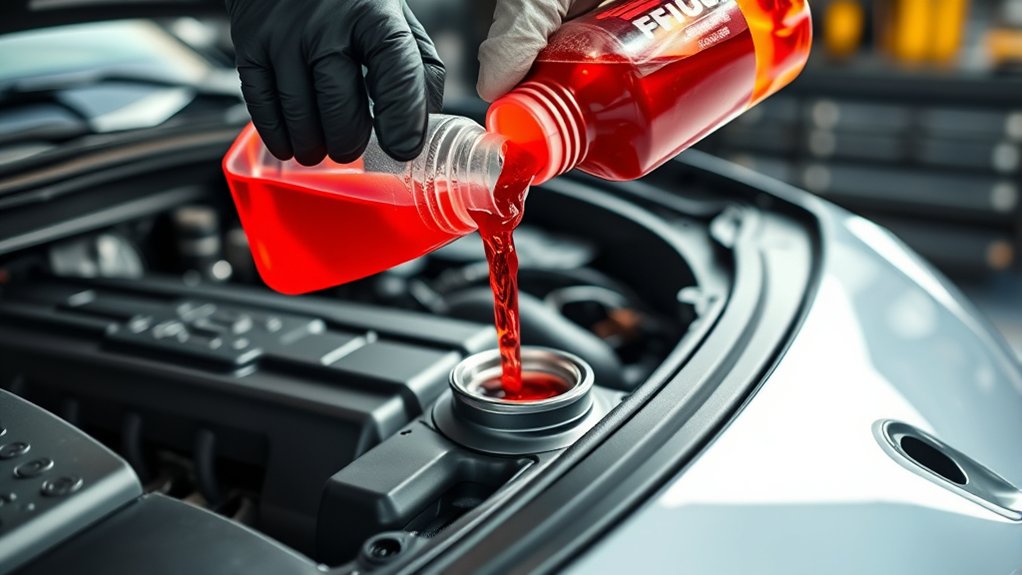
Because transmission fluid wears down over time, you’ll need to change it regularly to keep your vehicle running smoothly. Ignoring this can lead to transmission noise or gear slipping, which are signs that your fluid is no longer doing its job.
Typically, changing your fluid every 30,000 to 60,000 miles works for most vehicles, but always check your owner’s manual.
Here’s a quick guide on when and how to change your transmission fluid:
| Step | Description |
|---|---|
| 1. Warm Up Engine | Run the engine to circulate the fluid. |
| 2. Locate Drain Plug | Find the transmission drain plug. |
| 3. Drain Fluid | Remove plug and drain old fluid. |
| 4. Replace Plug | Securely reinstall the drain plug. |
| 5. Add New Fluid | Fill with manufacturer-recommended fluid. |
Transmission Filters: What They Do and When to Replace Them
While maintaining your transmission fluid is essential, you shouldn’t overlook the transmission filter, which traps debris and keeps contaminants from damaging your transmission. This filter plays a vital role in protecting the transmission system by catching metal shavings, dirt, and other particles that can cause wear or blockages.
If your vehicle experiences slipping gears or rough shifts, transmission system diagnostics can help identify if a clogged filter is the culprit. Regular transmission fluid analysis often reveals contamination levels, signaling when the filter needs replacement.
Typically, manufacturers recommend changing the transmission filter every 30,000 to 60,000 miles, but this can vary based on your driving conditions. Neglecting to replace the filter can lead to reduced fluid flow and overheating, accelerating transmission wear.
Easy Maintenance Tips to Keep Your Transmission Healthy
You’ll want to check your transmission fluid regularly to keep things running smoothly. And don’t wait too long to replace the filter — a clogged one can cause some serious issues. Just following these simple steps can really save you from costly repairs down the road.
Regular Fluid Checks
How often do you check your transmission fluid? Regular checks help you catch issues early and keep your transmission healthy. Pay attention to the transmission fluid color. It should be bright red or pink. Dark or burnt fluid signals trouble.
Also, make sure you check the fluid level on a level surface and with the engine warm. Here’s a quick guide:
| Check Aspect | What to Look For | Action Needed |
|---|---|---|
| Transmission Fluid Color | Bright red or pink | Normal |
| Dark or burnt | Change fluid immediately | |
| Fluid Level Accuracy | Between minimum and max | Normal |
| Below minimum | Add fluid |
Timely Filter Replacement
Keeping your transmission fluid clean and at the right level plays a big role in preventing damage. But changing the transmission filter on time is just as important.
The transmission filter traps debris and contaminants, so a clogged filter can reduce fluid flow and cause overheating. Just like your air filter protects your engine by keeping out dirt, the transmission filter safeguards your transmission’s internal parts.
Don’t forget that a well-functioning cooling system supports transmission health by preventing fluid overheating. If you delay replacing the transmission filter, dirt buildup can lead to costly repairs.
Check your owner’s manual for the recommended interval, and include filter changes when you service your transmission fluid. Staying on top of this simple maintenance keeps your transmission running smoothly and extends its lifespan.
How to Avoid Transmission Overheating
Since transmission overheating can cause serious damage, you should regularly check your vehicle’s fluid levels and quality. Low or dirty fluid can’t properly lubricate or cool your transmission, increasing the risk of overheating. Keep an eye out for transmission fluid leaks, which often appear as red or brown puddles under your vehicle.
Catching leaks early helps maintain the right fluid level and supports overheating prevention. Besides monitoring fluid, make sure your transmission cooler is clean and functioning well, as it plays a key role in regulating temperature. If you notice your transmission running hotter than usual or slipping gears, get it inspected promptly.
Avoid ignoring warning signs to protect your transmission’s lifespan. Routine maintenance, including fluid checks and leak repairs, forms the foundation of effective overheating prevention. Staying proactive keeps your transmission running smoothly and prevents costly repairs down the road.
How Your Driving Habits Affect Transmission Health
Paying attention to your driving habits plays a big role in maintaining your transmission’s health. Your driving techniques directly impact how smoothly your transmission operates. For example, abrupt starts, sudden stops, and aggressive acceleration put unnecessary strain on the system.
By adopting smoother acceleration and deceleration, you reduce wear and tear. Proper gear shifting also matters a lot. Avoid forcing the shifter or shifting gears too quickly, especially in manual transmissions.
Always let the clutch fully engage before moving, and don’t ride the clutch pedal. For automatic transmissions, avoid switching between drive and reverse while the vehicle is still moving. These habits prevent damage to internal components and reduce overheating risks.
Ultimately, treating your transmission gently through mindful driving techniques helps extend its lifespan and keeps your vehicle running efficiently.
DIY Transmission Repairs You Can Do
You don’t need to be a mechanic to handle some basic transmission repairs yourself. With just a few essential tools, you can easily check fluid levels and fix common issues that affect how your car performs.
Let’s walk through some simple steps you can take to keep your transmission running smoothly. It’s easier than you might think!
Basic Tools Required
Although transmission repairs might seem intimidating, having the right tools can make the process much more manageable. You’ll need a basic socket set and wrenches to remove and tighten bolts during clutch adjustment or transmission lubrication.
A torque wrench is essential to guarantee bolts are tightened to the manufacturer’s specifications, preventing damage. Don’t forget screwdrivers and pliers for handling clips and smaller components.
A jack and sturdy stands will safely lift and support your vehicle, giving you better access. Ultimately, a drip pan helps catch any fluid during minor repairs.
With these tools on hand, you can confidently tackle simple transmission tasks like adjusting the clutch or applying lubrication, saving time and money without compromising safety or quality.
Fluid Check Procedures
How often should you check your transmission fluid? Ideally, check it every 30,000 miles or when you notice shifting issues. Maintaining the correct fluid level is vital because low fluid can cause overheating and damage.
Here’s how to do it:
- Warm up your vehicle, then park on a level surface.
- Pull out the transmission dipstick, wipe it clean, reinsert it, and pull it out again.
- Check the transmission fluid color and level. Healthy fluid should be bright red and reach the “Full” mark.
If the fluid is dark or smells burnt, it’s time for a change. Remember, the importance of fluid level can’t be overstated. Too little or too much fluid harms your transmission’s performance and longevity.
Common DIY Fixes
When your transmission shows minor issues, tackling some common DIY fixes can save you time and money. Start by checking the transmission fluid color; healthy fluid is bright red or pink, while dark or burnt-smelling fluid indicates a need for a change.
Replacing or topping off the fluid is a straightforward task that can improve shifting performance. If you drive a manual, a clutch adjustment might be necessary to fix slipping or difficulty in gear changes.
Adjusting the clutch cable to the proper tension helps restore smooth operation without costly repairs. Keep an eye on leaks and worn seals, which you can often spot and replace yourself.
These simple steps keep your transmission in good shape and help avoid more expensive problems down the road.
When to Seek Professional Transmission Repair Services
If you notice unusual noises, slipping gears, or delayed shifting while driving, it’s time to consult a professional transmission repair service. Modern transmission technology is complex, and your vehicle’s compatibility with specific repair methods matters. Attempting a DIY fix without expertise might cause more harm than good.
You should seek professional help when:
- You hear grinding or whining sounds that don’t go away.
- Your vehicle struggles to shift gears or slips unexpectedly.
- Transmission fluid leaks or burning smells arise.
Professionals understand the intricate design of your transmission and use specialized tools to diagnose issues accurately. They ensure repairs match your vehicle’s transmission technology, preventing future breakdowns. Don’t wait until minor problems escalate. Getting expert assistance early saves you time and money while keeping your vehicle running smoothly.
How Regular Inspections Can Extend Transmission Life
Regular transmission inspections play a crucial role in keeping your vehicle running smoothly and preventing costly repairs down the line. By having a professional check your transmission regularly, you can guarantee proper transmission lubrication. This reduces friction and heat buildup that cause premature wear.
These inspections catch low or contaminated fluid early, maintaining ideal lubrication and preventing damage. Additionally, inspections help identify issues with gear synchronization before they escalate. When gears don’t synchronize correctly, shifting becomes rough and can lead to transmission failure.
Detecting these problems early allows for timely adjustments and repairs that extend your transmission’s lifespan.
Frequently Asked Questions
What Types of Transmission Fluids Are Compatible With My Vehicle?
You’ll want to check your owner’s manual to find the transmission fluid types compatible with your vehicle. Different cars need specific fluids like ATF, CVT, or synthetic blends.
Following compatibility guidelines guarantees your transmission runs smoothly and avoids damage. Don’t just guess. Using the wrong fluid can cause costly repairs.
If you’re unsure, consult a mechanic or trusted source to confirm the right fluid for your transmission.
How Do Transmission Repairs Affect Vehicle Resale Value?
You’ll find that transmission repairs can actually boost your vehicle’s resale value if done right. Using the correct transmission fluid and proven repair techniques shows buyers you’ve taken care of your car.
Neglect or sloppy fixes might scare them off, lowering value. So, maintaining proper fluid levels and choosing expert repairs keep your transmission healthy, making your vehicle more appealing and valuable when you decide to sell.
Can Cold Weather Damage My Transmission?
Yes, cold weather can damage your transmission if you’re not careful. When temperatures drop, transmission fluid thickens, making it harder for your transmission to shift smoothly.
If you start driving before the fluid warms up, you risk causing excessive wear or damage. To protect your transmission, let your vehicle idle a few minutes in cold weather.
Also, consider using transmission fluid designed for low temperatures to keep everything flowing properly.
What Are the Costs of Common Transmission Repairs?
Back in the days of knights and castles, you’d still want to know that transmission repair cost estimates today can range widely. You might pay $150 to $300 for a fluid change, depending on transmission fluid types.
A clutch repair or rebuild could run $1,000 to $3,500. Keep in mind, full transmission replacements might cost you $3,000 or more.
Knowing these costs helps you budget and avoid surprises down the road.
How Do Automatic and Manual Transmission Repairs Differ?
You’ll find that automatic transmission repairs focus more on transmission diagnostics and fluid issues, while manual transmission repairs often involve clutch adjustment and replacement.
With automatics, diagnosing electronic sensors is common, but manuals demand more mechanical work on the clutch system. So, when you tackle an automatic, you’re dealing with complex electronics. With a manual, you’ll spend time adjusting or replacing the clutch to restore smooth shifting.
Conclusion
You’ve learned how to spot warning signs, check and change fluids, and maintain your transmission like a pro. Remember, “a stitch in time saves nine.” Catching issues early and adopting good driving habits can save you from costly repairs down the road.
Keep up with regular inspections and don’t hesitate to call a professional when needed. Taking these steps guarantees your transmission stays healthy and your vehicle runs smoothly for miles to come. Proper vehicle transmission repair is key to keeping your car in top shape.