
How to Diagnose Vehicle Engine Repair Issues
If you’ve ever dealt with a stubborn engine problem, you know how frustrating it can be to figure out what’s wrong. You’re not alone—many people struggle with diagnosing vehicle engine repair issues, especially when symptoms aren’t obvious.
Whether it’s strange noises, warning lights, or overheating, pinpointing the cause can feel overwhelming.
To diagnose vehicle engine repair issues, start by spotting symptoms like unusual noises, warning lights, rough idling, or overheating signs. Use basic tools like an OBD-II scanner and multimeter to read error codes and check electrical systems.
Inspect fuel and air filters for blockages, and monitor oil and coolant levels.
If problems persist or seem serious, it’s best to consult a professional mechanic. Keep exploring to uncover more precise diagnostic steps and solutions.
Key Takeaways
- Monitor visual signs like oil level, exhaust smoke, and vehicle performance for early engine problem detection.
- Use an OBD-II scanner to read diagnostic trouble codes and interpret engine warning lights.
- Listen for unusual noises such as knocking or squealing to identify internal or belt-related issues.
- Inspect coolant levels, radiator, and hoses to diagnose engine overheating symptoms.
- Seek professional help for persistent symptoms or complex problems to ensure accurate diagnosis and repair.
Common Engine Problem Symptoms to Recognize
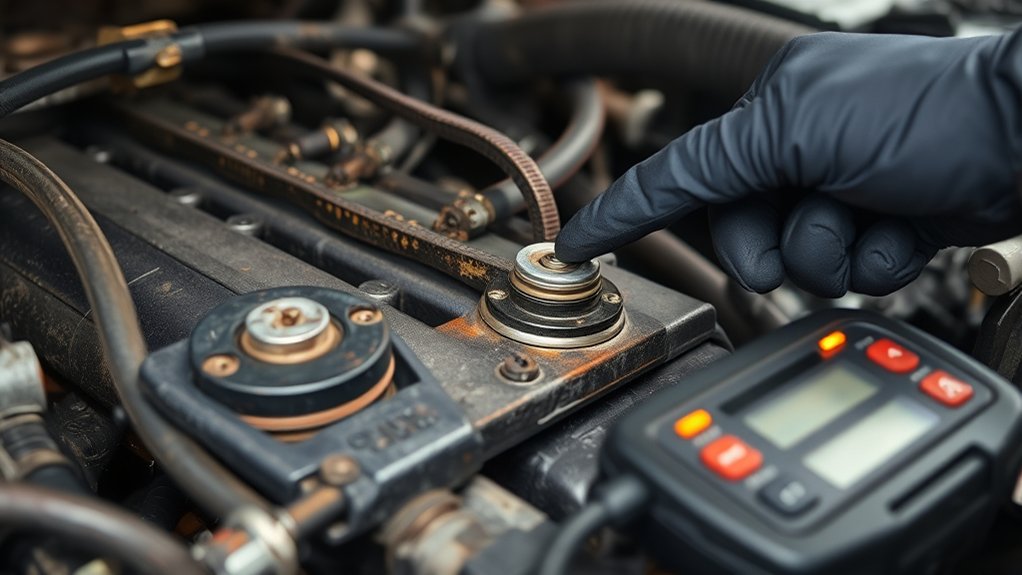
When your engine shows unusual signs, you need to recognize them early to prevent costly repairs. One of the first things you should monitor is your engine oil. If you notice the oil level dropping quickly or the oil appearing dirty, it’s a red flag that your engine may be struggling.
Early recognition of engine oil issues can help prevent expensive repairs down the road.
Another common symptom is strange noises like knocking or ticking, which often indicate internal issues. Pay attention to how your vehicle drives; hesitation or stalling during acceleration can signal engine problems.
Although tire pressure isn’t directly linked to engine health, low or uneven pressure can affect overall vehicle performance, putting extra strain on your engine. Furthermore, watch for excessive smoke from the exhaust or a sudden drop in fuel efficiency.
Catching these symptoms early helps you address minor issues before they turn into major engine repairs, saving you time and money in the long run.
How to Check Engine Warning Lights and Codes

Recognizing engine problem symptoms is only the first step; the next is understanding what your vehicle’s warning lights and codes mean. When you sit in the vehicle interior, pay close attention to the dashboard. The Check Engine light often signals an issue needing immediate attention.
Don’t ignore it, even if your car seems to run fine. Use an OBD-II scanner to read the diagnostic trouble codes (DTCs) stored in your vehicle’s computer. These codes point directly to potential engine problems.
Also, check for any exterior damage that might affect engine performance, such as leaks or broken components near the engine bay. Sometimes, warning lights can result from external issues rather than internal engine faults.
Once you retrieve the codes, look them up in your vehicle’s manual or online resources to understand the specific problem. This step helps you decide whether you can fix it yourself or need professional help, streamlining your engine repair diagnosis effectively.
Basic Tools Needed for Engine Diagnosis
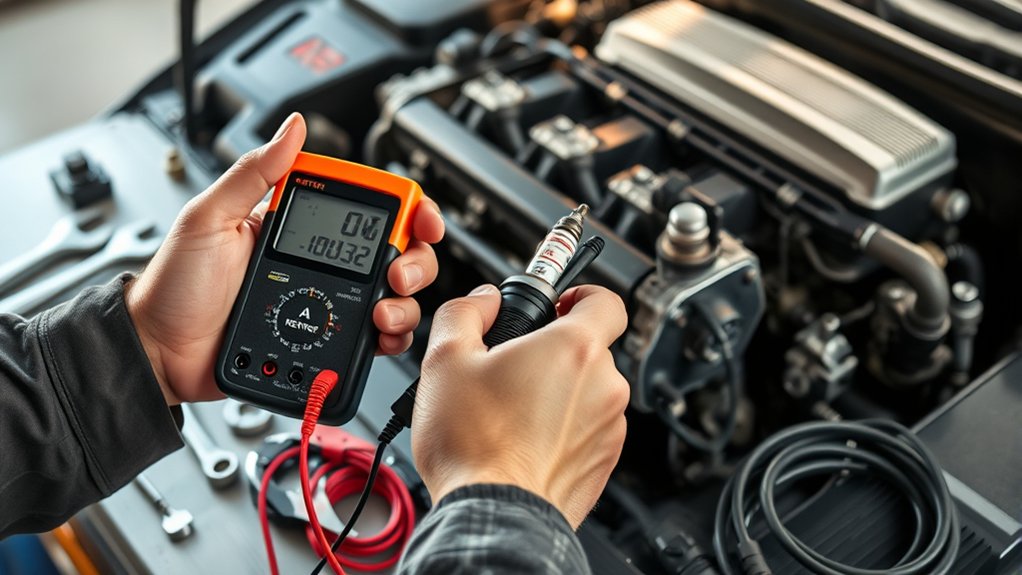
Before you start diagnosing engine issues, you’ll need a set of basic tools that make the process efficient and accurate. Having the right equipment helps you quickly assess critical areas like engine lubrication and battery voltage. This way, you won’t miss key signs of trouble.
Here are four essential tools to have on hand:
- Multimeter: Measures battery voltage and electrical circuits to pinpoint electrical faults.
- Wrench Set: Allows you to loosen or tighten bolts when inspecting components related to engine lubrication.
- Oil Pressure Gauge: Checks the oil pressure to confirm proper engine lubrication, preventing severe damage.
- OBD-II Scanner: Reads diagnostic trouble codes for a fast overview of engine issues.
With these tools, you can confidently perform initial checks and gather crucial data, setting the stage for effective repairs. They help you spot problems early before they escalate into costly repairs.
Listening for Unusual Engine Noises
Although engine problems can show up in many ways, unusual noises often give the earliest clues. When you listen carefully, analyzing engine sounds can help you spot issues before they get worse.
Start by identifying different sound frequencies. High-pitched squeals might mean belt wear, while low rumbles could point to exhaust problems.
To help you recognize sound frequencies, here’s a quick reference table:
| Noise Type | Possible Cause | Sound Frequency Range |
|---|---|---|
| Squealing | Worn belts | High (3000-6000 Hz) |
| Knocking | Ignition or timing | Mid (500-1500 Hz) |
| Rattling | Loose components | Low (100-500 Hz) |
Diagnosing Engine Performance and Fuel Efficiency Issues
Unusual engine noises can alert you to potential problems, but changes in performance and fuel efficiency often reveal issues that sounds can’t. If your vehicle feels sluggish or you notice a drop in miles per gallon, it’s time to investigate.
Poor engine oil quality or low levels can reduce engine efficiency, so keep an eye on that. Also, check your tire pressure regularly. Underinflated tires increase rolling resistance, which lowers fuel economy.
Here’s what to do:
- Monitor acceleration and engine response for any lag or hesitation
- Inspect tire pressure and inflate tires to recommended levels
- Evaluate engine oil condition and replace it if it looks dirty or thick
- Look for unusual exhaust smoke, which can indicate combustion problems
Checking Engine Fluids for Signs of Trouble
When you check your engine fluids regularly, you can catch many problems early before they cause serious damage. Start by inspecting your oil levels. Low oil can lead to increased engine friction and overheating.
Use the dipstick to verify the oil is within the recommended range and looks clean. Dark, gritty oil signals it’s time for a change. Next, assess the coolant condition. Coolant should have a bright color, usually green, orange, or pink, and be free of debris or oil contamination.
Cloudy or rusty coolant can indicate corrosion or leaks in the cooling system, which might cause your engine to overheat. Also, check for any fluid leaks under the vehicle. Leaking oil or coolant often points to gasket or hose issues.
Examining Spark Plugs and the Ignition System
Now, you’ll want to take a close look at the spark plugs. Check for any wear, deposits, or damage because how they’re doing directly impacts your engine’s performance.
Next up, don’t forget about the ignition system components—things like wires and coils. Make sure they’re working properly and delivering consistent sparks.
Catching any issues in these areas early on can help prevent misfires and keep your engine running smoothly and efficiently.
Spark Plug Condition
How can you tell if your spark plugs are causing engine trouble? Start by inspecting the spark plug condition closely. Look for signs of spark plug wear such as worn electrodes, heavy deposits, or cracks in the porcelain insulator. These issues can cause misfires and poor engine performance.
While checking the plugs, you should also consider ignition coil testing to verify the coil delivers proper voltage. Here’s what to watch for:
- Eroded or rounded electrodes indicating wear.
- Black, oily, or sooty deposits signaling combustion problems.
- Cracks or chips on the porcelain insulator.
- Signs of arcing or burning on the spark plug tip.
Regularly inspecting spark plugs and performing ignition coil testing helps you catch problems early and keep your engine running smoothly.
Ignition System Components
Although spark plugs play a crucial role, diagnosing engine issues requires examining the entire ignition system, including coils, wires, and control modules. You should inspect the ignition coil carefully, as it converts battery voltage into the high voltage needed to create a spark at the spark plug.
A failing ignition coil can cause misfires, rough idling, or difficulty starting. Check the spark plug for wear or fouling, but don’t stop there. Worn wires or faulty control modules can also disrupt ignition timing.
Testing each component ensures you pinpoint the root cause of engine problems. Remember, replacing a spark plug alone won’t fix an issue if the ignition coil or wiring is damaged. A thorough inspection leads to accurate diagnosis and effective repairs.
Troubleshooting Engine Air and Fuel Delivery Problems
You’ll want to check for common airflow blockages, like a clogged air filter or a dirty throttle body, since these can really restrict your engine’s performance. After that, it’s a good idea to run some fuel system diagnostics to catch issues like a failing fuel pump or dirty injectors. Catching these problems early on can help keep your engine running smoothly and avoid bigger headaches down the road.
Common Airflow Blockages
Where does your engine’s air supply get blocked, and how can you spot it? Common airflow blockages usually happen at the air filter or the intake manifold. A clogged air filter restricts the air entering the engine, which reduces performance and fuel efficiency.
Likewise, debris or carbon buildup inside the intake manifold can limit airflow. This often causes rough idling or stalling. To diagnose these issues, check for:
- Dirty or damaged air filter needing replacement
- Visible debris or oil contamination on the air filter
- Carbon deposits inside the intake manifold
- Cracks or leaks in intake manifold hoses
Fuel System Diagnostics
Since your engine relies on a precise mix of air and fuel to run efficiently, diagnosing fuel system issues is essential when performance drops. Start by checking the fuel pump for proper pressure. If it’s weak or failing, fuel won’t reach the engine effectively.
Next, inspect the fuel injection system. Clogged or malfunctioning injectors can disrupt the fuel flow, causing rough idling or hesitation.
| Symptom | Possible Cause |
|---|---|
| Engine stalls | Faulty fuel pump |
| Poor acceleration | Clogged fuel injectors |
| Hard starts | Low fuel pressure |
| Rough idle | Dirty fuel injection |
Testing for Engine Overheating Issues
When your engine starts to overheat, it’s essential to act quickly to prevent serious damage. Begin by checking the cooling system for any obvious issues. Look under the vehicle for signs of a coolant leak, as losing coolant can lead to overheating.
Next, inspect the radiator and hoses for cracks or blockages that might restrict coolant flow.
Here’s how to test for engine overheating issues effectively:
Monitor the temperature gauge while the engine runs.
Check coolant levels in the reservoir and radiator.
Inspect the radiator cap for damage or improper sealing.
Use a pressure tester to identify leaks in the cooling system.
When to See a Professional Mechanic
If you notice persistent engine noises or warning lights, it’s a good idea to call a professional mechanic. They have the tools and experience to accurately diagnose complex issues that might be missed during basic checks. Getting expert help early can save you a lot of time and prevent costly repairs down the road. So, don’t wait too long—when in doubt, it’s best to get a pro to take a look.
Recognizing Serious Engine Problems
Although minor engine issues can often be handled on your own, recognizing serious engine problems early can save you from costly repairs and breakdowns. Maintaining regular vehicle upkeep supports engine longevity, but some symptoms mean it’s time to call a professional mechanic immediately.
Watch for these serious warning signs:
- Persistent knocking or tapping noises from the engine
- Thick, blue or black smoke coming from the exhaust
- Sudden loss of power or difficulty accelerating
- Warning lights like the check engine light staying on
If you notice any of these signs, don’t delay. Addressing serious engine problems promptly protects your vehicle and ensures safer driving.
Benefits of Professional Diagnosis
Why should you trust a professional mechanic to diagnose engine problems? The benefits overview is clear: they use advanced diagnostic techniques that identify issues quickly and accurately.
By relying on their expertise, you avoid costly mistakes and guarantee your vehicle’s safety and performance.
| Emotion | Situation | Outcome |
|---|---|---|
| Relief | Engine warning light on | Fast, accurate diagnosis |
| Confidence | Unfamiliar engine noise | Expert explanation |
| Security | Sudden engine stall | Reliable repair plan |
| Trust | Complex diagnostic needed | Professional handling |
| Satisfaction | Timely problem detection | Lower repair costs |
Seeing a pro mechanic saves you time, money, and stress by applying precise diagnostic techniques you can’t replicate.
Frequently Asked Questions
How Often Should I Perform Engine Maintenance to Prevent Repairs?
You should perform engine maintenance every 5,000 to 7,500 miles to keep your vehicle running smoothly. Regularly checking engine oil longevity by changing the oil and filter on schedule prevents wear and tear.
Don’t forget cooling system maintenance. Flush and refill coolant as recommended to avoid overheating. Staying consistent with these tasks helps you avoid costly repairs and extends your engine’s life, keeping your car reliable and efficient.
Can Using Synthetic Oil Affect Engine Diagnostics?
Yes, using synthetic oil can affect engine diagnostics, especially if the synthetic oil compatibility with your engine isn’t ideal. When you perform engine oil analysis, synthetic oils often show different wear particle patterns compared to conventional oils. This might influence diagnostic results.
Make certain your mechanic knows about the synthetic oil you use so they can interpret the analysis correctly. That way, they can guarantee accurate diagnostics without confusion or misreading of engine wear indicators.
What Are the Risks of Ignoring Minor Engine Issues?
Ignoring minor engine issues puts your engine performance at serious risk, causing small problems to escalate into costly repairs. You might think it’s harmless now, but those little issues can reduce fuel efficiency and strain components.
Over time, this neglect shortens your vehicle longevity, meaning your car won’t last as long as it should. Stay proactive and address minor problems early to keep your engine running smoothly and extend your vehicle’s lifespan.
How Do Weather Conditions Impact Engine Performance?
You’ll notice climate effects play a big role in your engine’s performance. Temperature fluctuations can cause metal parts to expand and contract, leading to wear or leaks.
Cold weather thickens your oil, making it harder for the engine to turn over, while hot weather can cause overheating and strain cooling systems.
Are Aftermarket Parts Reliable for Engine Repairs?
Aftermarket parts can be a double-edged sword. You might strike gold or hit a snag. Their reliability depends on engine part quality; some match or even surpass originals, while others fall short.
You’ll want to research brands carefully and check reviews to guarantee aftermarket reliability before swapping parts. If you choose wisely, you can save money without sacrificing performance. Just remember, not all aftermarket parts are created equal.
Conclusion
Diagnosing your engine is like tuning a musical instrument. Each symptom, noise, or warning light is a note guiding you to harmony. By checking spark plugs, listening closely, and using basic tools, you can uncover hidden issues before they crescendo into costly repairs.
Remember, your engine’s health is the heartbeat of your vehicle. When problems persist, don’t hesitate to seek a professional’s touch to keep your ride running smoothly and confidently down the road. Proper vehicle engine repair ensures your car stays reliable and safe.