
3 Essential Automotive Services Every Car Needs
If you’ve ever felt overwhelmed by all the maintenance your car needs, you’re not alone. Many drivers struggle to keep up with essential automotive services that can save money and prevent breakdowns. Knowing which services really matter can make a big difference in your vehicle’s performance and safety.
You need regular oil changes to keep your engine lubricated and prevent costly wear. Tire maintenance, like rotation and pressure checks, guarantees even wear and better fuel efficiency, helping you stay safe on the road. 3 Essential Automotive Services Every Car Needs
Regular brake inspections catch problems early, avoiding expensive repairs and boosting performance.
Taking care of these essential services saves you money and improves your vehicle’s safety and longevity. Keep going to find out how each one protects your car.
Key Takeaways
- Regular oil changes keep engines lubricated, prevent wear, and maintain fuel efficiency.
- Tire maintenance, including rotation and pressure checks, ensures safety and extends tire life.
- Routine brake inspections detect wear early, prevent costly repairs, and improve vehicle safety.
Neglecting maintenance increases breakdown risks, reduces performance, and leads to expensive repairs.
Consistent preventative care prolongs vehicle lifespan and enhances overall driving experience.
Why You Need Regular Oil Changes to Protect Your Engine

How often do you think about the oil in your car’s engine? If it’s not often, you’re not alone. But regular oil changes are essential because engine lubrication relies heavily on clean, fresh oil.
Over time, oil breaks down and loses its ability to protect critical engine components. This can lead to increased friction and wear.
By changing your oil at recommended intervals, you maintain ideal oil longevity. This ensures it continues to flow smoothly and carry away heat and contaminants.
Neglecting oil changes speeds up engine wear and could result in costly repairs. When you keep up with regular oil changes, you’re not just protecting your engine; you’re also improving your vehicle’s performance and fuel efficiency.
How Tire Maintenance Saves You Money and Keeps You Safe

Keeping your engine running smoothly with regular oil changes is just one part of vehicle care. Tire maintenance plays a crucial role in saving you money and keeping you safe on the road.
Regular tire rotation helps guarantee even wear across all tires, extending their lifespan and improving fuel efficiency. Checking your tread depth is essential; worn-out treads reduce traction, increasing the risk of accidents, especially in wet conditions.
Regular tire rotation and tread depth checks ensure even wear, better fuel efficiency, and safer traction on the road.
You can measure tread depth easily or have a professional inspect it during routine service. Properly maintained tires prevent premature replacements, saving you money in the long run. Furthermore, they improve handling, braking, and overall safety.
Don’t overlook tire pressure either. Underinflated tires wear faster and hurt fuel economy. By staying on top of tire rotation, tread depth, and inflation, you protect your investment and guarantee safer drives every time you hit the road.
Tire maintenance is a simple step that delivers big benefits.
Why Regular Brake Inspections Prevent Costly Repairs

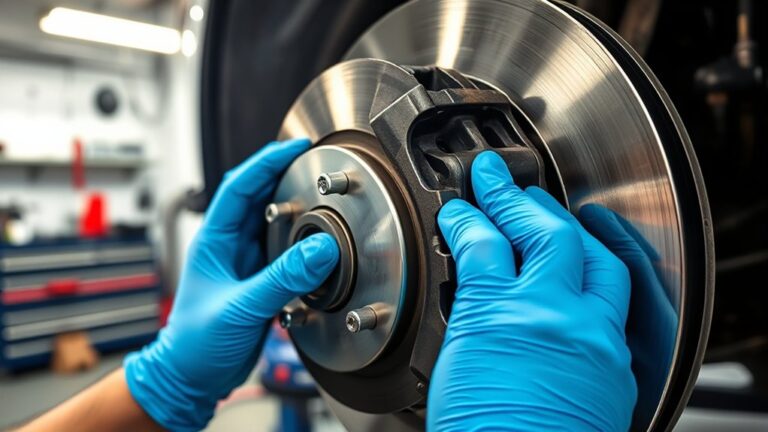
Although brake issues might seem minor at first, regular inspections can catch problems early and save you from expensive repairs down the road. When you schedule brake inspections, mechanics check for brake pad wear. This is vital because worn pads can damage rotors and lead to costly replacements.
They also perform hydraulic fluid checks to make sure your brake system operates smoothly. Neglecting these can cause leaks or brake failure, putting your safety at risk and increasing repair costs. By staying on top of these inspections, you’ll identify small issues before they turn into major problems.
Plus, maintaining your brakes improves your car’s overall performance and your confidence behind the wheel. Don’t wait for warning signs like squealing or reduced braking power. Regular brake inspections protect your wallet and keep you safe every time you drive.
Frequently Asked Questions
How Often Should I Replace My Car’s Air Filter?
You should replace your car’s air filter every 12,000 to 15,000 miles, depending on your driving conditions. The air filter lifespan can vary, so check your owner’s manual for specific replacement intervals.
If you often drive in dusty or polluted areas, you might need to replace it more frequently. Regular replacement keeps your engine running smoothly and improves fuel efficiency, so don’t skip this important maintenance step.
When Is the Best Time to Change Transmission Fluid?
You might think transmission fluid never needs changing, but that’s not true. The best time to change your transmission fluid is typically every 30,000 to 60,000 miles, though it varies by vehicle.
Regular transmission maintenance includes fluid inspection to catch contamination or low levels early. Don’t wait for issues. Check your owner’s manual and schedule fluid changes proactively to keep your transmission running smoothly and avoid costly repairs down the road.
How Do I Know if My Battery Needs Replacing?
You’ll know your battery needs replacing when you notice slow engine cranking, dim headlights, or warning lights on the dashboard. Battery lifespan typically ranges from 3 to 5 years, so if yours is older, it might be time.
Pay attention to charging indicators. If they show irregularities, your battery or alternator could be failing. Regularly testing your battery helps you avoid unexpected breakdowns and keeps your car running smoothly.
What Are Signs of a Failing Suspension System?
You’ll notice suspension troubles if your car feels bouncy or drifts during turns. Suspension troubleshooting often starts with checking for uneven tire wear or a rough ride.
Pay close attention to shock absorber signs like leaking fluid or excessive bouncing after bumps. If your vehicle noses down when braking or sways side to side, you should get your suspension inspected soon. This helps avoid bigger problems and keeps your handling safe.
How Important Is Regular Coolant System Maintenance?
Regular coolant system maintenance is essential because it prevents coolant contamination, which can cause corrosion and damage your engine. If you don’t flush the system regularly, old coolant and debris build up, reducing its effectiveness.
Conclusion
By treating your car to regular oil changes, tire care, and brake inspections, you’re not just maintaining a machine—you’re preserving a trusted companion. Like a well-tuned orchestra, these services keep every part playing in harmony, saving you from costly surprises down the road.
Remember, your car’s health is in your hands, so don’t wait. Nurture it now and enjoy a smoother, safer journey wherever the road takes you with essential automotive services every car needs.