
How to Diagnose Automotive Air Conditioning Repair Issues
Dealing with a car’s air conditioning that just won’t cool properly can be incredibly frustrating. You’re not alone—many people struggle with diagnosing what exactly is wrong when their AC system fails. Whether it’s an annoying leak or a faulty compressor, understanding how to pinpoint the issue is the first step toward getting your ride comfortable again.
To diagnose automotive air conditioning repair issues, start by checking for refrigerant leaks using UV dye or electronic detectors and inspect hoses and fittings for damage. Listen for unusual compressor noises and test clutch engagement with a multimeter.
Examine electrical components like fuses, wiring, and relays for faults. Also, inspect the condenser and evaporator for debris, damage, or leaks, and measure refrigerant pressures with a gauge.
Troubleshooting the blower motor and cooling fans guarantees proper airflow. Exploring these steps uncovers deeper insights for effective repair.
Key Takeaways
- Check for weak airflow, unusual odors, and fluctuating cooling to identify common AC system failures. These signs often point to underlying issues that need attention.
- Detect refrigerant leaks using UV dye, electronic detectors, or soap bubble tests on hoses and connections. Catching leaks early helps prevent bigger problems down the line.
- Inspect compressor operation, clutch engagement, and electrical components like fuses and relays for proper functionality. Ensuring these parts work correctly is key to a healthy AC system.
- Examine condenser and evaporator for physical damage, corrosion, leaks, and clogged cabin air filters. These checks help maintain efficient cooling performance.
- Measure refrigerant pressures with gauges and test blower and cooling fan operation to assess system performance. This gives a good overall picture of how well your AC is working.
How Your Car’s Air Conditioning System Works
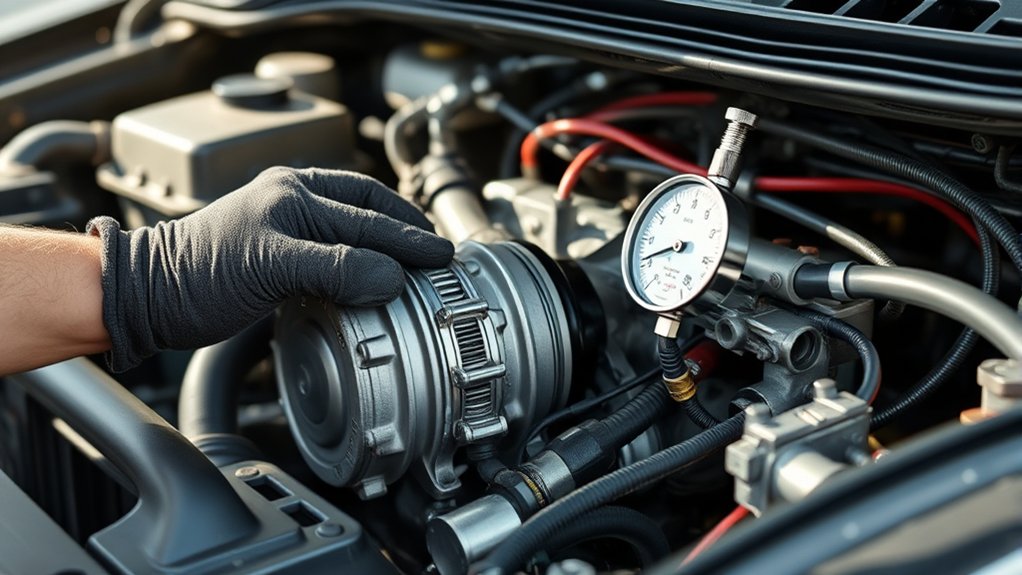
Before you can diagnose air conditioning issues, it helps to understand how your car’s AC system works. Your car’s AC cools and dehumidifies the air inside the automotive interior, making your drives comfortable.
Understanding your car’s AC system is key to diagnosing and fixing air conditioning problems effectively.
It starts with the compressor, which pressurizes refrigerant and circulates it through the system. The refrigerant then moves to the condenser, where it releases heat outside the vehicle.
Next, it flows through an expansion valve or orifice tube, dropping in pressure and temperature before entering the evaporator inside your dashboard.
As air passes over the evaporator, it cools down and moisture gets removed, improving air quality. The system also includes air filtration components that trap dust, pollen, and other particles, ensuring cleaner air inside your car.
A properly working AC system balances cooling and air filtration to maintain a comfortable and healthy automotive interior environment. Understanding these basics puts you in a better position to identify what might go wrong.
Signs Your Car’s AC Is Failing

You’ll notice your car’s AC is failing when the airflow feels weak or inconsistent. It’s one of those things that doesn’t always happen all at once, so keep an eye out. Also, if you catch any unusual odors coming from the vents, that’s definitely a sign something might be wrong. These signs are pretty important because spotting them early can help you avoid bigger problems down the road.
Weak Airflow Symptoms
How can you tell if your car’s AC is struggling? One clear sign is weak airflow coming from the vents. This often points to an issue you can check yourself before calling a mechanic.
Here are three common weak airflow symptoms to watch for:
- Reduced Air Pressure: If the air feels faint or barely pushes out, your cabin air filter might be clogged, restricting airflow.
- Uneven Air Distribution: Some vents blow weaker air than others, which could mean duct blockages or a failing blower motor.
- Unusual Cabin Noise: If you hear strange sounds when the AC is on, it might be a worn blower fan affecting airflow efficiency.
Keep an eye on these signs to catch problems early and stay comfortable on the road.
Unusual Odors Detection
Weak airflow isn’t the only sign your car’s AC might be acting up. Strange smells coming from the vents can also hint at underlying issues.
If you notice musty or moldy odors, it often means moisture has built up in the system, promoting bacterial growth. Addressing this quickly is essential for odor elimination and your comfort.
One common solution is filter replacement. Clogged or dirty cabin air filters trap moisture and debris, worsening odors. Regularly changing these filters helps keep the air fresh.
You might also need a professional cleaning of the evaporator and ducts to remove mold and mildew buildup. Paying attention to unusual smells helps you catch problems early and avoid more costly repairs down the road.
Inconsistent Cooling Patterns
When your car’s air conditioning blows air that fluctuates between cold and warm, it signals a potential problem. This inconsistency can affect comfort and air quality inside your vehicle. Here’s what you should check:
- Refrigerant Levels: Low refrigerant prevents the AC from maintaining steady cooling.
- Compressor Function: A failing compressor may cycle on and off, causing temperature swings.
- Cabin Filtration: A clogged cabin filter restricts airflow, impacting cooling efficiency and air quality.
Addressing these issues promptly helps restore consistent cooling and ensures your cabin filtration works correctly. If you notice uneven temperatures or diminished air quality, don’t hesitate to have your system inspected. Fixing inconsistent cooling patterns early prevents bigger, costlier problems later.
How to Check for Refrigerant Leaks

Wondering if your car’s air conditioning is losing its chill because of a refrigerant leak? Start by identifying the refrigerant type your system uses, as this affects your leak detection method. Common refrigerants include R-134a and R-1234yf.
To check for leaks, visually inspect hoses, connections, and the compressor for oily residue or damage. Next, use a UV dye and blacklight or an electronic leak detector for more precise identification.
Remember, proper leak detection not only saves you money but also protects the environment.
| Refrigerant Type | Leak Detection Method | Notes |
|---|---|---|
| R-134a | UV Dye & Blacklight | Most common in older vehicles |
| R-1234yf | Electronic Leak Detector | Newer, eco-friendly refrigerant |
| Both | Soap Bubble Test | Quick visual check for bubbles |
| Both | Visual Inspection | Look for oily residue or damaged parts |
Following these steps helps you pinpoint leaks before they worsen.
Diagnosing AC Compressor and Clutch Problems
You’ll want to start by checking if the AC compressor is working properly and delivering the right pressure. Then, take a look at the clutch to see if it’s engaging and disengaging like it should when you turn on the AC. These simple steps can help you quickly pinpoint common problems with the compressor and clutch.
Compressor Functionality Checks
Although the compressor is the heart of your vehicle’s air conditioning system, diagnosing its issues requires careful attention to both the compressor unit and its clutch. To maintain ideal air conditioning aesthetics and effective interior climate control, you need to confirm the compressor operates smoothly.
Here’s how you can check compressor functionality:
- Listen for Unusual Noises: Grinding or squealing sounds often signal internal damage or worn bearings.
- Measure System Pressure: Use gauges to verify the compressor generates correct pressure levels. Abnormal readings may indicate failure.
- Inspect for Leaks or Damage: Look for refrigerant leaks or visible cracks on the compressor housing that can reduce cooling efficiency.
Clutch Engagement Issues
How can you tell if your AC compressor clutch is failing to engage properly? First, listen for unusual cabin noise when you turn on the AC. A failing clutch often produces a clicking or grinding sound.
Next, check if the compressor pulley spins freely without engaging the clutch. That means the clutch isn’t activating. Also, inspect the air filter. If it’s clogged, it can cause system strain and indirectly affect clutch performance.
Use a multimeter to test the clutch coil for proper voltage. No power means it won’t engage. If the clutch doesn’t engage, your AC won’t cool correctly, and you’ll notice warmer air inside.
Addressing clutch engagement issues quickly prevents further compressor damage and restores efficient cooling.
How to Spot Electrical Issues in Your Car’s AC
When your car’s AC blows warm air or fails to turn on, electrical problems are often the culprit. To spot these issues, start with a thorough fuse inspection. A blown fuse can easily cut power to the AC system, so check your vehicle’s fuse box for any damaged or burnt fuses related to the air conditioning.
Next, examine the electrical wiring connected to the AC components. Look for frayed wires, loose connections, or corrosion. These can disrupt the flow of electricity and cause intermittent or complete failure of the AC system.
Finally, test the AC relay and switches, as faulty relays or malfunctioning switches can prevent the compressor from engaging properly. By systematically checking these three areas, you can identify and resolve common electrical faults that impact your car’s air conditioning performance, saving time and avoiding unnecessary repairs.
Inspecting the AC Condenser and Evaporator for Damage
When you’re checking the AC condenser, keep an eye out for bent fins, debris buildup, or any leaks. These issues can really cut down on how well your cooling works. Then, when you move on to the evaporator, look for signs of refrigerant leaks—things like oily residue or if you notice the cooling isn’t as strong as it should be. To catch problems early, using leak detection methods like UV dye or electronic detectors can be a big help.
Common Condenser Damage Signs
Though the condenser is a tough component, it can suffer damage from road debris, corrosion, or leaks that reduce your AC system’s efficiency. You should watch for common condenser damage signs to catch issues early.
1. Condenser corrosion
Look for rust or discoloration on the condenser’s surface. This can cause leaks and reduce cooling performance.
2. Fan blade damage
Inspect the fan blades near the condenser for cracks or bends. Damaged blades can impede airflow and lead to overheating.
3. **Physical dents or punctures
Check for visible dents or holes caused by stones or debris. These may disrupt refrigerant flow or cause leaks.
Spotting these signs helps you address problems before they worsen and keeps your AC running smoothly.
Evaporator Leak Detection Methods
Detecting leaks in the evaporator and condenser is essential for maintaining your vehicle’s AC system. Start by inspecting the AC condenser for visible damage like bent fins or corrosion, which can cause refrigerant leaks.
For the evaporator, use a UV dye and blacklight to pinpoint leaks, especially since the evaporator is hidden behind the dashboard. Don’t forget to check the condition of your cabin air filters; clogged filters can reduce airflow and mask leak symptoms.
Also, examine the automotive insulation around the evaporator, as damaged insulation can allow moisture buildup, leading to corrosion and leaks. Regularly inspecting these components helps maintain system efficiency and prevents costly repairs, ensuring your AC keeps your cabin comfortable and cool.
Measuring Refrigerant Pressure With a Gauge
When you measure refrigerant pressure with a gauge, you gain critical insight into your air conditioning system’s performance. This step helps you identify if the refrigerant level is ideal or if leaks or blockages exist.
Before connecting the gauge, confirm proper refrigerant recycling practices to avoid environmental harm. Also, verify the accuracy of your pressure calibration to get reliable readings.
Follow these steps:
- Connect the gauge set to the low and high-pressure service ports on your AC system.
- Start the engine and turn on the AC to its maximum cooling setting.
- Observe the pressure readings on both sides and compare them to manufacturer specifications.
Troubleshooting the AC Blower and Cooling Fans
If your air conditioning blows warm air or doesn’t run at all, you’ll want to check the AC blower and cooling fans first. These components are essential for maintaining interior comfort and effective climate control.
Start by inspecting the AC blower motor. If it’s not working, you won’t get enough airflow inside your vehicle. Listen for unusual noises or weak airflow from the vents, which can indicate a failing blower motor or clogged cabin air filter.
Next, examine the cooling fans under the hood. They help dissipate heat from the condenser, so if they don’t operate correctly, your AC won’t cool efficiently. Check the fan blades for damage and ensure the fan motors run when the AC is on.
Also, verify the electrical connections and fuses linked to both the blower and cooling fans. Troubleshooting these parts can restore your vehicle’s climate control system and keep your interior comfort intact.
When to Recharge Your Car’s AC
How can you tell your car’s AC needs a recharge? Maintaining your vehicle’s interior comfort depends heavily on a properly charged AC system. If you start noticing weaker cooling or warm air blowing, it’s time to check your AC’s refrigerant level.
Regular vehicle maintenance includes monitoring your AC system to avoid discomfort during hot drives.
Here are three signs you need to recharge your car’s AC:
- Reduced Cooling Performance: The air isn’t as cold as it used to be, even when the AC is on full blast.
- Longer Cooling Time: It takes much longer for the interior to cool down, signaling low refrigerant.
- Hissing or Bubbling Sounds: These noises can indicate leaks causing refrigerant loss.
Pay attention to these signs to keep your vehicle’s interior comfort intact and avoid further damage. Recharging your AC is a simple step that ensures your car stays cool and comfortable.
When to Call a Professional for AC Repair
Noticing your car’s AC isn’t cooling properly even after a recharge often means the problem goes beyond low refrigerant. When you encounter issues like strange noises, leaking fluids, or electrical problems, it’s time to call a professional.
DIY fixes can risk damaging your automotive paint or other vehicle components if done improperly. Plus, some AC issues could relate indirectly to tire maintenance, like engine strain from improper tire pressure affecting system performance.
Professionals have the tools and expertise to diagnose and fix complex problems safely.
| Signs to Call a Professional | Why It Matters |
|---|---|
| Persistent warm air | Indicates system leaks or compressor issues |
| Strange noises or odors | Could signal mechanical failure or mold growth |
| Fluid leaks under the car | May damage automotive paint or cause corrosion |
| Electrical malfunctions | Requires specialized diagnostic tools |
Don’t wait. Address AC issues promptly to avoid costly repairs and maintain your car’s overall health.
Frequently Asked Questions
What Type of Refrigerant Does My Car Use?
You’ll find the refrigerant type your car uses listed in the owner’s manual or on a label under the hood. Common refrigerant types include R-134a and R-1234yf.
Make sure you choose the right one because system compatibility is essential for proper cooling and avoiding damage. Using the wrong refrigerant can harm your AC system, so always double-check the specifications before adding or replacing refrigerant in your vehicle.
How Often Should I Service My Car’s AC System?
You know what they say: “An ounce of prevention is worth a pound of cure.” You should service your car’s AC system at least once a year to keep it running smoothly.
During service, make sure to check the air filter and perform a belt inspection. These simple steps help prevent bigger problems, improve air flow, and keep your AC cooling efficiently.
Don’t wait until you’re uncomfortable to take action!
Can Using My AC Affect My Car’s Fuel Efficiency?
Yes, using your AC can affect your car’s fuel efficiency because it increases energy consumption. When your AC runs, the engine works harder to power the compressor, which uses more fuel.
This not only impacts your fuel economy but also contributes to a higher climate impact due to increased emissions. To minimize this, you can use the AC wisely, like turning it off when it’s not necessary or using recirculation mode to reduce strain.
Are There Eco-Friendly Alternatives to Traditional Refrigerants?
Imagine your car’s AC releasing harmful gases that quietly damage the environment. You’ll be glad to know there *are* eco-friendly refrigerant alternatives designed to reduce environmental impact.
These new refrigerants, like R-1234yf, lower greenhouse gas emissions without sacrificing cooling power. By choosing these refrigerant alternatives, you’re not only keeping your car cool but also helping protect the planet.
It’s a smart, responsible upgrade you’ll appreciate every drive.
What Tools Do Professionals Use for AC Repair Diagnostics?
You’ll use several tools for AC repair diagnostics, including a refrigerant recovery machine to safely remove and store refrigerant. Leak detection tools like electronic leak detectors or UV dye kits help you pinpoint where refrigerant escapes.
Pressure gauges let you monitor system pressure, while multimeters check electrical components. With these tools, you can accurately identify issues and guarantee your vehicle’s air conditioning works efficiently and safely.
Conclusion
Now that you know how to spot issues with your car’s AC, you’re practically an automotive cooling detective! Don’t ignore signs like weak airflow or strange noises; they’re screaming for your attention.
Checking for leaks, electrical problems, or compressor troubles can save you from sweating through an entire summer. Remember, sometimes it’s best to call a pro before things get as hot as the surface of the sun.
Stay cool and keep your ride chill by diagnosing automotive air conditioning repair issues early!