7 Essential Tips for Vehicle Suspension Repairs
If you’ve ever experienced a bumpy ride or noticed your car pulling to one side, you’re not alone. Many people struggle with vehicle suspension repairs problems that can affect safety and comfort. Finding the right tools and knowing how to fix suspension issues can feel overwhelming, but with the right guidance, you can get your ride smooth and steady again.
You’ll want to spot early suspension issues like uneven tire wear or steering wobble to stay safe. Gather essential tools like spring compressors and torque wrenches to handle repairs properly.
Prioritize urgent fixes such as leaks or loud noises, and replace worn shocks, springs, and bushings carefully. After repairs, align your suspension for peak handling.
Adopt smooth driving habits and inspect regularly to extend your suspension’s life. Keep going to uncover how to maintain a smooth, safe ride.
Key Takeaways
- Regularly inspect suspension components for uneven tire wear, noises, and loose bolts to catch issues early. This helps prevent bigger problems down the road.
- Use proper tools like spring compressors and torque wrenches to safely remove, install, and tighten suspension parts. It’s all about working smart and staying safe.
- Replace worn bushings and leaking shocks promptly to maintain optimal handling and ride comfort. Don’t wait until the ride feels rough.
- Prioritize safety by addressing severe vibrations, noises, or alignment problems immediately. These signs mean your suspension needs attention now.
- Adjust driving habits and reduce speed on rough terrain to minimize suspension wear and damage. Being cautious can save you money and hassle later.
How to Spot Early Suspension Problems
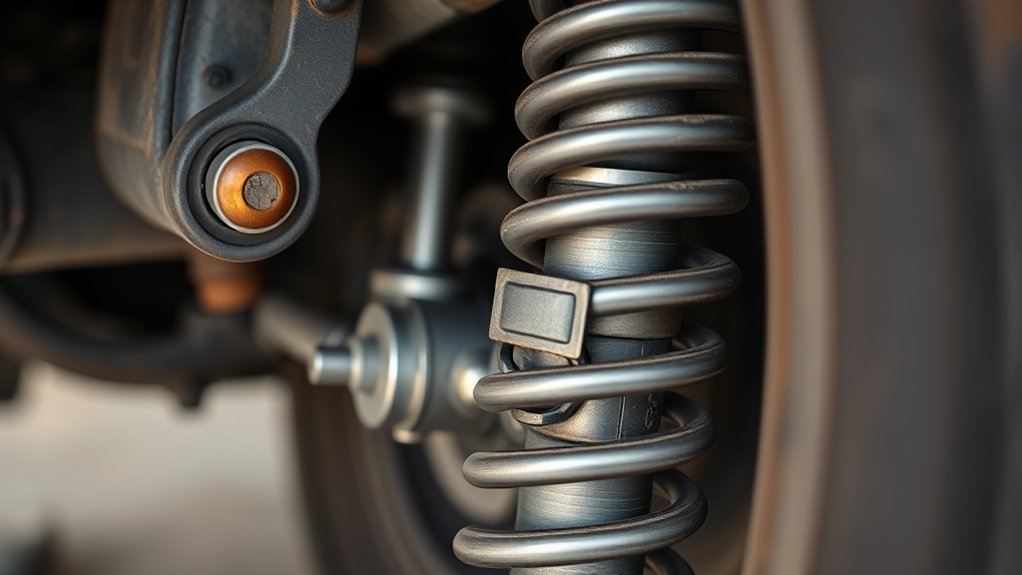
How can you tell if your vehicles suspension is starting to fail? One clear sign is uneven tire wear. If you notice bald spots or excessive wear on one side of your tires, it’s a red flag that your suspension isn’t distributing weight properly.
Another warning sign is a steering wobble. When you drive, if your steering feels shaky or unsteady, especially at higher speeds or on rough roads, it often means your suspension components are worn out or loose.
You might also feel your car bouncing excessively after hitting bumps or notice it pulling to one side while driving. Regularly checking for these symptoms can help you catch suspension issues early before they worsen.
Don’t ignore these signs, as failing suspension affects your vehicle’s handling and safety. Staying alert to tire wear and steering wobble lets you address problems promptly, saving you from costly repairs down the road.
Essential Tools You’ll Need for Suspension Repairs
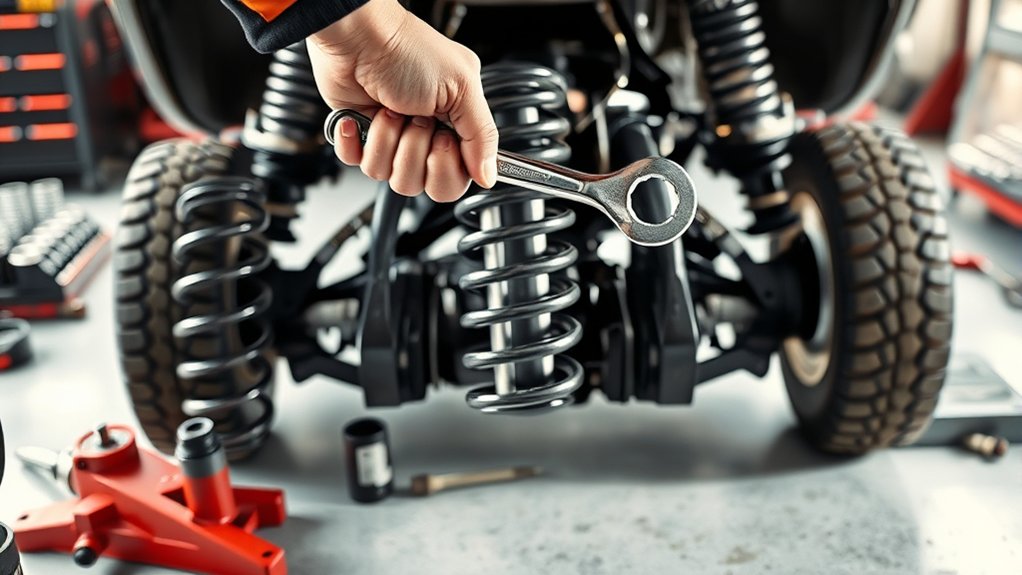
Before diving into suspension repairs, you’ll want to gather the right tools to make the job smoother and safer. Whether you’re working on suspension upgrades or installing aftermarket components, having the essentials on hand saves you time and frustration.
Here are the top three tools you shouldn’t be without:
- Spring Compressors – These are crucial for safely removing and installing coil springs without injury.
- Torque Wrench – Precision is key when tightening bolts to manufacturer specs, especially with aftermarket components.
- Ball Joint Separator – This tool helps you separate ball joints cleanly without damaging parts.
With these tools, you’ll handle suspension repairs confidently and efficiently. Skipping them can lead to improper installation or even accidents. So, invest in quality tools to protect both your vehicle and yourself as you upgrade or repair your suspension system.
How to Prioritize Suspension Repairs Effectively
You’ll want to start by figuring out how urgent each suspension issue is to keep your vehicle safe. It’s all about balancing your budget with the repairs you really need, so you don’t end up with bigger, more expensive problems later on. When you prioritize repairs effectively, you focus on safety first without spending more than necessary.
Assess Urgency Levels
Although suspension issues can vary widely, recognizing which problems demand immediate attention can prevent costly damage and guarantee your safety on the road. When evaluating urgency levels, keep these points in mind:
1. Severe noise or vibrations
If your vehicle shakes excessively or makes loud clunks, it’s a red flag needing prompt inspection.
2. Uneven tire wear or alignment problems
These suggest suspension misalignment that can worsen quickly, risking control loss.
3. Leaking shocks or struts
Fluid leaks compromise damping, affecting ride comfort and handling stability.
While suspension upgrades and aftermarket options can improve performance, don’t delay repairs that affect safety. Address urgent issues first to avoid escalating costs or accidents. Prioritize wisely, and you’ll keep your ride smooth and secure.
Budget Versus Safety
How do you balance the cost of suspension repairs with the need to stay safe on the road? Start by prioritizing essential fixes that directly impact your vehicle’s handling and braking.
While a suspension upgrade might seem appealing, focus first on repairing worn or damaged components to ensure safety. Aftermarket parts can offer cost-effective alternatives, but choose quality brands to avoid compromising performance.
Don’t cut corners on critical elements like shocks, struts, or control arms. If your budget is tight, tackle the most urgent repairs first, then plan for upgrades later.
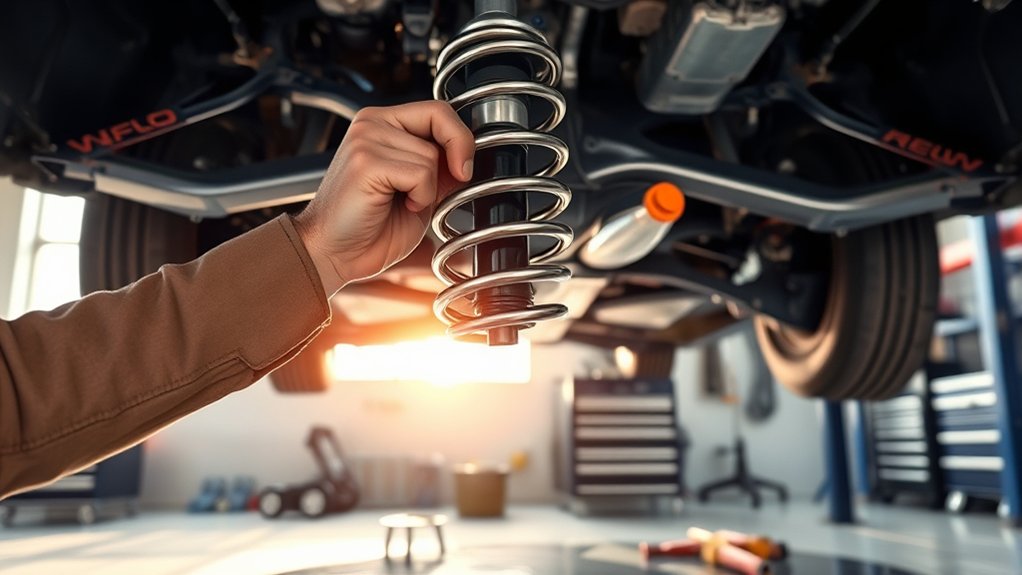
How to Replace Shock Absorbers and Springs
Before diving into the replacement process, make sure you have the right tools and safety equipment on hand. Replacing shock absorbers and springs requires careful attention to shock adjustment and spring compression to guarantee your vehicle rides smoothly and safely.
Here’s what you should focus on:
- Spring Compression: Use a reliable spring compressor to safely remove and install springs without risking injury.
- Shock Adjustment: Once installed, adjust the shocks according to your vehicle’s specifications to maintain proper handling.
- Secure Fastening: Double-check all bolts and mounts are tightened to the correct torque to prevent future issues.
How to Repair Worn Suspension Bushings
If you start hearing clunking noises or notice your tires wearing unevenly, it could be a sign that your suspension bushings are worn out. The first thing you’ll want to do is figure out which bushings are damaged. Once you’ve identified the problem areas, you can follow a straightforward step-by-step process to replace them. Let’s go through how to spot the issue and swap out those bushings without any hassle.
Identifying Bushing Wear
When your vehicle starts producing unusual noises or feels less stable on the road, worn suspension bushings could be the culprit. Identifying bushing wear early helps prevent costly damage.
Start by performing a wear pattern analysis to spot uneven deterioration caused by poor bushing material selection or harsh driving conditions. Then, check for these signs:
- Visible cracks, tears, or missing chunks in the rubber or polyurethane.
- Excessive play or looseness in suspension components during a manual shake test.
- Unusual vibrations or clunking noises when driving over bumps.
Step-by-Step Replacement Process
Though replacing worn suspension bushings might seem intimidating, you can handle the process efficiently with the right tools and clear steps. First, safely lift and support your vehicle. Remove the wheel to access the suspension components.
Next, detach any parts blocking the bushings, like control arms or sway bars. Use a press or appropriate tools to push out the old bushings carefully. Clean the mounting area before installing new bushings. Consider aftermarket components for improved durability.
Press in the new bushings, ensuring they align correctly. Reassemble the suspension, tightening bolts to spec. Finally, reinstall the wheel and lower the vehicle.
If you’re considering suspension upgrades, this is a great opportunity to swap in higher-quality bushings that improve performance and longevity.
How to Align Your Suspension After Repairs
After completing your suspension repairs, you’ll want to verify your vehicle’s alignment is spot on to maintain proper handling and tire wear. Whether you’ve installed suspension upgrades or replaced aftermarket components, proper alignment ensures your car drives smoothly and safely.
Here’s how to align your suspension after repairs:
- Check Camber, Caster, and Toe Angles. These three angles affect how your tires contact the road. Use alignment tools or visit a professional to measure and adjust them precisely.
- Use Quality Alignment Equipment. Don’t skip this step. Accurate tools or a professional alignment machine will save you from uneven tire wear and steering issues.
- Test Drive and Reinspect. After adjustments, take a short drive to feel the handling. Then, recheck alignment to confirm it’s perfect.
Suspension Maintenance Tips to Extend Life
Ensuring your suspension alignment is spot on after repairs sets the stage for a smoother ride and longer-lasting components. To extend your suspension’s life, regularly inspect key parts like shocks, struts, and bushings for wear or damage.
Keep an eye out for uneven tire wear, which often signals alignment or suspension issues needing immediate attention. Consider suspension upgrades with quality aftermarket parts to boost durability and performance, especially if you frequently drive on rough terrain.
Don’t neglect routine maintenance such as lubricating joints and checking for loose bolts, which can prevent premature wear. Also, avoid aggressive driving habits like sudden stops or sharp turns that stress suspension components unnecessarily.
Frequently Asked Questions
What Are the Costs of Common Suspension Repairs?
You’ll usually pay around $75 to $150 for a suspension alignment, depending on your location and vehicle model. Shock absorber replacement can cost between $200 and $500 per axle, including parts and labor.
Keep in mind, prices vary based on the quality of parts and the complexity of the job. If you notice uneven tire wear or a bumpy ride, getting these repairs done promptly can save you more money down the road.
How Does Suspension Affect Vehicle Fuel Efficiency?
Your suspension directly affects fuel efficiency because poor suspension alignment increases rolling resistance, making your engine work harder. When your shock absorbers aren’t maintained, your tires don’t stay properly connected to the road, causing uneven wear and more drag.
Can Suspension Issues Cause Uneven Tire Wear?
Yes, suspension issues can cause uneven tire wear like a crooked picture frame distorting the view. When your tire alignment is off, it puts uneven pressure on your tires, wearing them down faster on one side.
Faulty shock absorbers can’t properly cushion bumps, leading to inconsistent tire contact with the road. You’ll want to fix these suspension problems quickly to extend tire life and keep your ride smooth.
When Should I Upgrade to Performance Suspension Parts?
You should upgrade to performance suspension parts when you notice your driving conditions demand better handling, stability, or comfort than your current setup provides. If you face rough roads, frequent cornering, or want improved responsiveness, performance upgrades make a big difference.
They boost control and safety, especially during spirited driving or harsh environments. Don’t wait for problems. Upgrade proactively to match your vehicle’s demands and your driving style.
Are DIY Suspension Repairs Safe for All Vehicle Types?
DIY suspension repairs aren’t safe for all vehicle types because each has unique requirements and complexities. You need to take into account DIY safety carefully. Some modern or high-performance vehicles demand specialized tools and knowledge.
Always check your vehicle compatibility before starting any repairs. If you’re unsure, it’s smarter to consult a professional to avoid risking damage or injury. Prioritize safety and know your limits when tackling suspension work yourself.
Conclusion
So, now that you’re basically a suspension whisperer, don’t wait for your car to bounce like a basketball before acting. Armed with these tips, you can tackle repairs like a pro or at least fake it convincingly.
Remember, ignoring suspension issues won’t make them disappear. It’ll just turn your daily drive into an off-road adventure you didn’t sign up for. Keep things smooth, or prepare to welcome your inner rollercoaster enthusiast.
Your call, but when it comes to vehicle suspension repairs, staying ahead of problems is always the smarter move.