
10 Essential Tune Up Auto Repair Tips
Keeping your car running smoothly can feel overwhelming, especially when you’re juggling busy schedules and unexpected breakdowns. You’re not alone—many people struggle with knowing which auto repairs and maintenance tasks are truly essential. That’s why we’ve put together these 10 essential tune-up auto repair tips to help you maintain your vehicle with confidence and ease.
You’ll want to replace worn spark plugs and cabin air filters regularly for smooth performance and clean air. Inspect and swap out dirty air filters to keep fuel efficiency up.
Check your battery health and essential fluid levels often to avoid breakdowns. Don’t forget to inspect belts, hoses, tires, and brakes for wear.
Use diagnostic tools to catch hidden issues early. Keep up with these steps, and you’ll open even more ways to maintain your vehicle’s health.
Key Takeaways
- Replace spark plugs regularly to ensure smooth engine performance and prevent misfires or starting difficulties.
- Inspect and replace air and cabin filters to maintain engine efficiency and improve air quality inside the vehicle.
- Check and maintain fluid levels, including engine oil, coolant, and brake fluid, to avoid engine damage and system failures.
- Rotate and balance tires every 5,000 to 7,000 miles to promote even wear and enhance vehicle handling and safety.
- Use diagnostic tools to detect hidden engine issues early, preventing costly repairs and maintaining optimal performance.
Replace Worn Spark Plugs for Better Performance
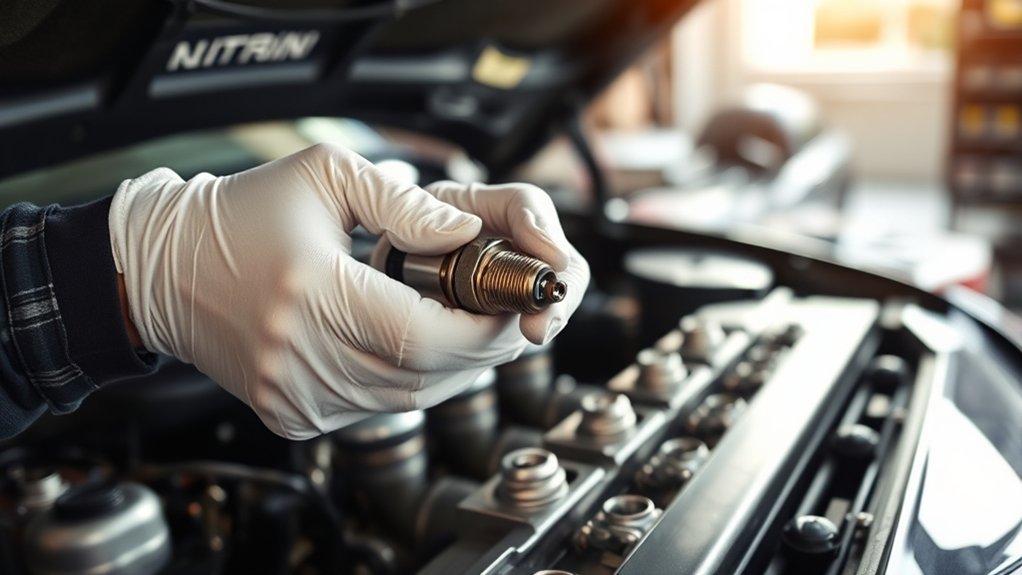
Although spark plugs are small, they play an essential role in your engine’s performance. When your spark plugs wear out, they can cause misfires, reduced fuel efficiency, and sluggish acceleration.
Regular spark plug replacement guarantees your ignition system fires properly, delivering the spark needed to ignite the air-fuel mixture in each cylinder. If you notice rough idling or difficulty starting your car, it’s a good idea to check the spark plugs first.
Neglecting this simple maintenance step can lead to more serious engine problems down the road. By replacing worn spark plugs, you’ll restore smooth engine operation and improve overall performance.
Don’t wait for symptoms to appear. Following your vehicle manufacturer’s recommended schedule for spark plug replacement keeps the ignition system running efficiently and extends your engine’s lifespan. Taking this proactive step saves you time and money by preventing costly repairs later.
Inspect and Replace Your Air Filters

How often do you check your air filters? Keeping an eye on them is vital for maintaining good air quality inside your vehicle and ensuring your engine runs efficiently. Dirty or clogged air filters reduce airflow, forcing your engine to work harder and potentially lowering fuel efficiency.
To avoid this, inspect your air filters every 12,000 to 15,000 miles or as recommended in your owner’s manual. Look for dust, dirt, or discoloration that signals it’s time for a replacement.
Remember, the filter lifespan varies depending on driving conditions. Dusty environments shorten it, while cleaner areas extend it. Replacing your air filters regularly helps protect your engine from debris and improves overall performance.
Don’t overlook this simple step during your tune-up. It’s one of the easiest ways to keep your vehicle running smoothly while enhancing the air quality you breathe inside your car.
Check Your Battery Health

One of the most common reasons cars stall or fail to start is a weak or dead battery. To avoid being stranded, regularly check your battery health. Start by inspecting for battery corrosion around the terminals, which can hinder electrical flow and cause starting problems.
A weak battery often causes starting issues—regularly check for corrosion to keep your car reliable.
If you spot any white or greenish buildup, clean it off carefully with a mixture of baking soda and water, using a brush. Next, test your battery’s voltage with a multimeter; a healthy battery should read around 12.6 volts when the car is off.
Don’t forget to assess your charging system as well. Your alternator needs to be working properly to keep the battery charged while you drive. If your battery struggles to hold a charge or your charging system isn’t functioning right, it’s time to replace the battery or have the charging system serviced.
Keeping your battery and charging system in top shape guarantees reliable starts every time.
Check and Refill Essential Fluids
You should regularly check your engine oil levels to keep your car running smoothly. And while you’re at it, don’t forget to take a look at your coolant and brake fluid too. Both of these are essential for safety and performance. Keeping these fluids topped up not only helps prevent breakdowns but also saves you from costly repairs down the road.
Engine Oil Levels
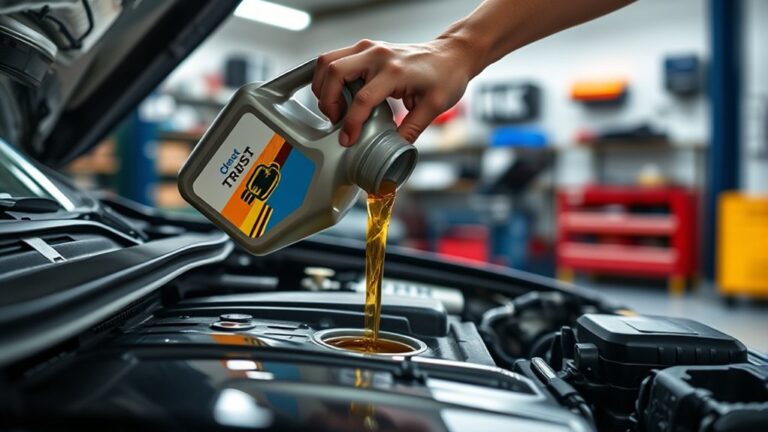
Wondering why maintaining proper engine oil levels is essential? Engine oil lubricates your engine’s moving parts, reducing friction and preventing overheating. Without the right amount, your engine can suffer serious damage.
Checking your engine oil regularly helps you spot leaks or burning oil early. To check, park your car on a level surface, turn off the engine, and wait a few minutes. Then, pull out the dipstick, wipe it clean, reinsert it fully, and pull it out again to read the level.
If it’s below the recommended mark, add the correct oil type as specified in your owner’s manual. Remember, regular oil changes are vital. They not only replenish the oil but also remove contaminants, keeping your engine running smoothly and extending its life.
Coolant And Brake Fluid
After keeping an eye on your engine oil levels, it’s just as important to monitor other essential fluids like coolant and brake fluid. Proper coolant maintenance prevents your engine from overheating and protects it against corrosion. Check the coolant reservoir regularly, ensuring the fluid stays between the minimum and maximum marks.
If it’s low, top it off with the recommended coolant type for your vehicle. Likewise, brake fluid replacement is vital for safe stopping power. Over time, brake fluid absorbs moisture, reducing its effectiveness.
Inspect the brake fluid reservoir and replace the fluid according to your manufacturer’s schedule or if it looks dark and contaminated. Staying on top of coolant maintenance and brake fluid replacement keeps your vehicle running smoothly and safely, helping you avoid costly repairs down the road.
Inspect Belts and Hoses for Wear
You should regularly check your belts and hoses for cracks, fraying, or any signs of wear. Make sure to see if the hoses still feel flexible. Take a close look to spot any leaks. Catching these problems early can save you from bigger issues later on.
Check Cracks and Fraying
Although belts and hoses might seem sturdy, they can develop cracks and fraying over time that lead to serious engine problems. You should perform regular fraying inspection and crack prevention by closely examining these components. Look for small splits or worn edges before they worsen. Early detection helps avoid costly repairs and breakdowns.
| Issue | What to Look For |
|---|---|
| Cracks | Tiny splits, surface breaks |
| Fraying | Loose threads, worn edges |
| Discoloration | Fading or uneven color |
| Hard Spots | Stiff or brittle sections |
| Soft Spots | Areas that feel mushy |
Stay proactive with your inspections to maintain engine health and extend belt and hose life.
Assess Hose Flexibility
Three key areas to focus on when evaluating hose flexibility are softness, brittleness, and cracks. During your hose inspection, gently squeeze and bend each hose to check its condition.
A hose that feels overly soft or squishy may be deteriorating internally, while one that’s brittle could snap under pressure. Pay close attention to any visible cracks or stiff spots, as these indicate wear and potential failure.
Your flexibility analysis helps you spot hoses that still perform well versus those needing replacement. Remember, hoses must maintain some pliability to handle engine vibrations and heat changes.
Look for Leaks
When inspecting belts and hoses, keep an eye out for any signs of leaks, as they often signal underlying wear or damage. Effective leak detection is crucial because even a small drip can lead to major problems if ignored.
Check for wet spots, cracks, or residue around hose connections and along belts. Pay special attention to coolant, oil, and other fluid lines, since proper fluid management depends on a tight, leak-free system.
If you spot any leaks, address them immediately to prevent overheating or engine damage. Regularly inspecting these components helps you catch leaks early, saving you time and money on costly repairs.
Clean Your Fuel System Components
Keeping your fuel system components clean is essential for maintaining your engine’s performance and fuel efficiency. Over time, dirt and debris can clog your fuel injectors and fuel filter, causing poor acceleration, rough idling, and reduced gas mileage.
Regular fuel injector cleaning helps remove buildup, ensuring your engine burns fuel efficiently. You can use fuel additives or have a professional service clean the injectors directly.
Don’t forget fuel filter replacement. It’s vital for preventing contaminants from reaching your engine. A clogged fuel filter restricts fuel flow, leading to stalling and hesitation.
Check your vehicle’s manual for recommended intervals. Typically, replacing the fuel filter every 20,000 to 40,000 miles keeps your fuel system running smoothly.
Rotate and Balance Tires
You should rotate your tires regularly to make sure they wear evenly and last longer. If you start feeling vibrations or see uneven tread wear, it might be time to get your tires balanced. Try to rotate your tires every 5,000 to 7,000 miles—that way, your ride stays smooth and safe.
Benefits of Tire Rotation
Although it might seem like a minor task, rotating and balancing your tires can considerably extend their lifespan and improve your vehicle’s handling. By regularly rotating your tires, you guarantee even tread depth across all four tires, which prevents uneven wear and helps maintain proper tire pressure.
This not only boosts traction but also improves fuel efficiency and safety. Uneven tire wear can lead to vibrations and poor handling, so rotating tires keeps your ride smooth and stable. Plus, balanced tires reduce stress on suspension components, saving you from costly repairs.
Keeping up with tire rotation is a simple step that protects your investment, improves performance, and makes sure you get the most out of every tire. Don’t overlook this essential maintenance task!
Signs Tires Need Balancing
Regularly rotating your tires helps maintain even wear, but balancing them guarantees smooth performance as well. You’ll know your tires need balancing if you feel vibrations in the steering wheel or through the seat at certain speeds.
Uneven tire pressure or inconsistent tread depth can also cause shaking or pulling to one side. If you notice rapid or uneven tread wear, it’s a strong sign your tires aren’t balanced correctly.
Ignoring these signs can lead to premature tire damage and decreased fuel efficiency. Checking tire pressure regularly and ensuring proper tread depth helps spot issues early.
Balancing your tires not only improves ride comfort but also extends their lifespan and keeps your vehicle running safely.
How Often To Rotate
How often should you rotate your tires to keep them in ideal condition? Generally, you should rotate your tires every 5,000 to 7,500 miles. This helps maintain even tire wear, improving performance and extending tire life.
Regular tire rotation also complements tire alignment checks, which ensure your wheels stay properly aligned for safe driving. When rotating tires, consider pairing this service with an oil filter change to save time and keep your vehicle in top shape.
| Mileage Interval | Recommended Action |
|---|---|
| Every 5,000 miles | Rotate tires |
| Every 10,000 miles | Check tire alignment |
| Every oil change | Replace oil filter |
Keeping up with these maintenance steps will help your vehicle run smoothly and safely.
Check Brake Pads and Rotors
Because your brake pads and rotors play an essential role in stopping your vehicle safely, you should inspect them frequently for wear and damage. Start by checking the thickness of your brake pads. If they’re worn down close to the metal backing, it’s time to replace them.
Brake pads and rotors are crucial for safety; inspect them often for wear and replace when needed.
Familiarize yourself with brake pad types—organic, semi-metallic, and ceramic—since each offers different performance and longevity. Choose the right type based on your driving habits.
Next, examine the rotors for grooves, cracks, or warping. Rotor materials vary, commonly cast iron or composites; composites often provide better heat dissipation but may cost more.
If you notice uneven rotor wear or vibration when braking, have them resurfaced or replaced. Regularly maintaining your brake pads and rotors prevents costly repairs and ensures your vehicle stops reliably.
Don’t wait for warning signs. Make brake inspections part of your routine tune-up to stay safe on the road.
Use Diagnostic Tools to Find Hidden Issues
Even if your car seems to run fine, hidden issues can lurk beneath the surface, waiting to cause bigger problems later. Using advanced diagnostic tools helps you uncover these hidden engine issues before they escalate. These tools connect to your vehicle’s onboard computer and scan for trouble codes that might not trigger warning lights yet.
By regularly using diagnostic tools, you can pinpoint problems like misfires, sensor malfunctions, or fuel system irregularities early on. This proactive approach saves you from costly repairs and guarantees your car runs smoothly. Don’t rely solely on how your car feels; trust technology to reveal what you can’t see.
Whether you visit a mechanic or invest in a handheld scanner, incorporating diagnostic checks into your tune-up routine keeps your engine healthy and dependable. Catching hidden engine issues early helps maintain performance, improves fuel efficiency, and extends your vehicle’s lifespan.
Maintain Your Cabin Air Filter for Fresh Air
Why should you care about your cabin air filter during a tune-up? Because it directly impacts your cabin air quality and overall driving comfort. The cabin air filter traps dust, pollen, and other pollutants, ensuring you breathe clean air inside your vehicle.
Your cabin air filter is key to clean air and a comfortable drive.
Over time, it gets clogged, reducing airflow and causing unpleasant odors or even HVAC system strain.
Regular air filter replacement is essential. During your tune-up, check the cabin air filter and replace it if it’s dirty or clogged.
This simple step improves ventilation, promotes better HVAC performance, and keeps allergens at bay. Ignoring it can lead to poor cabin air quality, making your drive less enjoyable and potentially affecting your health.
Frequently Asked Questions
How Often Should I Schedule a Professional Tune-Up?
You should schedule a professional tune-up every 30,000 to 50,000 miles to keep your engine performance at its best. Regular oil maintenance is essential during these tune-ups to prevent engine wear and guarantee smooth operation.
If you drive in severe conditions, like stop-and-go traffic or extreme temperatures, consider more frequent tune-ups. Staying on top of this helps you avoid costly repairs and keeps your vehicle running efficiently.
Can Weather Affect My Car’s Tune-Up Needs?
Weather definitely affects your car’s tune-up needs. It’s like your vehicle dances to the climate’s tune. Climate impact means harsher conditions, like extreme heat or cold, can wear parts faster.
You’ll want seasonal adjustments to keep things running smoothly. For example, switching oil types or checking your battery before winter hits.
Staying ahead with these tweaks helps prevent breakdowns and keeps your car humming no matter the season.
What Are Signs My Car Needs a Tune-Up?
You’ll notice your car needs a tune-up if it’s running rough, stalling, or struggling to start. Poor fuel economy or engine misfires also signal it’s time.
Pay attention to spark plug replacement intervals, as worn plugs can cause these issues. If you’re overdue for an oil change frequency recommendation, that’s another clear sign.
Staying on top of these helps your engine run smoothly and prevents costly repairs down the road.
How Does Regular Tune-Up Improve Fuel Efficiency?
Regular tune-ups improve your fuel economy by ensuring your ignition timing is precise. This helps your engine burn fuel more efficiently. When your ignition system is off, your engine wastes fuel, lowering fuel economy.
Are Tune-Ups Necessary for Electric Vehicles?
You don’t need traditional tune-ups for electric vehicles, but you do need battery maintenance and software updates. Just like you check oil in gas cars, you should monitor your EV’s battery health.
Just like you get regular software updates on your phone, your EV’s system needs updates to improve performance and fix bugs. So, while tune-ups aren’t necessary, staying on top of these tasks keeps your EV running smoothly and efficiently.
Conclusion
By following these essential tune-up tips, you’ll keep your car running smoother than a rocket on a launchpad. Don’t let small issues snowball into expensive repairs. Regular maintenance saves you time, money, and stress.
Checking spark plugs, fluids, brakes, and filters isn’t just smart; it’s the key to prolonging your vehicle’s life. Stay proactive, and your car will thank you with reliable performance every mile you drive.
Remember, these essential tune-up auto repair tips are your best defense against unexpected breakdowns and costly repairs. Keep up with them, and your vehicle will stay in top shape for years to come.