How to Diagnose and Repair Your Automotive Exhaust System
If you’ve ever noticed strange smells, odd noises, or a sudden drop in fuel efficiency from your car, you’re not alone. Many people struggle to identify issues with their automotive exhaust system, which can be tricky to diagnose without the right know-how.
Fortunately, understanding the basics can save you time, money, and frustration. How to Diagnose and Repair Your Automotive Exhaust System.
You can diagnose your automotive exhaust system by spotting unusual smells, noises, or drops in fuel efficiency. Safely inspect for leaks by checking pipes, joints, and mufflers when the engine’s cool, using visual cues and sound.
Temporary fixes like sealants or tape can help, but replacing damaged parts and consulting a professional guarantees proper repair.
Understanding these basics sets the stage to uncover more detailed inspection and maintenance tips for your exhaust system.
Key Takeaways
- Identify exhaust problems by noticing unusual smells, noises, reduced fuel efficiency, and dashboard warning lights.
- Inspect visually for rust, cracks, holes, and listen for hissing or popping sounds to detect leaks and damage.
- Use tools like OBD-II scanners, stethoscopes, and smoke machines to pinpoint exhaust issues accurately.
- Apply temporary fixes like exhaust sealant or tape for minor leaks, but replace damaged parts promptly.
- Seek professional help for complex repairs, persistent noises, or emissions test failures to ensure safety and compliance.
How To Tell If Your Exhaust System Has Problems
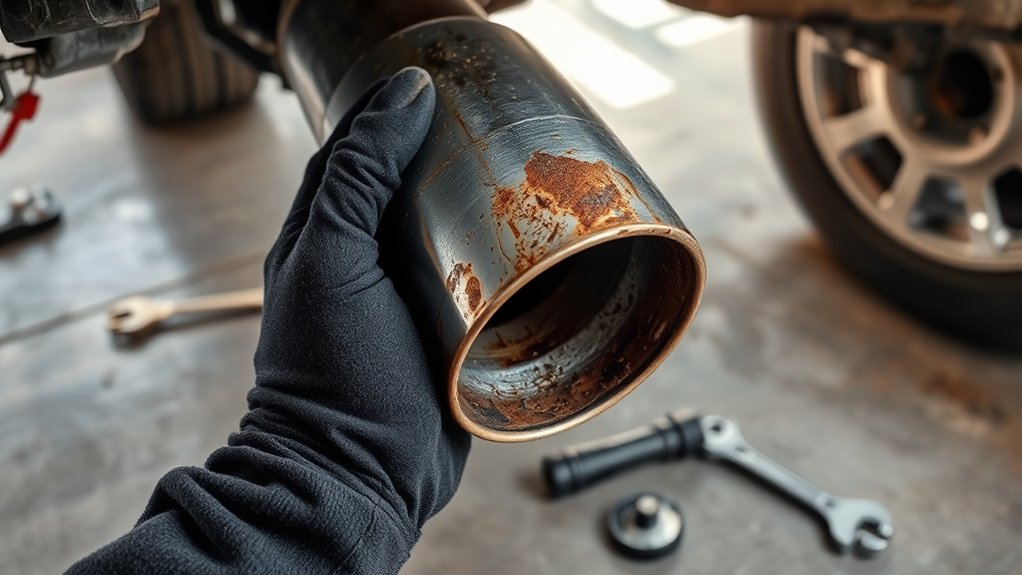
Although your exhaust system works quietly in the background, you’ll notice problems quickly if something goes wrong. One of the first signs is an increase in exhaust emissions. If you spot unusual smoke or a stronger smell from your tailpipe, that’s a clear indicator your system isn’t functioning properly.
Problems with your exhaust system often show up as unusual smoke or stronger smells from the tailpipe.
The catalytic converter plays an essential role here. It reduces harmful emissions, so if it’s clogged or damaged, you might see a rise in pollution or even fail an emissions test.
You might also experience a drop in fuel efficiency or feel your engine struggling during acceleration. These symptoms suggest the exhaust system isn’t venting gases effectively.
Keep an eye out for any dashboard warning lights related to emissions, as they often point to issues with the catalytic converter or oxygen sensors. Catching these signs early helps you avoid bigger, costlier repairs down the line.
How To Identify Causes Of Strange Exhaust Noises
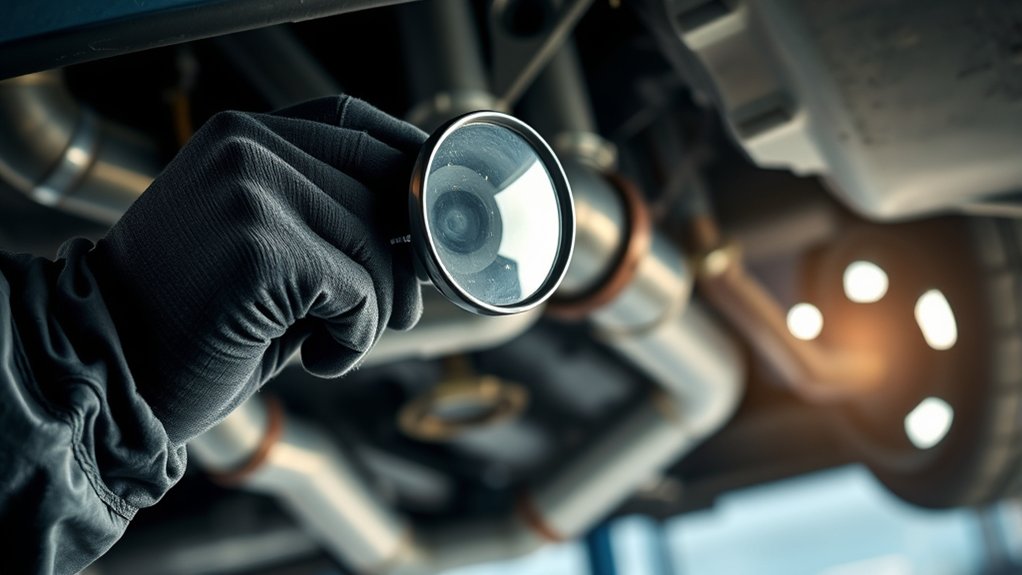
You’ll notice different types of strange exhaust noises, and each one points to specific issues like leaks, holes, or broken parts. Just pay close attention to where the sound is coming from and how it changes as you rev the engine. Doing this will help you figure out the exact cause and decide what needs fixing.
Common Exhaust Noise Types
How can you tell if your exhaust system is behaving normally or signaling a problem? Listen closely for common exhaust noise types. A loud rumbling often indicates damaged exhaust insulation, which normally muffles engine sounds while helping your system meet emission standards.
You might also hear a sharp hissing noise, usually caused by restricted airflow or minor blockages affecting performance. Ticking or popping sounds often point to combustion issues, not the exhaust itself, but they still impact overall exhaust behavior.
If you notice any unusual noises, it’s a sign your system needs attention before it affects emissions or fuel efficiency. Recognizing these sounds early helps you maintain your vehicle’s performance and stay compliant with emission standards.
Diagnosing Leaks And Holes
Unusual exhaust noises often point to leaks or holes in your system. Start by reviewing your exhaust system history. Any past damage, repairs, or modifications can hint at weak spots.
Next, visually inspect the pipes, muffler, and joints for rust, cracks, or holes. Pay close attention to areas near clamps and welds, common leak sites.
When your engine runs, listen carefully for hissing or popping sounds that indicate escaping gases. Remember, leaks not only cause noise but can affect your vehicle’s compliance with emission regulations.
Small holes might let harmful pollutants escape before proper treatment. Catching them early keeps your system efficient and legal. Use a smoke test or soapy water on suspected areas to spot leaks you can’t see.
Identifying Broken Components
When strange noises come from your exhaust, they often signal broken components that need attention. Start by inspecting the exhaust manifold, as cracks or loose bolts here can cause ticking or tapping sounds.
Next, check the catalytic converter; a rattling noise may indicate broken internal parts or blockages. You might also hear hissing from leaks or a loud rumble if the muffler’s damaged.
Use a flashlight and listen carefully while the engine runs, but be cautious of hot surfaces. If you spot visible damage or hear unusual noises near these components, it’s time to repair or replace them.
Identifying the exact source helps you fix the problem quickly and prevents further damage to your exhaust system.
How To Detect Exhaust Leaks Safely
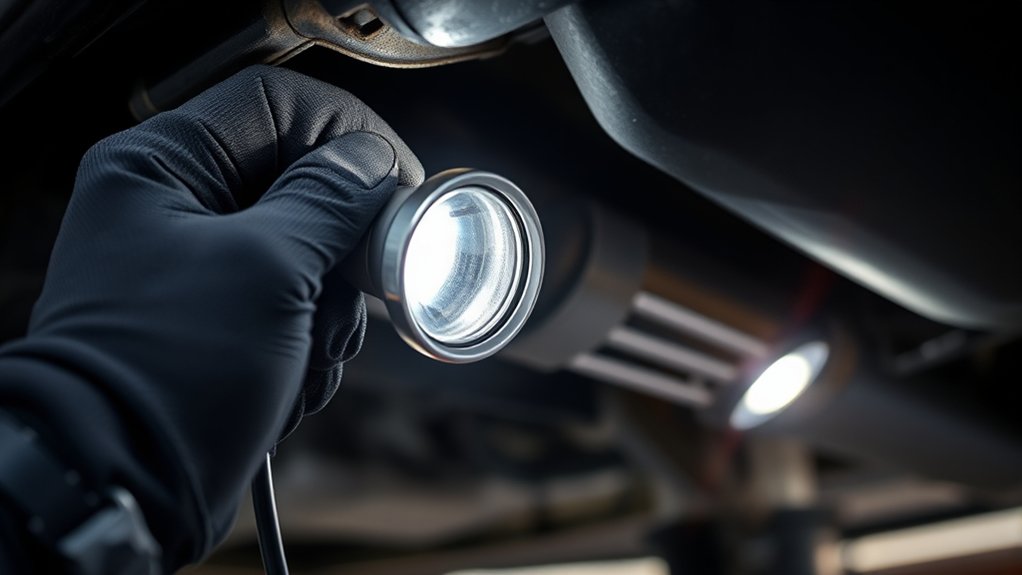
Before you start, make sure the engine is cool to avoid burns. You don’t want to rush this part because hot engine parts can seriously hurt you. Now, take a close look along the exhaust pipes. Watch out for soot marks, rust, or holes—these are common signs that there might be a leak.
Also, always work in a well-ventilated area. It’s really important to keep fresh air flowing while you check things out. And don’t forget to wear gloves to protect your hands. Staying safe is key when you’re dealing with exhaust systems.
Visual Inspection Techniques
Although exhaust leaks can sometimes be subtle, you can spot them early by carefully inspecting the system while it’s cool and the engine is off. Start by examining the exhaust fluid connections for any signs of corrosion or wetness, which might indicate leaks.
Pay close attention to the catalytic converter. Look for cracks, rust, or damage around its body and joints. Use a flashlight to check the entire exhaust pipe, hangers, and muffler for holes or soot marks that suggest escaping gases.
Avoid touching hot components, and if you see any suspicious areas, gently tap them to detect loose parts. This thorough visual inspection helps you catch leaks before they worsen, ensuring your exhaust system runs efficiently and safely.
Common Leak Indicators
Since exhaust leaks can pose safety risks and reduce your vehicle’s performance, you’ll want to recognize their common signs early. Listen for unusual noises like hissing or tapping near joints or damaged exhaust materials, which often indicate leaks.
You might also notice a strong smell of exhaust fumes inside the cabin, signaling a breach in the system. Visual signs include black soot around seams or rust spots on pipes and mufflers.
Furthermore, if your vehicle fails to meet emission standards during an inspection, it could be due to leaks allowing unfiltered gases to escape. Detecting these indicators promptly helps maintain your car’s efficiency and safety.
Keep an eye out for these signs to catch leaks before they worsen or affect your vehicle’s emissions.
Safety Precautions During Testing
Recognizing signs of exhaust leaks is a good start, but testing your system safely is just as important to avoid injury or exposure to harmful gases. Before you begin, make sure your vehicle is parked in a well-ventilated area to prevent buildup of toxic vehicle emissions.
Never test the exhaust system in a closed garage or confined space. Use gloves when handling exhaust materials, as they can get extremely hot and cause burns. Always let the engine cool down before inspecting or touching any exhaust parts.
Consider using a smoke machine or soapy water to detect leaks without direct contact. Keep a fire extinguisher nearby, since exhaust materials may ignite if exposed to sparks or flames. Following these precautions helps you detect leaks effectively while protecting your health and safety.
Why Exhaust Problems Reduce Fuel Efficiency
Why does a faulty exhaust system hurt your vehicle’s fuel efficiency? Since the early days of the exhaust system history, these components have been designed to manage engine gases efficiently. When your exhaust system malfunctions, due to leaks, clogs, or damaged sensors, it disrupts the smooth flow of exhaust gases.
This forces your engine to work harder, burning more fuel to maintain performance. Furthermore, a compromised exhaust system can send incorrect data to your engine’s computer, causing poor fuel-air mixture adjustments.
Beyond fuel costs, you should consider the environmental impact. A failing exhaust system often means higher emissions of harmful pollutants, contributing to air pollution and stricter regulatory violations.
Maintaining your exhaust system not only saves you money at the pump but also helps reduce your carbon footprint. So, keeping your exhaust in top shape is essential for both efficient driving and environmental responsibility.
How To Recognize Foul Smells From Your Exhaust
When your exhaust emits unusual or foul odors, it’s a clear sign that something is wrong. Recognizing these exhaust odors helps you catch issues early before they worsen. Pay attention to the emission smell coming from your vehicle. It can reveal problems like leaks or incomplete combustion.
You might notice:
- A strong rotten egg scent, indicating a sulfur issue or catalytic converter failure.
- A sharp, sweet smell, often linked to leaking coolant entering the combustion chamber.
- A pungent, burning oil odor, suggesting oil is leaking into the exhaust system.
- A raw fuel smell, pointing to unburned gasoline escaping through exhaust leaks.
- A musty or moldy scent, which could mean moisture buildup or corrosion inside the exhaust.
Essential Exhaust Diagnostic Tools For Home Inspection
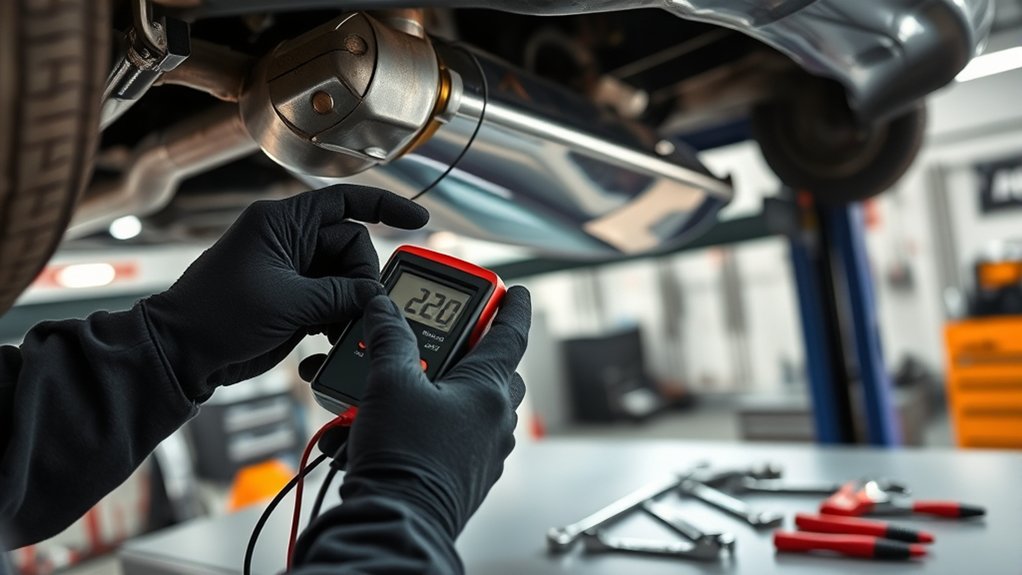
Before you start inspecting your exhaust system, you’ll need the right tools to accurately diagnose any issues. A basic OBD-II scanner is essential for reading trouble codes related to your exhaust system, especially if your vehicle’s emission standards require specific sensor data.
A mechanic’s stethoscope or a simple rubber hose helps you pinpoint leaks by listening for unusual noises along the pipes. Don’t forget a flashlight to thoroughly check hard-to-see areas, particularly if you’re reviewing the exhaust system history for previous repairs or modifications.
A pressure gauge or vacuum tester can also be useful to identify blockages or restrictions. Furthermore, a digital thermometer lets you monitor exhaust temperature, ensuring your catalytic converter operates within proper limits.
Having these tools on hand gives you a solid foundation for diagnosing issues accurately, saving time and money before deciding on repairs or replacements.
Step-By-Step Guide To Inspecting Your Exhaust System
Now that you have the right tools ready, you can start inspecting your exhaust system step-by-step. Begin by parking your vehicle on a flat surface and letting it cool. Then, follow these steps:
With your tools ready, park on a flat surface, let the vehicle cool, then begin your exhaust inspection.
Visually examine the exhaust pipes and muffler for rust, holes, or damage. Check the catalytic converters for cracks or discoloration, which can affect exhaust emissions.
Listen for unusual noises like hissing or rattling that indicate leaks or loose parts. Feel around joints and connections for air escaping, but be cautious near hot components.
Inspect hangers and mounts to ensure the exhaust system is securely in place.
Fixing Minor Exhaust Leaks Yourself
Once you’ve pinpointed where the exhaust is leaking, you can use temporary seal solutions to stop the noise and fumes. You’ll only need a few basic tools like a wrench, a wire brush, and some exhaust tape or putty.
With these, you can quickly patch small leaks before planning a more permanent fix. It’s a simple way to keep things running smoothly until you have time for a proper repair.
Identifying Leak Locations
Although exhaust leaks can be tricky to pinpoint, you can often locate them yourself with a few simple techniques. Start by examining the exhaust material closely for any visible damage or rust, especially around joints and welds. Keep emission standards in mind, as leaks can increase harmful emissions and affect your vehicle’s performance.
Here’s how to identify leak locations:
- Listen for unusual hissing or popping sounds while the engine runs
- Feel for escaping air around connections and pipes
- Look for black soot marks or carbon buildup near leak points
- Spray soapy water on suspicious areas and watch for bubbles
- Check for vibrations or changes in exhaust noise when revving the engine
These steps help you spot leaks accurately before proceeding with repairs.
Temporary Seal Solutions
How can you quickly address minor exhaust leaks before getting professional repairs? You can apply temporary seal solutions to keep your exhaust system functional and reduce noise.
Start by cleaning the leak area around the catalytic converter or pipe to remove dirt and rust. Then, use exhaust fluid or a specialized high-temperature sealant designed for exhaust systems to coat the leak. These products create a temporary barrier that withstands heat and prevents fumes from escaping.
Wrap the area with exhaust tape or a clamp to hold the sealant in place. Remember, these fixes are short-term and won’t replace proper repairs. Always schedule a professional inspection to ensure your catalytic converter and exhaust system work safely and efficiently.
Temporary solutions help you drive safely until then.
Basic Tools Needed
Before you start fixing minor exhaust leaks yourself, gathering the right tools makes the job much easier and safer. Understanding your exhaust system history helps you appreciate its design and the importance of maintaining its integrity. This directly impacts automotive aesthetics and performance.
Here’s a basic toolkit you’ll need:
- Socket wrench set for loosening and tightening bolts
- Wire brush to clean rust and debris from joints
- Exhaust sealant or patch kit for quick leak repairs
- Jack and jack stands to safely elevate your vehicle
- Safety glasses and gloves to protect yourself during the job
With these tools, you can confidently tackle minor leaks while preserving your exhaust system’s function and your vehicle’s overall look.
When To Replace Parts Of Your Exhaust System
When you notice unusual noises, decreased fuel efficiency, or visible damage, it’s time to contemplate replacing parts of your exhaust system. Pay close attention to rust, cracks, or holes, especially on components made from lower-quality exhaust material prone to corrosion.
If your vehicle struggles to meet current emission standards during inspections, worn-out parts like the catalytic converter or oxygen sensors may need replacement. Also, consider the age of your exhaust system. Metal fatigue or seal failures often cause leaks that reduce performance and increase harmful emissions.
Replacing damaged sections promptly helps maintain engine efficiency and keeps your car environmentally compliant. Always choose replacement parts that meet or exceed OEM specifications, ensuring they match your vehicle’s exhaust material and emission requirements.
When To Call A Pro For Exhaust Repairs
Wondering whether you can fix your exhaust system on your own or if it’s time to call a professional? Some exhaust issues require expert attention, especially when they involve complex components or impact automotive emissions.
Considering a DIY exhaust repair? Some problems need professional care, especially those affecting emissions or involving complex parts.
If you notice any of the following signs, it’s best to seek a pro’s help:
- Persistent loud noises that don’t improve after minor fixes
- Visible damage or corrosion on exhaust system materials beyond surface rust
- Strong exhaust smell inside the cabin indicating leaks
- Check engine light related to emissions control systems
- Failed emissions test due to exhaust system malfunctions
Professionals have the tools and knowledge to handle intricate repairs and assure your exhaust system complies with emission standards. Attempting repairs on advanced components like catalytic converters or oxygen sensors without experience can worsen problems.
When in doubt, calling a pro saves you time, protects your vehicle’s performance, and keeps your automotive emissions within legal limits.
Frequently Asked Questions
What Materials Are Commonly Used in Automotive Exhaust Systems?
You’ll find exhaust pipes usually made from aluminized steel or stainless steel because they resist corrosion well. Muffler materials often include stainless steel or sometimes fiberglass packing inside to reduce noise.
Stainless steel is popular since it lasts longer and handles heat better, while aluminized steel offers a budget-friendly option. Choosing the right materials helps your exhaust system perform efficiently and last through harsh conditions without rusting or failing prematurely.
How Does a Catalytic Converter Work in the Exhaust System?
When it comes to keeping your car’s emissions in check, the catalytic converter is the heart of the matter. It boosts catalytic efficiency by turning harmful gases into less dangerous ones through chemical reactions.
You’ll want to monitor converter lifespan since a worn-out converter can tank your car’s performance. If you keep it in tip-top shape, it’ll help your exhaust system run cleaner and smoother for miles to come.
Can a Faulty Exhaust System Affect Vehicle Emissions Testing?
Yes, a faulty exhaust system can definitely affect your vehicle’s emissions testing. Since emission regulations are strict, any leaks or malfunctions in the exhaust can cause higher pollutant levels, leading to test failure.
You’ll want to use diagnostic tools to check for issues like leaks or sensor malfunctions before testing. Catching and fixing these problems early helps guarantee your vehicle meets regulations and passes emissions tests smoothly.
What Are the Environmental Impacts of a Damaged Exhaust System?
Think of your exhaust system as your car’s lungs. When damaged, it can’t filter pollutants properly. You’ll see a drop in emission reduction, leading to more harmful gases released into the air.
This worsens air quality and contributes to smog and health issues for everyone around. By keeping your exhaust system in good shape, you actively support cleaner air and a healthier environment for your community.
How Often Should a Complete Exhaust System Be Professionally Inspected?
You should have your complete exhaust system professionally inspected at least once a year. Paying attention to unusual exhaust noise helps you spot potential issues early.
Regular inspections guarantee your vehicle stays emission compliant, which is vital for passing state regulations and protecting the environment. If you notice louder sounds or smell exhaust fumes, don’t wait. Get it checked sooner to avoid costly repairs and maintain peak performance.
Conclusion
Now that you know how to spot and fix common exhaust issues, you might think you’re ready to tackle any problem. But what if that strange noise or foul smell signals something more serious than a simple leak? Don’t ignore the signs. Your car’s performance and safety depend on it.
Sometimes, the fix is easy; other times, it’s best to call in a pro before a small issue turns into a costly nightmare. Stay alert and act fast when diagnosing and repair your automotive exhaust system.