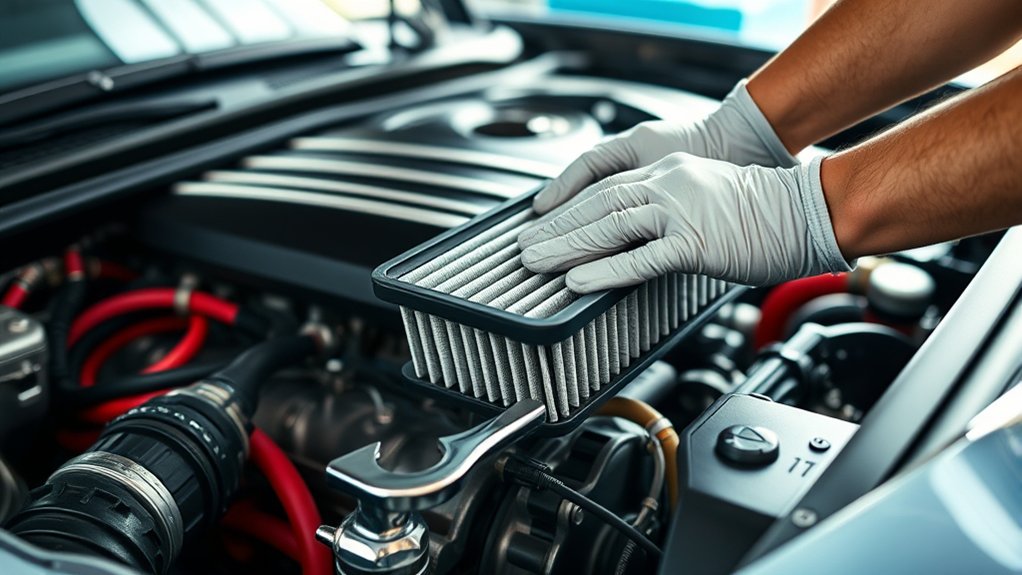
Car Engine Service in 3 Easy Steps to Keep It Running Smooth
Keeping your car engine service running smoothly can sometimes feel like a puzzle. You’re not alone if you’ve struggled with engine troubles or just want to avoid unexpected breakdowns. Many people want simple, reliable ways to maintain their engines without spending a fortune or getting overwhelmed by technical jargon.
To keep your car engine running smooth, start by checking and changing your engine oil regularly to avoid wear and improve performance.
Next, inspect and replace your air and fuel filters to guarantee proper engine breathing and prevent costly issues.
Finally, maintain your cooling system and accessory belts by monitoring coolant levels and belt condition to avoid overheating and belt failure.
Follow these simple steps, and you’ll keep your engine efficient and reliable. There’s more helpful advice ahead.
Key Takeaways
- Regularly check and change engine oil every 3,000 to 7,500 miles using the correct oil type. This helps your engine run smoothly and last longer.
- Inspect and replace engine air filters yearly and fuel filters every 20,000-30,000 miles. Keeping these clean ensures optimal airflow and fuel delivery.
- Maintain coolant levels and flush the cooling system as scheduled. This prevents overheating and protects your engine from damage.
- Examine accessory belts for wear and proper tension. Replace them promptly to keep your engine running reliably.
- Follow a consistent maintenance schedule to extend your engine’s life and avoid costly repairs down the road.
Check and Change Your Engine Oil Regularly
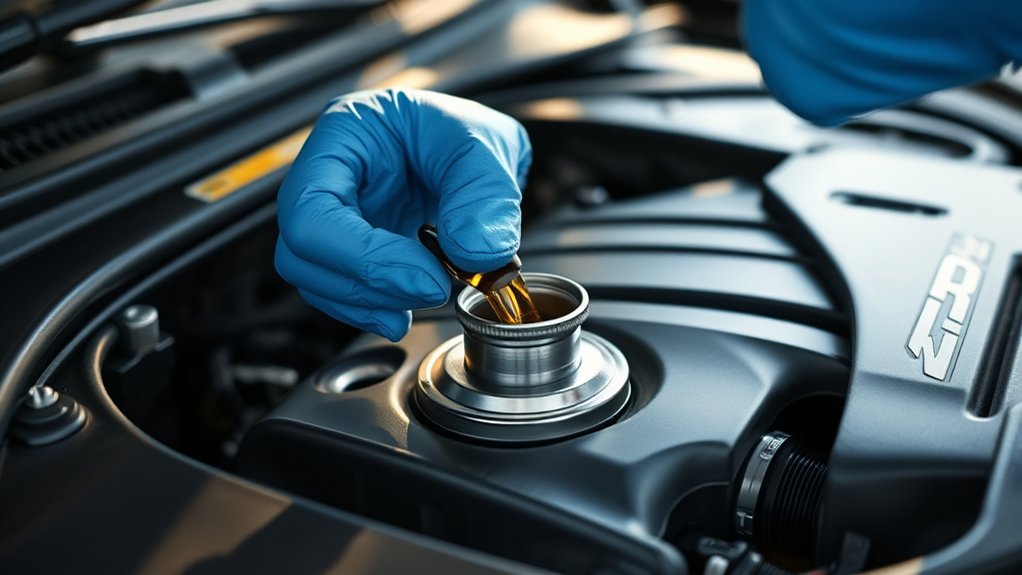
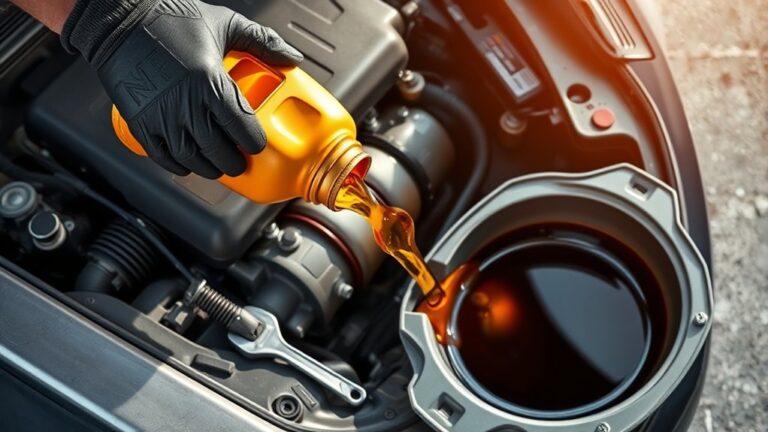
How often do you check your engine oil? Keeping an eye on your oil level and quality is essential for your car’s health. You should check it at least once a month or before long trips.
Using the right oil viscosity is important. It affects how well the oil flows and protects your engine under different temperatures. Check your owner’s manual to find the recommended viscosity for your vehicle.
Sticking to proper oil change intervals is just as important. These intervals vary depending on your car model and driving conditions but typically range from 3,000 to 7,500 miles. Regular oil changes prevent sludge buildup and guarantee your engine runs smoothly.
Don’t wait for the oil to look dirty or for the oil change light to come on. Proactive maintenance by checking and changing your engine oil regularly extends engine life and improves performance, saving you costly repairs down the road.
Inspect and Replace Engine Air and Fuel Filters
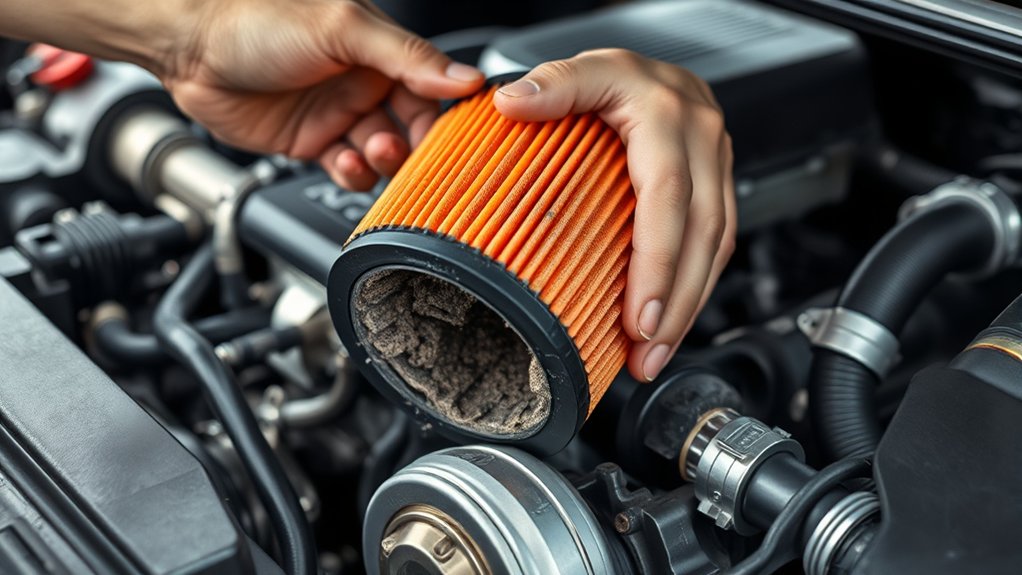
Why should you inspect and replace your engine air and fuel filters regularly? Clean filters ensure your engine breathes properly and fuel flows smoothly. This prevents reduced performance and increased fuel consumption. Neglecting air filter maintenance can lead to dirt buildup. Skipping fuel filter replacement risks clogging your fuel system.
Here’s a simple guide to keep these filters in check:
| Filter Type | Purpose | Maintenance Tip |
|---|---|---|
| Engine Air Filter | Blocks dust and debris | Replace every 12,000 miles or yearly |
| Fuel Filter | Removes contaminants in fuel | Replace every 20,000-30,000 miles |
| Both Filters | Improve engine efficiency | Inspect during oil changes |
Regularly inspecting and replacing these filters keeps your engine running smoothly. It also improves fuel efficiency and extends engine life. Don’t skip air filter maintenance or fuel filter replacement to avoid costly repairs down the road.
Maintain Your Engine Cooling System and Accessory Belts
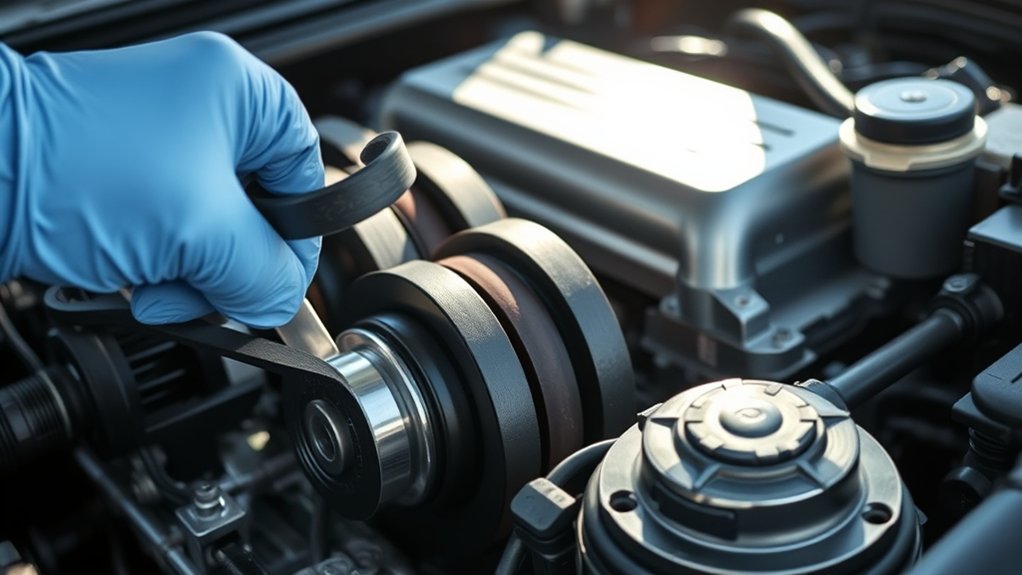
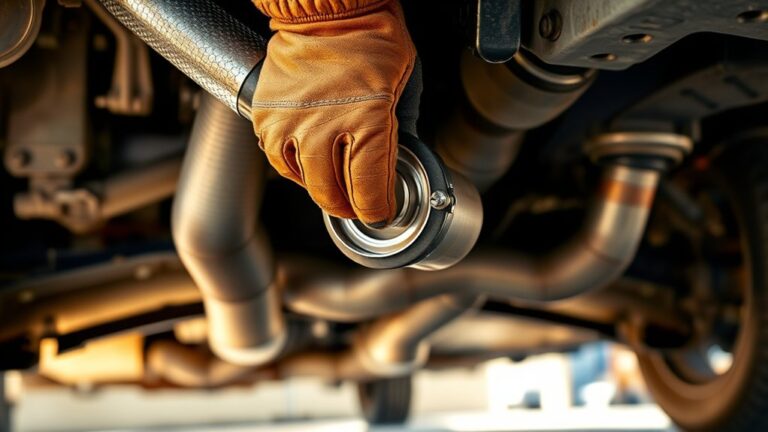
Keeping your engine filters clean helps your engine run efficiently, but maintaining your cooling system and accessory belts is just as important for overall performance. You should regularly check your coolant levels to prevent overheating and guarantee your engine stays at the right temperature.
Regularly checking coolant levels and maintaining accessory belts ensures your engine runs smoothly and stays cool.
Also, inspect the condition of your accessory belts; cracks or fraying are signs they need replacement. Proper belt tension is vital. Belts that are too loose can slip, while overly tight belts can cause premature wear.
To keep your cooling system and belts in top shape, focus on these key steps:
- Monitor coolant levels and top off with the recommended type when necessary.
- Check accessory belts for wear and adjust belt tension to the manufacturer’s specs.
- Flush and replace coolant according to your vehicle’s maintenance schedule to avoid corrosion and buildup.
Frequently Asked Questions
How Often Should Spark Plugs Be Replaced?
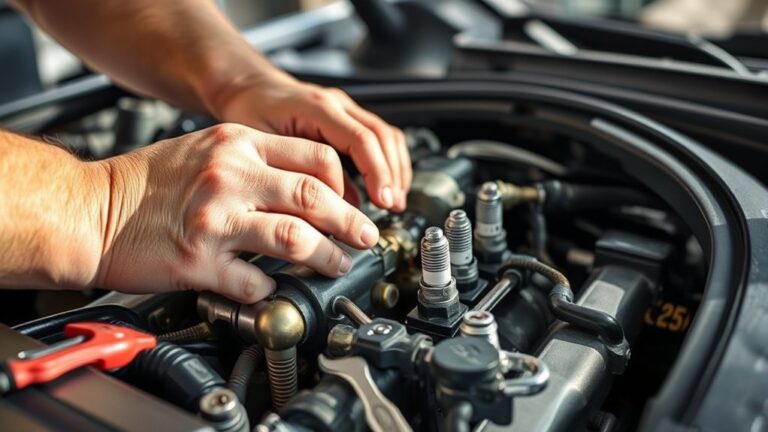
You should replace your spark plugs every 30,000 to 100,000 miles, depending on your car’s make and model. Regular spark plug maintenance helps your engine run efficiently and prevents misfires.
Check your owner’s manual for specific replacement intervals, and don’t wait until you notice performance issues. Staying on top of spark plug maintenance guarantees smooth starts and better fuel economy, saving you money and headaches down the road.
What Signs Indicate a Failing Car Battery?
You’ll notice signs of a failing car battery when your engine struggles to start or the lights dim unusually. Battery corrosion around the terminals can also signal trouble, affecting electrical flow.
If your battery seems fine but your car still has issues, an alternator failure might be the culprit, as it charges the battery while driving. Keep an eye on these signs to avoid getting stranded unexpectedly.
How Do I Know if My Timing Belt Needs Replacement?
Did you know over 80,000 miles is the common range for timing belt replacement? You’ll know your timing belt needs replacement if you hear ticking noises or notice engine misfires.
Stick to the belt replacement schedule in your car’s manual and perform regular timing belt inspections. Ignoring these signs or delays can cause serious engine damage, so don’t skip those checkups to keep your engine running smoothly.
Can Using the Wrong Type of Fuel Damage My Engine?
Yes, using the wrong type of fuel can damage your engine. It reduces fuel efficiency and may cause engine contamination, leading to poor performance and costly repairs.
Your engine’s components aren’t designed for improper fuel types, so contaminants can build up and harm essential parts. To keep your engine running smoothly and maintain peak fuel efficiency, always use the recommended fuel grade specified by your vehicle’s manufacturer.
What Are Common Causes of Engine Overheating Besides Coolant Issues?
Did you know that nearly 30% of engine overheating cases stem from cooling system failures? Besides coolant issues, you should watch for clogged radiators, broken water pumps, or faulty thermostats.
Neglecting radiator maintenance can block airflow, causing your engine to overheat. Also, check for damaged hoses or a malfunctioning cooling fan. Staying on top of these can prevent costly repairs and keep your engine running smoothly.
Conclusion
Now that you know these three simple steps, imagine the difference it could make if you start today. Will you let your engine struggle on neglected oil and filters, or will you take charge and keep it running smooth?
Don’t wait for a breakdown to force your hand. Stay ahead with regular care. Your engine’s health depends on what you do next.
Ready to give your car engine service the attention it deserves? Taking action now is the best way to keep your engine running smooth.