5 Must-Have Services at Your Local Car Brake Shop
Dealing with brake issues can be stressful, and if you’ve ever felt unsure about what your car really needs, you’re not alone. Many people struggle to keep their brakes in top shape, but knowing the essential services can save you from costly repairs and keep you safe on the road.
Let’s break down the must-have services your local car brake shop offers to help you drive with confidence.
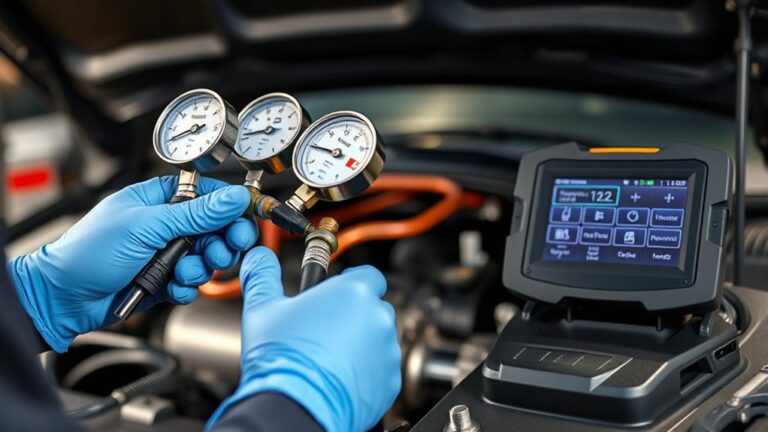
You need a complete brake system inspection first to pinpoint any issues before repairs. Watch for squealing noises or pedal softness—they’re signs your brakes need service.
Don’t wait to replace worn brake pads, as they affect stopping power and safety. Flushing brake fluid regularly keeps your system reliable and responsive.
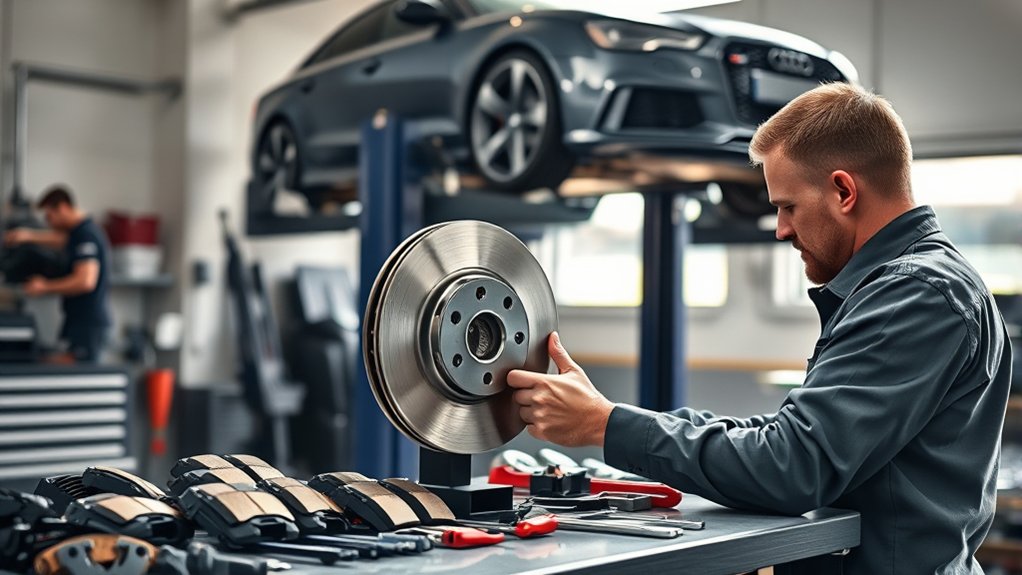
Plus, caring for your brake rotors ensures smooth, quiet stops. Keep these five services in mind to maintain your vehicle’s safety and performance—there’s plenty more to uncover about each.
Key Takeaways
- Complete brake system inspection to identify exact issues and ensure accurate diagnosis before repairs or replacements. This step helps avoid unnecessary work and keeps your brakes reliable.
- Brake pad replacement restores stopping power, reduces noise, and prevents rotor damage. It’s a key service to keep your car safe on the road.
- Brake fluid flush removes contaminants and maintains brake system reliability and responsiveness. Regular flushing keeps your brakes working smoothly.
- Brake rotor care includes inspection, resurfacing, or replacement to prevent vibrations and ensure smooth braking. Taking care of rotors means a more comfortable and safer drive.
- Early recognition and servicing of brake problems like noises, vibrations, or pedal issues enhance safety. Addressing these signs early can save you from costly repairs later.
Why a Complete Brake System Inspection Is Your First Step
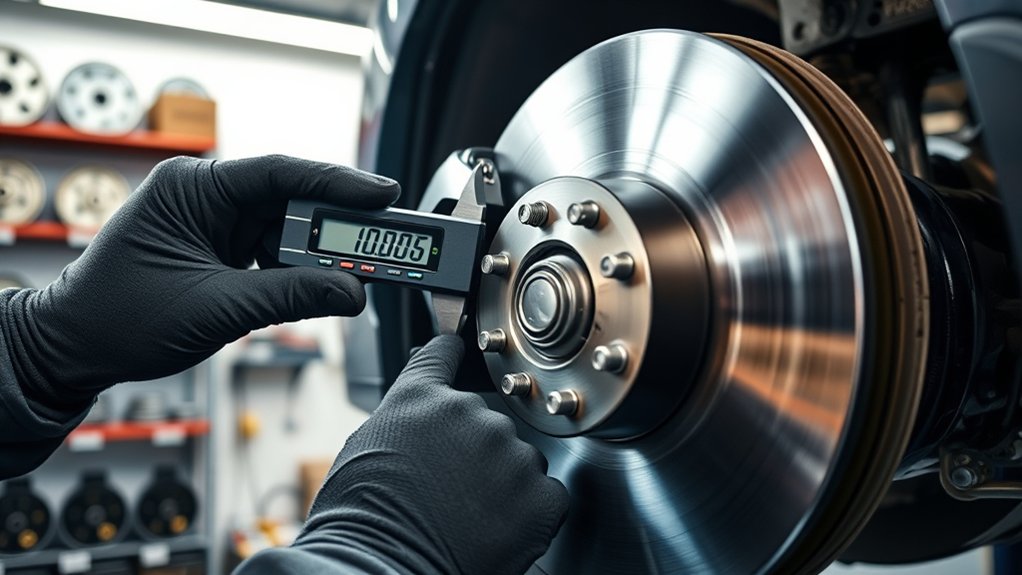
Before any brake repairs or replacements, you need a complete brake system inspection to identify the exact issues. When you hear brake noise or notice a brake warning light on your dashboard, it’s a clear sign something’s wrong. But without a thorough inspection, you won’t know whether it’s a minor problem like worn brake pads or a more serious issue affecting your safety.
During the inspection, a technician checks all components, including pads, rotors, calipers, and fluid levels, to pinpoint the cause of the brake noise or warning. This step guarantees you don’t waste money fixing the wrong part or overlook hidden problems that could worsen over time. By starting with a complete brake system inspection, you get an accurate diagnosis and a tailored repair plan. It’s the smartest way to keep your brakes in top shape and guarantee your vehicle’s safety on the road.
How to Recognize When Your Brakes Need Service
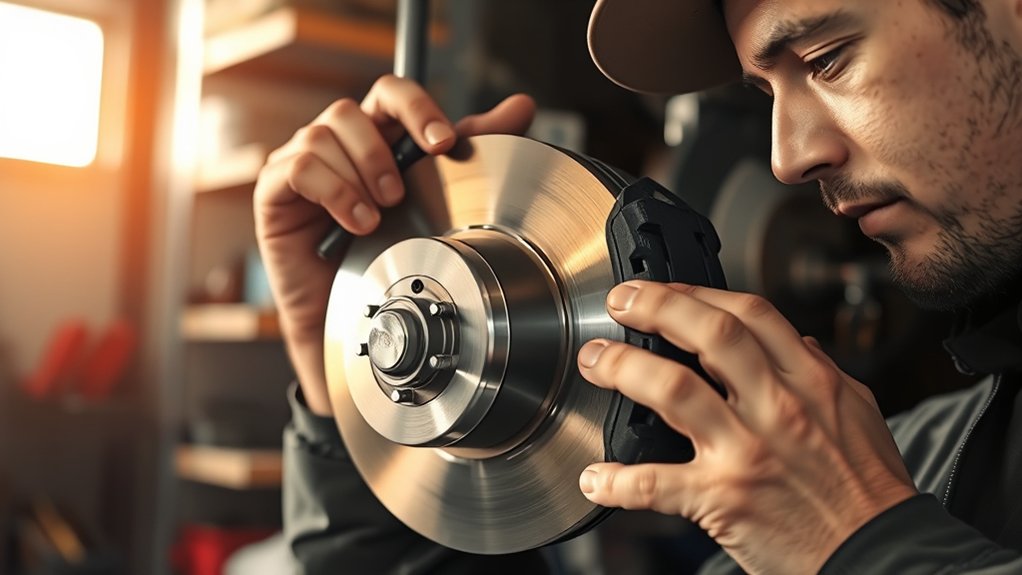
If you notice a squealing sound when you press the brake pedal or feel a vibration in the steering wheel, your brakes likely need service. Brake noise like squealing or grinding often signals worn brake pads or other issues.
Squealing brakes or steering wheel vibrations usually mean your brake pads need attention or replacement.
You might also detect a change in how the brake pedal feels. If it’s softer or sinks closer to the floor than usual, that pedal softness could indicate air in the brake lines or fluid leaks.
Another sign to watch for is a longer stopping distance or a pulling sensation to one side when braking. Don’t ignore these symptoms; they’re your car’s way of telling you that the braking system needs attention.
Regularly checking for brake noise and pedal softness helps you catch problems early, ensuring your safety on the road. When in doubt, visit your local brake shop for a professional inspection to keep your brakes in top shape.
Why Replacing Brake Pads Is Crucial for Safety
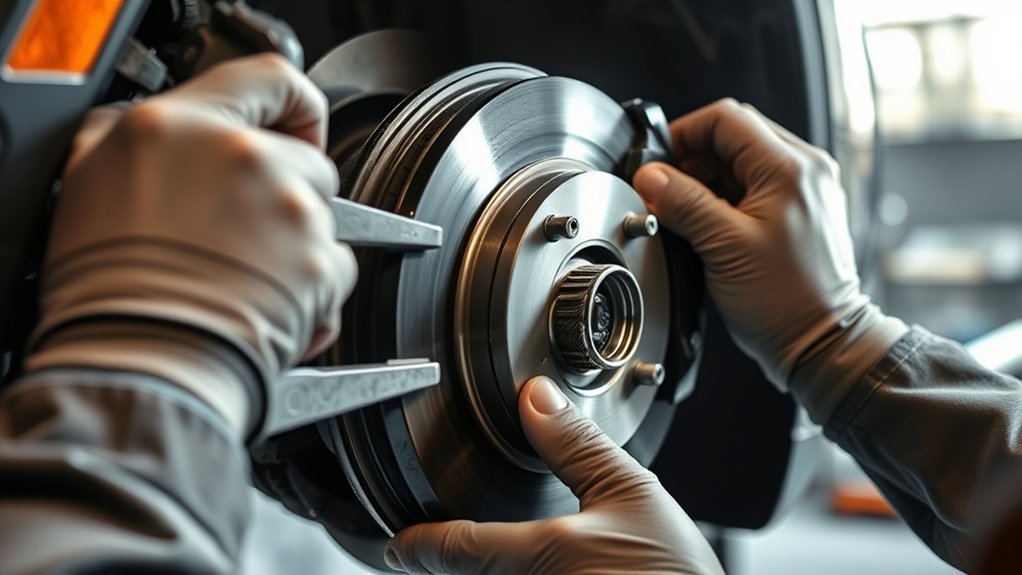
Why does replacing brake pads matter so much for your safety? Worn brake pads reduce your stopping power, which increases the risk of accidents. Brake pad materials play a key role here because they affect durability and performance.
When pads wear thin, they can cause noise and vibrations that distract you and reduce control. Replacing them guarantees noise reduction and reliable braking.
Here’s what you need to know:
| Benefit | Why It Matters |
|---|---|
| Improved stopping | Shorter stopping distances save lives |
| Noise reduction | Quieter brakes help focus on driving |
| Consistent braking | Predictable response in emergencies |
| Prolonged rotor life | Prevents costly repairs down the line |
When and Why You Should Flush Your Brake Fluid
Replacing your brake pads keeps your stopping power sharp, but maintaining your brake fluid also plays an essential role in safe braking. Over time, brake fluid absorbs moisture and accumulates contaminants like dirt and rust particles. These contaminants reduce the fluid’s effectiveness, leading to softer brakes and potential system failure. Flushing your brake fluid removes these impurities and restores peak performance.
You should flush your brake fluid every 1 to 2 years or according to your vehicle manufacturer’s recommendations. The frequency depends on the brake fluid types used: DOT 3, DOT 4, or DOT 5.1 each have different moisture absorption rates and service intervals. If you notice a spongy brake pedal or reduced braking power, it’s a clear sign your brake fluid needs attention.
A professional brake shop will drain the old fluid completely and replace it with fresh fluid matching your vehicle’s specifications, ensuring your brakes stay reliable and responsive.
How Brake Rotor Care Improves Your Driving Experience
Although brake pads get most of the attention, caring for your brake rotors is just as crucial to your vehicle’s performance. Neglecting rotor care can lead to rotor corrosion, causing uneven surfaces that increase brake noise and reduce stopping power.
By maintaining smooth, clean rotors, you’ll enjoy quieter brakes and a safer driving experience. Regular inspections and timely resurfacing or replacement prevent damage from worsening.
Here’s a quick overview of how rotor care impacts your driving:
| Benefit | Cause | Result |
|---|---|---|
| Reduced brake noise | Clean, smooth rotors | Quieter stops |
| Improved braking | No rotor corrosion | Better safety |
| Extended rotor life | Timely maintenance | Saves money on repairs |
Taking care of your rotors means fewer vibrations and smoother braking every time you hit the road. Don’t overlook rotor care; it’s essential for reliable, hassle-free driving.
Frequently Asked Questions
How Long Does a Typical Brake Service Appointment Take?
A typical brake service appointment usually takes about one to two hours. During this time, you can expect brake pad replacement and rotor resurfacing if needed.
The exact duration depends on your car’s condition and the services required. If your rotors need resurfacing, it might add some time, but it’s essential for smooth braking. Scheduling a brake service lets you get back on the road safely without a long wait.
Are Aftermarket Brake Parts as Reliable as OEM Parts?
Think of aftermarket quality like a well-made replica watch. It looks great and can keep time, but may not match the original’s precision. Aftermarket brake parts can be reliable but vary widely.
When you compare OEM parts against aftermarket quality, OEMs usually guarantee consistent performance and safety since they’re designed specifically for your car. So, while some aftermarket options are solid, you should research carefully to make certain safety isn’t compromised.
Can I Drive Immediately After Brake Fluid Is Flushed?
Yes, you can drive immediately after brake fluid is flushed, but make sure the brake fluid color looks clear and fresh, not dark or murky. Different brake fluid types, like DOT 3, DOT 4, or DOT 5.1, have specific properties, so your mechanic should use the right one for your vehicle.
Once the system is bled properly and the fluid is replaced, your brakes will perform safely, letting you drive right away without worry.
What Payment Options Do Brake Shops Usually Accept?
Brake shops usually accept various payment methods like cash, credit cards, and debit cards to make it easy for you. Many also offer financing options if you need to spread out the cost of repairs over time.
You can often pay via mobile wallets or checks too, depending on the shop. Before your service, ask about their accepted payment methods and whether they provide financing options, so you’re prepared when it’s time to pay.
Do Brake Shops Offer Warranties on Their Services?
Yes, brake shops usually offer warranty policies on their services to give you peace of mind. These service guarantees cover parts and labor, ensuring that if something goes wrong within a certain period, they’ll fix it at no extra cost.
Before you agree, make sure you understand the terms, like how long the warranty lasts and what’s included. Don’t hesitate to ask for details so you know exactly what protection you’re getting.
Conclusion
Taking care of your brakes is essential for your safety. Did you know that worn brake pads can increase stopping distance by up to 60%? Getting a complete brake system inspection helps catch issues before they become serious.
Recognizing warning signs early and replacing pads on time keeps your car stopping when it counts. Flushing brake fluid and maintaining rotors are also key to reliable braking performance.
Don’t wait until it’s too late. Make these must-have services a priority at your local car brake shop to keep your brakes in top shape.