
How to Diagnose Auto AC Repair Issues Quickly
If you’ve ever been stuck in a hot car with a malfunctioning AC, you’re not alone. Many people struggle with figuring out what’s wrong and how to fix it quickly. The good news is that diagnosing your car’s AC issues doesn’t have to be complicated or time-consuming.
To diagnose your car AC issues quickly, start by checking if the air feels warm or airflow is weak. Look for strange odors or uneven cooling, then inspect for oily residue or hissing sounds that signal refrigerant leaks. How to Diagnose Auto AC Repair Issues Quickly
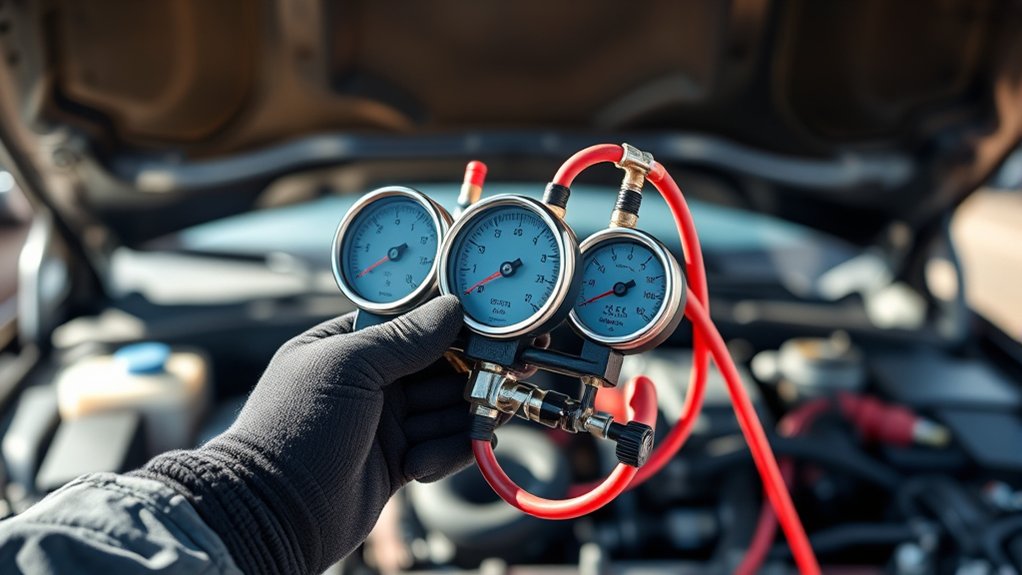
Use a pressure gauge to verify refrigerant levels, and test electrical components like fuses, relays, and the blower motor for faults. Cleaning the condenser can help too.
If you follow these steps, you’ll soon uncover the root cause and how to fix it effectively.
Key Takeaways
- Check for warm or uneven airflow and strange odors to identify common AC malfunction signs. These clues often point to underlying issues that need your attention.
- Inspect refrigerant levels using a pressure gauge. Also, look for oily residue or hissing sounds, as these usually indicate leaks.
- Test electrical components by checking fuses, relays, wiring, and blower motor functionality with a multimeter. This helps pinpoint electrical faults quickly.
- Visually clean the condenser and remove debris to ensure proper airflow. Keeping it clear prevents overheating and keeps your AC running smoothly.
- Listen for unusual compressor noises and verify clutch engagement. These checks help assess the mechanical health of your system fast.
7 Signs Your Car AC Isn’t Cooling Properly

If your car’s AC isn’t cooling properly, you’ll quickly notice the difference on hot days. One common sign is the air feeling warm or only slightly cooler than outside. You might also detect a strange cabin odor, which often points to a dirty or clogged air filter.
When the air filter is blocked, airflow decreases, making it harder for your AC to cool the cabin effectively. Another sign is weak airflow coming from the vents, even when the fan is on high. You could also experience uneven cooling, where some vents blow cold air while others don’t.
If your AC cycles on and off rapidly, it’s a warning signal that something’s wrong. Lastly, watch for moisture or condensation inside the car, which can indicate system issues. Recognizing these signs early helps you address problems before they worsen, keeping your drives comfortable.
Common Causes of Car AC Failure

You’ll want to watch for refrigerant leaks because they often cause your AC to lose its cooling power. It’s a good idea to keep an eye out for compressor issues too, like strange noises or if it fails to engage. Also, electrical system problems can disrupt the entire AC operation, so checking the wiring and fuses is key.
Refrigerant Leaks Detection
Because refrigerant is essential for your car’s AC system to function properly, detecting leaks quickly is necessary to avoid further damage. When you notice a drop in cooling efficiency or your AC isn’t blowing cold air, a refrigerant leak could be the culprit.
Start by visually inspecting hoses, connections, and the condenser for oily residue, which often indicates a leak. You can also use a UV dye and a blacklight to spot leaks more accurately.
If you’re experiencing low refrigerant levels, a refrigerant recharge might temporarily restore cooling, but it’s important to fix the leak itself. Ignoring leaks not only reduces your AC’s performance but can also harm the compressor and other components, leading to more expensive repairs down the line.
Compressor Malfunction Symptoms
One of the most common reasons your car’s AC might fail is a malfunctioning compressor. When the compressor struggles, you’ll notice the cabin temperature doesn’t drop as expected, even if your auto AC filters are clean.
The compressor’s job is to circulate refrigerant, so if it’s faulty, cooling efficiency drops drastically. You might also hear unusual noises like grinding or squealing, signaling internal damage.
Another sign is the AC clutch not engaging, which stops the compressor from running altogether. If you ignore these symptoms, your AC system can suffer more damage.
Regularly check your auto AC filters and watch for inconsistent cabin temperature to catch compressor issues early and avoid costly repairs.
Electrical System Issues
Although your car’s AC compressor might be in perfect condition, electrical system issues can still cause the entire system to fail. You need to check the electrical components carefully because they play a vital role in your AC’s operation.
Here are three common electrical problems you should look for:
- Battery corrosion. Corroded battery terminals can disrupt power flow, leading to AC failure. Clean the terminals regularly to guarantee a solid connection.
- Wiring harness damage. Frayed or broken wires in the harness can interrupt signals to the AC system, causing it to malfunction.
- Blown fuses or faulty relays. These protect the AC circuit but can fail, stopping the compressor or fans from running.
Addressing these issues quickly helps keep your AC running smoothly.
How to Spot Leaks in Your Car’s AC System

If your car’s AC isn’t cooling properly, you’ll want to check for leaks as soon as possible. Leaks reduce the efficiency of your AC system and can cause environmental harm if old refrigerants escape. Modern systems use eco friendly refrigerants, which are better for the planet but still require careful handling.
Even vintage air conditioning systems can develop leaks over time, so don’t overlook older vehicles.
To spot leaks, inspect key areas for oily residue or listen for hissing sounds. Using a UV dye or electronic leak detector can help pinpoint hard-to-see leaks quickly.
| Common Leak Signs | Where to Inspect |
|---|---|
| Oily residue on components | Hoses, connections, compressor |
| Hissing or bubbling sound | Around fittings and valves |
| Reduced cooling efficiency | Entire AC system |
Catch leaks early to save money and keep your AC running smoothly.
How to Check Your Car’s AC Refrigerant Level
After checking for leaks, the next step is to verify your car’s AC refrigerant level. Low refrigerant can reduce cooling efficiency or stop the AC from working altogether. Here’s how you can check it quickly:
- Locate the Low-Pressure Port: Find the AC system’s low-pressure service port, usually near the compressor or along the larger diameter aluminum tubing. Make sure you know the correct refrigerant type for your vehicle, often listed on a sticker under the hood.
- Attach a Pressure Gauge: Connect an AC pressure gauge to the low-pressure port. Start your engine and turn on the AC to its highest setting. The gauge reading should fall within the manufacturer’s recommended range.
- Interpret Readings & Follow Recharging Procedures: If the pressure is low, you’ll need to recharge the system with the correct refrigerant type. Follow proper recharging procedures to avoid overfilling or damaging the system.
Regularly checking refrigerant levels helps keep your AC running smoothly.
How to Diagnose a Faulty AC Compressor
When your car’s AC isn’t cooling properly, a faulty compressor is often the culprit you should check first. The auto compressor is essential for circulating refrigerant through the system. So if it’s failing, your AC won’t perform well.
Start your system diagnosis by listening for unusual noises like grinding or squealing when the AC is on. Next, check if the compressor clutch is engaging. If it’s not, the compressor won’t work.
| Symptom | Possible Cause |
|---|---|
| No cold air | Compressor failure |
| Loud noises | Worn compressor bearings |
| Compressor clutch off | Electrical issue |
| Refrigerant leaks | Damaged seals |
| Overheating compressor | Internal damage |
How to Test Your Car AC Blower Motor
First, you’ll want to locate the blower motor. It’s usually found under the dashboard on the passenger side, so that’s a good place to start. Once you’ve found it, go ahead and check all the electrical connections. Make sure they’re secure and free of any corrosion—that can really affect how well the motor works.
After that, it’s time to test the motor itself. You can do this by turning on your AC and listening carefully to see if it’s running smoothly and consistently. If you want to be more precise, grab a multimeter and use it to check the motor’s functionality. This way, you’ll know for sure if everything’s working as it should.
Locate The Blower Motor
Where exactly is the blower motor located in your car’s AC system? You’ll typically find it under the dashboard on the passenger side or beneath the glove compartment. Knowing its location helps you test the blower motor and understand issues with fan speed.
To locate the blower motor:
- Remove the glove box or lower dashboard panel for easy access.
- Look for a round, cylindrical component with electrical wiring attached.
- Identify the fan blades connected to the motor, which push air through the vents.
Once found, you can proceed to test the blower motor’s operation and fan speed settings. Locating it first saves time diagnosing problems and ensures you’re addressing the right component for your AC repair.
Check Electrical Connections
After locating the blower motor, the next step is to check its electrical connections to guarantee power is reaching the unit. Start by inspecting the wiring harness for any loose, corroded, or damaged connectors.
Use a multimeter to test voltage at the motor’s terminals. If you don’t get a proper reading, the issue could be with the fuse, relay, or wiring. Many modern vehicles support remote diagnostics, allowing you to scan the AC system for electrical faults quickly.
While checking connections, keep in mind that using eco-friendly refrigerants reduces environmental impact and often pairs with newer, more efficient electrical components. Ensuring solid electrical contact helps maintain your blower motor’s performance and prevents unexpected breakdowns, making your auto AC system more reliable and environmentally conscious.
Test Motor Functionality
Although you’ve checked the electrical connections, the next step is to test the blower motor itself to guarantee it’s functioning properly. Motor testing is essential for an accurate functionality assessment of your car’s AC system. Here’s how you can do it:
- Access the blower motor: Locate it under the dashboard or near the passenger side footwell.
- Apply direct power: Using jumper wires, connect the motor to a 12V power source to see if it runs.
- Listen and observe: Check for smooth operation without strange noises or irregular speed.
If the motor doesn’t run or sounds unusual, it likely needs repair or replacement. This motor testing ensures you identify blower motor issues quickly, saving you time and money on unnecessary part replacements.
Checking Your Car AC Condenser for Blockages
Since your car’s AC condenser plays a crucial role in cooling, you need to inspect it regularly for blockages that can reduce airflow and efficiency. Start by opening your hood and visually examining the condenser, located in front of the radiator.
Look for leaves, dirt, bugs, or debris stuck between the condenser fins. These blockages can trap heat and lower your AC’s performance. For effective condenser maintenance, gently clean the fins using compressed air or a soft brush to avoid damaging them.
If you notice stubborn debris, you may need to rinse it carefully with water, but make sure the engine is off and cool first. Regular blockage removal not only improves cooling but also extends the condenser’s lifespan.
Ignoring this step can lead to overheating and costly repairs. Make condenser inspection part of your routine car care to keep your AC running smoothly and efficiently.
How Electrical Problems Can Kill Your Car’s AC
Cleaning your AC condenser won’t fix every issue your system faces. Electrical problems can silently kill your car’s AC, ruining your interior comfort and messing with climate control.
If your AC isn’t blowing cold air, check these common electrical culprits:
- Blown fuses or faulty relays. These protect your AC circuits. A blown fuse or relay can stop the compressor or fan from working.
- Bad wiring or loose connections. Damaged wires or loose plugs disrupt power flow and cause intermittent AC failures.
- Faulty pressure switches or sensors. They regulate when the compressor engages. If they malfunction, the system won’t cycle properly.
When electrical components fail, your climate control system can’t operate efficiently, leaving you with a hot, uncomfortable interior. You’ll want to inspect these parts or have a professional diagnose the problem quickly to restore your car’s AC performance.
When to Use a Pressure Gauge for AC Diagnosis
You’ll want to use a pressure gauge when you suspect there might be issues with refrigerant levels or leaks in the system. It’s really helpful to know the right time to check the pressure because it can help you pinpoint problems much faster.
For example, common pressure readings can show whether your AC is low on refrigerant, overcharged, or dealing with other faults. So, keeping an eye on those numbers can save you a lot of guesswork and time.
Identifying Pressure Gauge Benefits
When should you reach for a pressure gauge during an AC diagnosis? You want to rely on it when you need precise insights into your system’s pressure levels. Ensuring pressure accuracy is key. A properly calibrated gauge helps you spot issues early and avoid costly repairs.
Here are three benefits of using a pressure gauge:
- Accurate System Assessment It reveals the exact pressures, helping you evaluate system health accurately.
- Leak Detection By monitoring pressure drops, you can identify leaks quickly.
- Performance Verification After repairs, you verify that the system operates within optimal pressure ranges thanks to proper gauge calibration.
Using a pressure gauge effectively enhances your diagnostic process and boosts repair success.
Optimal Timing For Usage
Although pressure gauges are invaluable tools, knowing the right moment to use them can save you time and effort. The best timing for using a pressure gauge is during seasonal adjustment, especially when switching between hot and cold months. This is when your auto AC system experiences different loads, making it easier to spot irregular pressure readings.
You’ll want to check pressures before you start repairs or if you notice decreased cooling efficiency. Avoid using the gauge immediately after turning off the AC, as pressures can fluctuate and give misleading results. Instead, measure when the system is running steadily.
Common Pressure Reading Indicators
Knowing the right time to check your AC system’s pressure sets the stage for accurate diagnosis. Using pressure sensors and diagnostic tools effectively helps pinpoint issues quickly. You should use a pressure gauge when:
- The AC blows warm air. This often signals low refrigerant or a leak.
- The compressor cycles on and off frequently, indicating possible pressure irregularities.
- You notice unusual noises or smells. These can hint at system strain or contamination.
When to Get Professional Auto AC Repair
If your car’s AC isn’t cooling like it used to or you notice strange noises or odors, it’s time to call a professional. While some minor issues can be handled at home, problems like low refrigerant levels, compressor failures, or leaks need expert attention.
Regular auto AC maintenance can prevent many costly repairs, but if symptoms persist after a refrigerant refill, don’t hesitate to seek help. Professionals have the tools to diagnose pressure reading irregularities accurately and find hidden issues.
Trying complex repairs without proper knowledge can make things worse or damage the system. Also, if you detect a burning smell, excessive moisture, or the AC cycles on and off frequently, these are clear signs you need expert service.
Timely professional intervention keeps your AC system efficient and extends its lifespan, so you stay comfortable during every drive.
Frequently Asked Questions
How Often Should I Service My Car’s AC System?
You should service your car’s AC system at least once a year to keep it running efficiently. Check and replace the air filter regularly because a clogged one can reduce airflow and strain the ventilation system.
If you notice weak cooling or strange odors, get it inspected sooner. Regular maintenance helps prevent costly repairs and guarantees your AC blows fresh, cool air every time you drive.
Can Using the AC Damage My Car’s Engine?
Using your AC won’t directly damage your car’s engine, but it can contribute to engine overheating if your cooling system isn’t in good shape.
If the AC system has refrigerant leaks, your AC struggles, making the engine work harder and potentially raising engine temperature.
Regular maintenance helps prevent these issues, so keep an eye on refrigerant levels and cooling components to avoid any engine overheating caused indirectly by your AC.
What Type of Refrigerant Is Best for My Car?
The best refrigerant type for your car depends on its make and model, so always check your owner’s manual. Compatibility considerations are essential because using the wrong refrigerant can damage your AC system.
Most modern cars use R-134a or the newer R-1234yf, which is more environmentally friendly. If your vehicle is older, it might require R-12.
Don’t guess. Stick to the recommended refrigerant types to keep your AC running smoothly.
How Does Climate Affect AC Performance in Cars?
Think of your car’s AC as a garden that thrives or wilts depending on the weather. Climate patterns act like sunlight or drought, directly impacting how well your AC cools.
Temperature fluctuations force your system to work harder, sometimes causing wear or inefficiency. When heat spikes, your AC struggles to keep up, while colder climates might reduce its effectiveness.
Understanding these shifts helps you maintain comfort and spot issues early.
Are There Any DIY Fixes for Minor AC Issues?
Yes, you can try some DIY troubleshooting for minor AC issues. First, check the refrigerant level and recharge it if low. Clean or replace the cabin air filter to improve airflow.
Inspect the AC compressor belt for wear and tighten it if needed. Also, clear debris from the condenser. These minor repair tips often solve common problems and save you a trip to the mechanic.
Just be cautious and follow safety guidelines.
Conclusion
Don’t let a failing car AC turn your drives into a desert trek. By spotting signs early and checking key components like refrigerant levels and compressors, you can nip problems in the bud before they blow up.
Think of your AC system as a delicate ecosystem. When one part falters, the whole cool breeze disappears. Keep it humming smoothly, and you’ll enjoy every ride like an invigorating oasis on a scorching day.
Remember, quick diagnosis is key to effective auto AC repair issues. Catching problems early helps maintain comfort and saves you time and money in the long run.