How to Diagnose and Auto Exhaust Systems Repair
If you’ve ever dealt with a noisy or smelly car exhaust, you know how frustrating it can be. Many people struggle to figure out what’s wrong with their auto exhaust system and how to fix it without spending a fortune. You’re not alone—getting to the root of exhaust problems is a common challenge for car owners everywhere.
You can diagnose your auto exhaust systems repair by listening for unusual noises, checking for strange smells, and visually inspecting for cracks, rust, or holes. Use soapy water to find leaks and watch for blocked or collapsed pipes causing engine sluggishness.
Always work on a cool vehicle in a ventilated area and use proper tools to remove or install parts carefully. After repairs, test for leaks and emissions to guarantee everything’s sealed right.
Keep going to uncover detailed repair steps and maintenance tips.
Key Takeaways
- Identify exhaust issues by detecting unusual noises, smells, reduced performance, and visual signs like rust or cracks.
- Conduct safe inspections using flashlights, soapy water, and auditory checks for leaks or blockages.
- Prevent rust with regular cleaning, rust inhibitors, and protective coatings on joints, welds, and mounts.
- Remove and replace exhaust parts carefully using proper tools, supporting components, and ensuring correct alignment and sealing.
- Test repaired systems by checking for leaks, abnormal sounds, and verifying emissions compliance with a gas analyzer.
How to Spot Common Exhaust System Problems
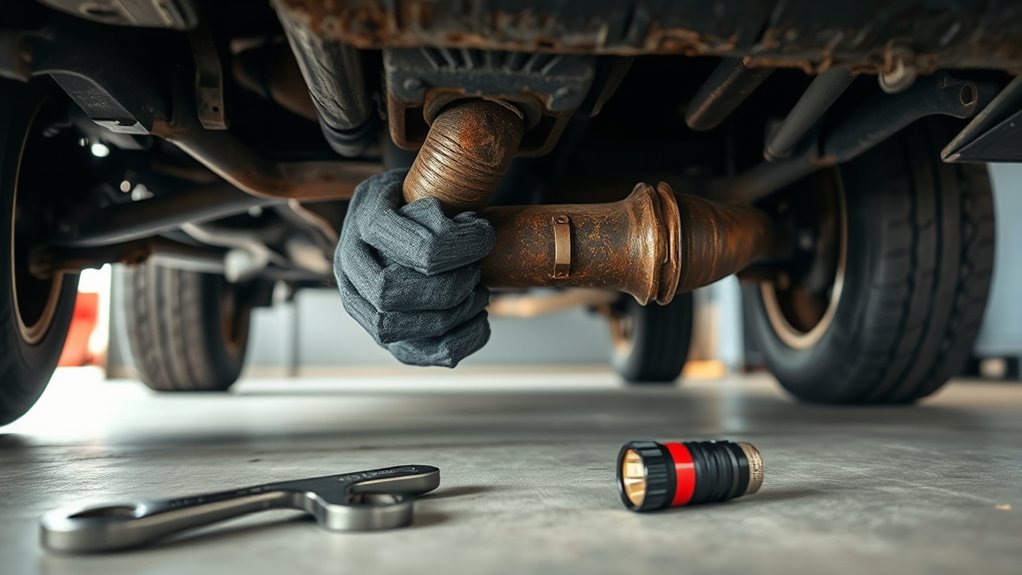
Although exhaust system issues can sometimes be subtle, you can usually spot common problems by paying attention to unusual noises, smells, or performance changes in your vehicle. If you hear louder-than-normal engine sounds, it’s often a sign your exhaust system’s noise reduction isn’t working properly.
A damaged muffler or a cracked pipe can let exhaust gases escape, increasing noise and reducing efficiency. You might also notice strange smells, especially the sharp odor of exhaust emissions inside or near your car, which signals leaks that need immediate attention.
Reduced engine performance or lower fuel efficiency can also point to blockages or malfunctions in your exhaust system. Keeping an eye on these symptoms helps you catch problems early, ensuring your vehicle runs cleanly and quietly.
Addressing these signs promptly not only protects your engine but also reduces harmful emissions, keeping you safer on the road.
How to Check for Exhaust Leaks Safely
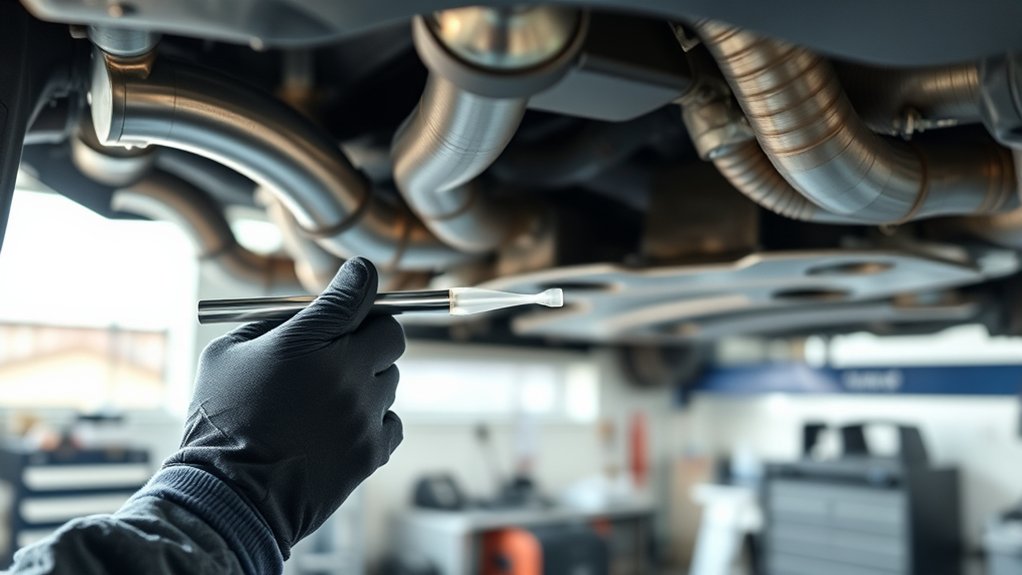
Noticing signs like unusual noises or smells often means your exhaust system has a leak that needs checking. To check safely, first verify the engine is cool to avoid burns. Next, work in a well-ventilated area, preferably outdoors, to prevent inhaling harmful exhaust fumes. Avoid running the engine in a closed garage.
Use a flashlight and visually inspect joints, welds, and pipes for cracks or holes. You can also listen closely for hissing sounds while the engine runs at idle. To pinpoint smaller leaks, carefully apply soapy water to suspect areas; bubbles indicate escaping gases.
Identifying Rust and Corrosion in Exhaust Components
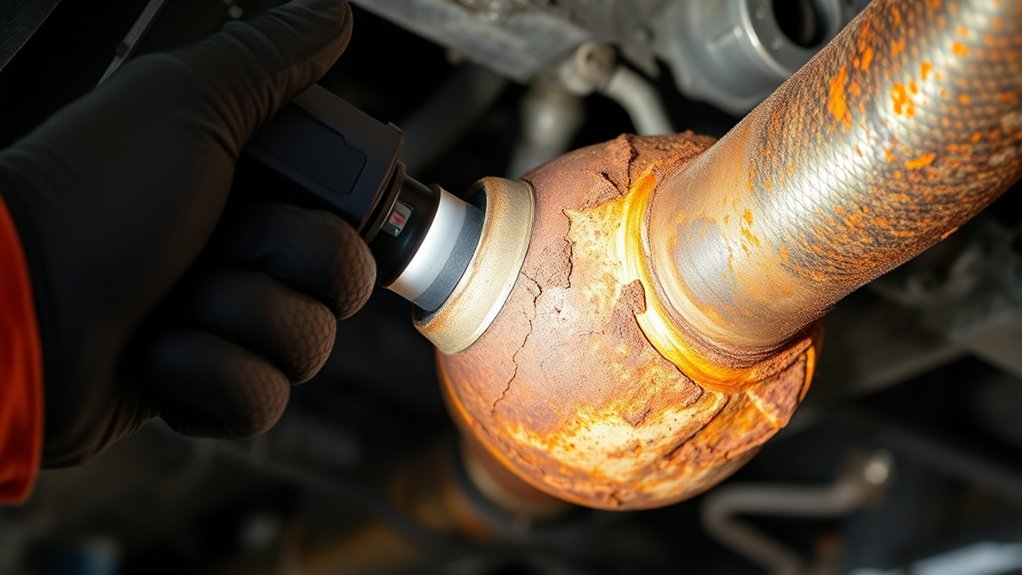
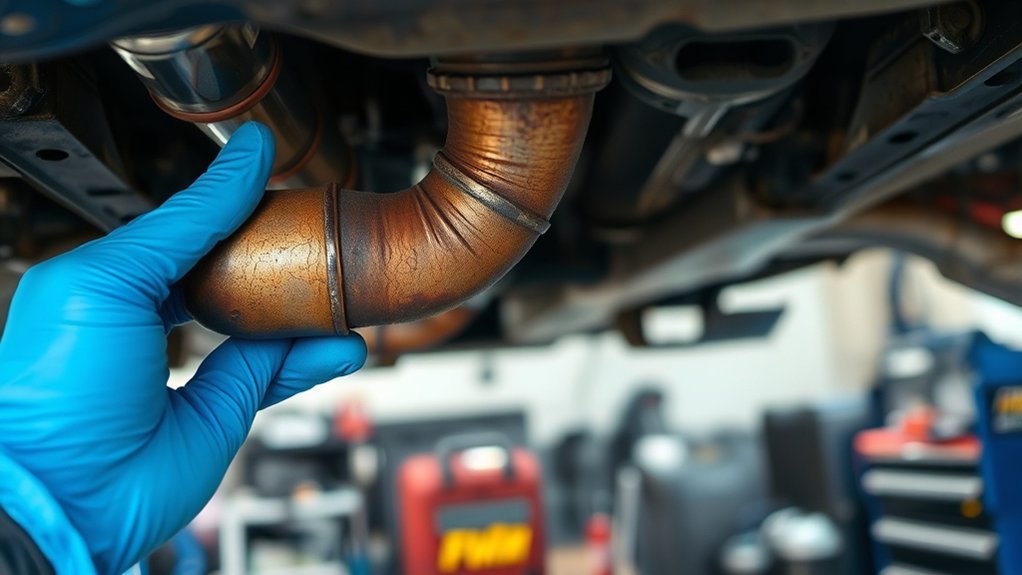
You’ll often notice rust starting to form on parts like the pipes, muffler, and joints of your exhaust system. Keep an eye out for flaking metal, holes, or a rough texture—these are clear signs that corrosion is setting in. If you catch these early, you can apply protective coatings to help stop the rust from spreading further. It’s all about staying ahead before the damage gets worse.
Common Rust Locations
When inspecting your vehicle’s exhaust system, pay close attention to areas where moisture and road debris tend to collect. These spots often develop rust first. Rust in these locations can lead to increased exhaust noise and may cause your vehicle to fall short of emission standards.
Common rust locations include:
- Joints and welds where metal pieces connect
- The muffler, which faces constant heat and moisture
- Around the catalytic converter due to exposure to exhaust gases
- Hangers and brackets that support the exhaust system
Signs of Corrosion Damage
Although corrosion often starts subtly, recognizing its signs early can prevent costly repairs and safety issues. You might notice increased exhaust noise, which often indicates holes or thinning metal caused by rust.
Inspect the exhaust system closely for flaky rust, discoloration, or visible holes around joints and pipes. Corrosion can lead to exhaust leaks, affecting your vehicle’s performance and potentially causing it to fail emission testing.
Pay special attention to areas near mounting points and bends, as these spots corrode faster. If you spot bubbling paint or feel a rough surface texture, those are also red flags.
Catching these signs early lets you address the damage before it worsens, ensuring your exhaust system remains safe, efficient, and compliant with emissions standards.
Preventing Exhaust Rust
How can you keep your exhaust system free from rust before it becomes a problem? Start by acting proactively to prevent corrosion. You can extend your exhaust’s life by applying protective coatings and routine maintenance.
Here’s what you should do:
- Clean the exhaust regularly to remove dirt and moisture.
- Apply rust inhibitors designed for metal surfaces.
- Use high-temperature exhaust paint to add a protective layer.
- Inspect exhaust components frequently for early signs of rust or damage.
Detecting and Clearing Exhaust Blockages
Why does your car feel sluggish or produce unusual noises? These symptoms often point to exhaust blockages. When your exhaust system clogs due to carbon buildup or damaged components, exhaust fluid can’t flow properly, affecting engine performance and emissions.
During emissions testing, a blocked exhaust increases harmful output, causing your vehicle to fail.
To detect blockages, start by listening for unusual hissing or rattling sounds from the exhaust. Visual inspection can reveal dents or collapsed pipes. You can also check for excessive heat near the blockage or a drop in fuel efficiency.
Clearing blockages usually involves removing the affected section and cleaning or replacing it. Avoid using harsh chemicals on parts sensitive to exhaust fluid components.
Essential Tools for Exhaust System Diagnosis and Repair
Before you plunge into fixing your exhaust system, you’ll need the right tools to diagnose and repair issues accurately. Understanding exhaust system materials like stainless steel or aluminized steel helps you choose compatible replacement parts and tools. Accurate diagnosis also requires familiarity with emission testing procedures, ensuring your vehicle meets regulatory standards.
Equip yourself with these essentials:
- OBD-II Scanner: Quickly reads trouble codes related to exhaust components.
- Mechanic’s Stethoscope: Pinpoints leaks or blockages by amplifying sounds.
- Exhaust Gas Analyzer: Measures emission gases to evaluate system efficiency.
- Welding Equipment: For repairing or replacing damaged sections of exhaust system materials.
These tools streamline the repair process and help you maintain compliance with emission standards. Having them at hand ensures you can identify problems precisely and implement the right fixes without unnecessary guesswork.
When Should You Replace Your Muffler or Catalytic Converter?
Although your muffler and catalytic converter can last for years, you’ll need to replace them if you notice persistent loud noises, reduced engine performance, or a failed emissions test. A damaged muffler often causes a louder exhaust sound, signaling internal rust or holes that affect noise reduction.
Likewise, a clogged or failing catalytic converter can reduce engine efficiency and cause your vehicle to emit harmful pollutants. If your car fails to meet emission standards, it’s a clear sign the catalytic converter isn’t functioning properly and must be replaced.
Ignoring these symptoms can lead to more serious damage and costly repairs down the line. Pay close attention to changes in exhaust sound and engine response, and schedule an inspection if you suspect a problem. Replacing your muffler or catalytic converter promptly not only ensures better performance but also helps your car comply with environmental regulations.
Fixing Exhaust Leaks Step-by-Step
If you notice unusual noises or a drop in fuel efficiency, you might have an exhaust leak that needs fixing. Exhaust noise often signals a hole or crack in your system. This can affect engine performance and cause your vehicle to fail emission testing. Here’s how you can fix it step-by-step:
Locate the leak by listening for hissing sounds or using soapy water to spot bubbles. Allow the exhaust to cool completely before working to avoid burns. Clean the affected area thoroughly to ensure proper adhesion of repair materials. Then, apply exhaust repair tape or a patch kit designed for high temperatures over the leak.
After the repair, start your car and listen for any remaining exhaust noise. If the leak persists, you might need professional help. Remember, fixing leaks promptly not only improves fuel efficiency but also ensures your car meets emission standards and runs safely.
Removing and Installing Exhaust System Parts
Before you start removing exhaust system parts, make sure you have the right tools on hand. This helps you avoid damage and keeps things safe. It’s a good idea to follow a clear, step-by-step process when taking parts off—this way, everything stays organized and nothing gets lost.
When it’s time to install the parts back, use proper techniques to secure them. Doing this will help maintain the system’s integrity and ensure everything works smoothly. Just take your time and double-check your work as you go along.
Tools Needed
Before you begin removing or installing exhaust system parts, gather the essential tools to make the job smoother and safer. Having the right equipment is vital for handling components like the exhaust pipe and ensuring a successful muffler repair.
Here are the key tools you’ll need:
- Socket set with ratchet and extensions for loosening bolts and clamps
- Penetrating oil spray to break loose rusted or stuck parts
- Exhaust hanger removal tool to easily detach rubber mounts
- Pry bar or flathead screwdriver for advantage and alignment
These tools help you work efficiently and reduce the risk of damaging parts or injuring yourself. Make sure everything is within reach before starting to keep the process organized and straightforward.
Step-by-Step Removal
How do you begin removing or installing exhaust system parts safely and effectively? Start by ensuring the vehicle is cool and securely lifted. Locate the components you need to remove, like the muffler or catalytic converter.
Use penetrating oil on bolts to ease rusted fasteners. Carefully unbolt clamps and hangers, supporting the parts to prevent sudden drops.
As you remove sections, watch for damage affecting exhaust noise or emission control devices like sensors. Keep track of all hardware for reinstallation.
Avoid forcing parts to prevent damage. If a component is stuck, gently tap or apply heat as needed.
Proper Installation Techniques
Where should you focus when reinstalling exhaust system parts to guarantee a secure fit and proper function? Start by paying close attention to the exhaust material compatibility and ensuring all parts meet current emission standards. This helps prevent leaks and keeps your vehicle environmentally compliant.
Follow these tips:
- Use proper gaskets and clamps for a tight seal.
- Align components carefully to avoid stress and premature wear.
- Torque bolts to manufacturer specs to prevent loosening.
- Inspect hangers and supports to maintain correct positioning.
Testing Your Repairs for Proper Exhaust Function
Once you’ve completed your exhaust repairs, you’ll want to verify that everything functions correctly to guarantee safety and performance. Start by reviewing the exhaust system history to understand previous issues and confirm your repair addresses them fully.
Next, conduct a visual inspection to confirm all components are securely installed without leaks or gaps. Then, run the engine and listen for unusual noises that might indicate escaping gases or loose parts.
Use a gas analyzer to check emissions output, ensuring it meets current emission standards for your vehicle. If emissions are too high, it could signal incomplete repairs or underlying problems.
Also, monitor exhaust flow for smooth operation without restrictions or blockages. Finally, take a brief test drive, paying attention to engine responsiveness and unusual vibrations.
Proper testing ensures your exhaust system runs efficiently, protects the environment, and complies with regulations, giving you confidence in your repair job.
Maintenance Tips to Prevent Exhaust System Problems
It’s a good idea to regularly check your exhaust system for any visible damage or leaks. Catching problems early can save you a lot of trouble later on. Also, don’t wait too long to replace worn or damaged parts — doing so helps avoid bigger issues down the road. Staying on top of maintenance like this keeps your exhaust running smoothly and your vehicle safe.
Regular Visual Inspections
Although exhaust system problems can develop gradually, regular visual inspections help you catch issues early before they cause costly damage. By routinely checking your exhaust system, you can spot signs that might lead to louder exhaust noise or failed emissions testing.
During your inspection, focus on cracks, holes, or rust on pipes and mufflers. Also, check for loose or missing hangers and clamps.
Look out for signs of soot or black streaks that indicate leaks. And listen for unusual noises when the engine is running.
These simple checks help you maintain performance and comply with emissions standards. Catching wear and tear early prevents bigger repairs and keeps your vehicle running smoothly and quietly.
Make visual inspections a regular part of your maintenance routine to avoid unexpected problems.
Timely Component Replacements
When should you replace key exhaust components to keep your system running smoothly? Replace parts like mufflers, catalytic converters, and pipes as soon as you notice increased exhaust noise or visible damage.
Ignoring worn components can lead to louder operation and reduced efficiency. Timely replacements help maintain proper emission controls, ensuring your vehicle passes inspections and minimizes harmful pollutants.
Don’t wait for a complete failure. If you spot rust, holes, or cracks during inspections, act quickly. Regularly updating these parts not only prevents costly repairs but also keeps your car running efficiently.
Staying proactive with component replacements safeguards your exhaust system’s performance and helps you avoid unexpected breakdowns on the road.
Frequently Asked Questions
What Causes the Exhaust System to Produce Unusual Noise Patterns?
Unusual noise patterns in your exhaust system usually come from exhaust leaks or muffler damage. When exhaust leaks occur, escaping gases create loud, hissing, or popping sounds.
If your muffler is damaged, it won’t dampen engine noise properly, making your car sound much louder or raspier than usual. You might also hear rattling if parts are loose. Checking these areas helps you pinpoint and fix the noise quickly.
How Does a Faulty Exhaust System Affect Fuel Efficiency?
A faulty exhaust system lowers your fuel efficiency by causing backpressure issues. When your catalytic converter is clogged or damaged, it restricts exhaust flow, making your engine work harder and burn more fuel.
Muffler corrosion also leads to leaks, disrupting the exhaust system’s balance and reducing performance. Fixing these problems helps your engine run smoothly, improving fuel economy and preventing costly repairs down the road.
Can a Damaged Exhaust System Trigger the Vehicle’s Check Engine Light?
Yes, a damaged exhaust system can definitely trigger your vehicle’s check engine light. If your catalytic converter is failing or clogged, it’ll cause your engine to run inefficiently, setting off the warning light.
Muffler corrosion can also lead to leaks that affect emissions and sensor readings, causing the light to come on. You should get it checked promptly to avoid further damage and maintain performance.
Are There Environmental Regulations for Exhaust System Emissions?
You’ll want to keep in mind that there are “clean air” guidelines, officially known as emission standards, designed to keep our environment healthier. When you maintain your vehicle’s exhaust system, you’re not just improving performance, you’re also ensuring regulatory compliance.
These rules limit harmful pollutants released into the atmosphere, so staying on top of your exhaust system helps you avoid fines and supports cleaner air for everyone around you.
What Are the Health Risks of Inhaling Exhaust Fumes?
You face serious health hazards when inhaling exhaust fumes because they contain toxic gases like carbon monoxide, nitrogen oxides, and hydrocarbons. These fumes can cause headaches, dizziness, respiratory problems, and even long-term damage to your lungs and heart.
Prolonged exposure increases your risk of cancer and neurological issues. Always guarantee proper ventilation and fix leaks promptly to protect yourself and others from these dangerous exhaust fumes.
Conclusion
By spotting signs, safely checking seals, and swiftly sorting stubborn smells, you’ll stay steps ahead of exhaust system struggles. Regularly removing rust, repairing rips, and replacing parts prevents problems from piling up.
With the right tools and thorough testing, you’ll tackle troubles confidently and keep your car cruising cleanly. Remember, routine care and careful checks create consistent performance, ensuring your exhaust stays efficient and your engine runs reliably for the road ahead.
Diagnosing and auto exhaust systems repair regularly is key to maintaining your vehicle’s health and performance.