How to Diagnose and Fix Four Wheel Drive Repair Issues
If you’ve ever struggled with your four-wheel drive system acting up, you’re not alone. Many people find it frustrating when their 4WD won’t engage properly or starts making strange noises.
Whether you rely on it for off-roading adventures or just need it for tough driving conditions, diagnosing and fixing four wheel drive repair issues can feel overwhelming.
To diagnose and fix four-wheel drive issues, start by checking for unusual noises, difficult shifting, or vibration during 4WD engagement.
Inspect fluid levels, seals, and components like drive shafts and CV joints for damage or leaks.
Test on low-traction surfaces and look for dashboard warnings.
Perform basic fluid changes and actuator calibrations if needed.
If problems persist, consider professional help for mechanical or electrical repairs.
Keep exploring to uncover detailed steps for effective 4WD maintenance and repair.
Key Takeaways
- Listen for unusual noises and test smooth shifting between 4WD modes in a safe, open area to identify engagement issues.
- Check fluid levels and inspect for leaks in the transfer case and differentials to prevent mechanical damage.
- Examine actuators, sensors, drive shafts, and CV joints for wear, damage, or calibration errors using diagnostic tools.
- Perform regular fluid and filter replacements using manufacturer-recommended products to maintain optimal 4WD system performance.
- Seek professional help for persistent noises, electrical malfunctions, fluid contamination, or complex mechanical failures beyond basic repairs.
Identifying Common 4WD Problems and Symptoms
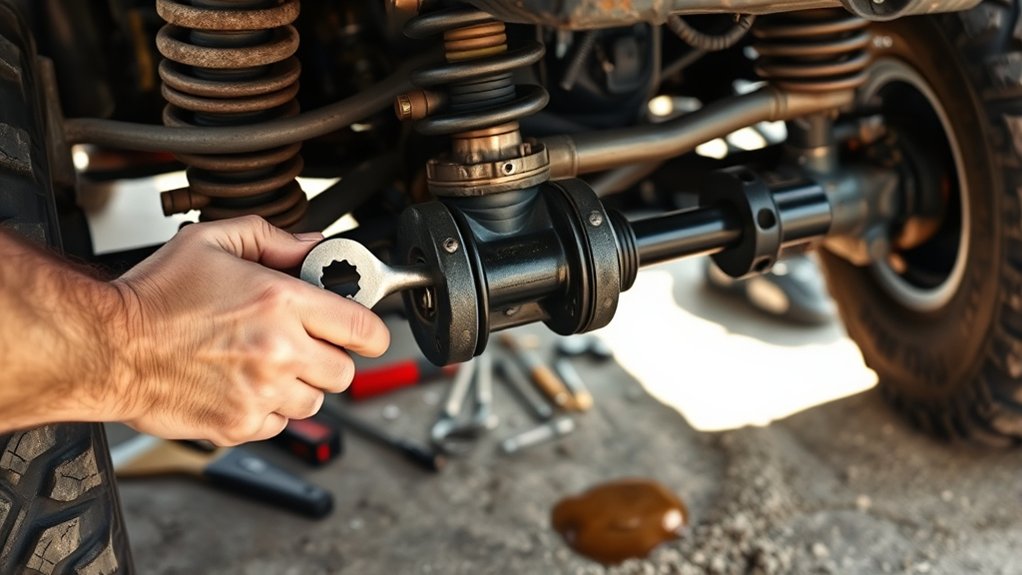
When your four-wheel drive system acts up, you’ll want to catch the problem early to avoid costly repairs. Pay attention to symptoms like unusual noises when engaging 4WD, difficulty shifting between modes, or vibrations while driving. These signs often indicate issues with the transfer case, differentials, or drive shafts.
If you’ve invested in vehicle customization or added off-road accessories, be mindful that these modifications can sometimes affect your 4WD’s performance. For instance, oversized tires or aftermarket suspension parts might strain the drivetrain, leading to premature wear or alignment problems.
Regularly inspect your system for leaks, worn components, or unusual wear patterns. Also, keep an eye on dashboard indicators related to your 4WD system. By recognizing these common problems early, you can address them before they escalate, ensuring your customized vehicle and off-road accessories don’t compromise your four-wheel drive’s reliability and safety.
Testing Your 4WD Engagement and Functionality

Noticing signs of trouble in your 4WD system means it’s time to verify its engagement and overall functionality. Start by engaging your 4WD in a safe, open area. Listen for unusual noises and feel for smooth transitions between modes. If the system struggles to engage, it could indicate an issue you need to address.
Next, check your vehicle suspension and tire alignment, as both affect 4WD performance. Uneven tire alignment can cause binding or resistance during engagement, while worn suspension components might lead to inconsistent traction. Inspect tires for proper pressure and wear to ensure even contact with the ground.
Finally, test your 4WD on a low-traction surface like gravel or wet pavement to confirm power distributes evenly to all wheels. If the system slips or hesitates, you may have a malfunction. This hands-on approach helps you pinpoint issues early, ensuring your 4WD operates smoothly when you need it most.
Common Causes of 4WD System Failures
You’ll want to check for electrical system malfunctions because faulty wiring or sensors can stop your 4WD from engaging properly. It’s pretty common for these little glitches to cause big problems.
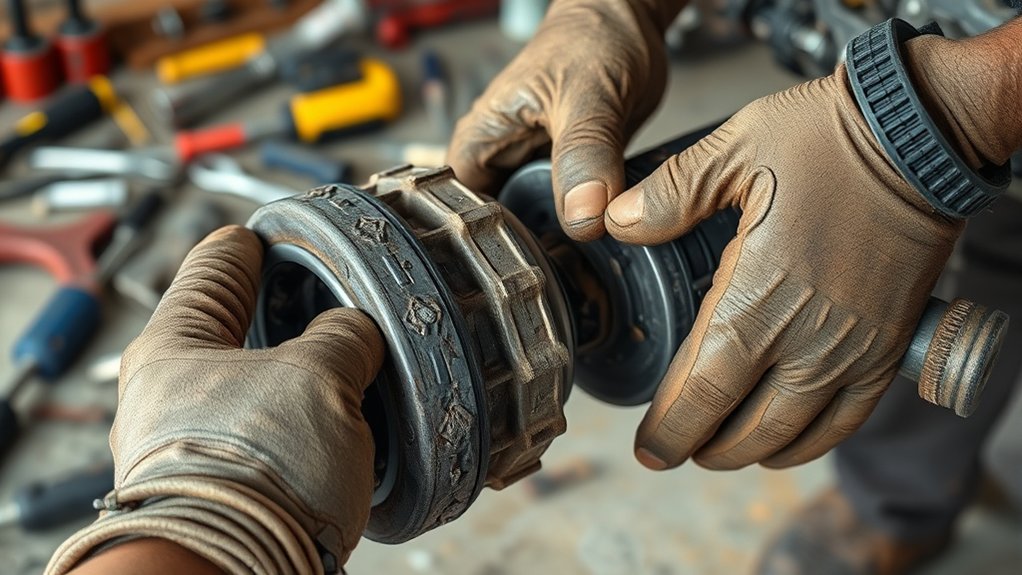
Then there’s mechanical component wear to consider. Worn gears or joints can definitely lead to failure over time, so keep an eye on those parts.
And don’t forget about fluid contamination. It might sound minor, but dirty fluid can damage internal parts and really reduce how well your system performs. So, it’s worth paying attention to that too.
Electrical System Malfunctions
Although mechanical issues often grab the spotlight, electrical system malfunctions are a common culprit behind 4WD failures. You should first check for battery corrosion, which can disrupt power flow and prevent your 4WD system from engaging.
Corrosion on battery terminals often causes voltage drops, so clean them thoroughly to restore proper contact. Next, inspect the wiring harnesses for any signs of wear, damage, or loose connections. Faulty wiring can interrupt signals from the 4WD control module, causing erratic or complete failure of the system.
Using a multimeter, test continuity along the harnesses to pinpoint issues. By addressing battery corrosion and ensuring wiring harness integrity, you can solve many electrical problems that interfere with your 4WD system’s performance.
Mechanical Component Wear
Since your 4WD system relies heavily on mechanical parts, wear and tear can quickly lead to failures. Components like drive shafts, universal joints, and differentials endure constant stress, so inspecting them regularly is essential.
Misaligned tires can put extra strain on these parts, accelerating wear and causing uneven tire degradation. Make sure you check tire alignment often to avoid this issue.
Furthermore, improper brake calibration can affect your 4WD’s performance, especially during off-road conditions where precise braking is critical. If the brakes aren’t calibrated correctly, you might experience uneven stopping power or increased component wear.
Fluid Contamination Issues
How does fluid contamination sneak into your 4WD system and cause failures? Dirt, water, and metal particles often enter through worn seals or improperly sealed fill plugs. These contaminants compromise your system’s performance.
Contaminated fluid leads to increased friction, overheating, and accelerated wear on gears and bearings. To spot these issues early, perform regular fluid analysis by checking for discoloration, debris, or changes in viscosity. This helps you catch problems before they escalate.
For contamination prevention, always use the correct fluid, replace seals promptly, and maintain proper fluid levels. Flushing and refilling your 4WD system at recommended intervals also keeps contaminants at bay, ensuring your drivetrain runs smoothly and reliably.
Staying proactive with fluid care saves you costly repairs down the line.
Diagnosing 4WD Transfer Case Problems
When your four-wheel drive system isn’t engaging properly, the transfer case is often the first component you should inspect. This part distributes power between the front and rear axles, so any issues here can stop your 4WD from working.
If you’ve done vehicle customization or off-road modifications, check that your transfer case settings still match your new setup.
Use this table to help diagnose common transfer case problems:
| Symptom | Possible Cause | Quick Check |
|---|---|---|
| 4WD won’t engage | Low transfer case fluid | Check fluid level and top off |
| Strange noises | Worn gears or bearings | Listen for grinding sounds |
| Leaking fluid | Damaged seals or gaskets | Inspect for fluid around case |
| Difficulty shifting 4WD | Faulty shift linkage | Test linkage movement |
Fixing Front and Rear Differential Issues in 4WD
You’ll want to start by listening for any unusual noises coming from the front or rear differentials. Then, check the differential fluid levels to ensure everything is properly lubricated. If you notice any leaks or damaged seals, it’s best to repair them right away to keep your 4WD running smoothly.
Identifying Differential Noise Causes
Although differential noise can sometimes seem minor, it often signals underlying issues that need prompt attention to prevent costly repairs. When you hear a persistent gear whine or humming sound coming from your 4WD’s front or rear differential, it usually indicates worn gears or insufficient lubrication.
You should listen closely for any grinding, clunking, or whining noises, especially during acceleration or turns, as these are common signs of differential problems. Ignoring differential noise can lead to increased wear and eventual failure of the gears inside.
Early identification lets you address issues like gear damage or bearing wear before they worsen. Pay attention to how the noise changes with speed or load. It’ll help you pinpoint whether the problem lies in the front or rear differential and guide your repair steps.
Checking Differential Fluid Levels
Persistent differential noise often points to problems with fluid levels or contamination in your 4WD’s front or rear differentials. To begin differential troubleshooting, start with a fluid level check.
Locate the differential fill plug on both the front and rear differentials, usually on the axle housing. Remove the plug and look inside; the fluid should be near the bottom of the fill hole. If it’s low, top it off with the manufacturer-recommended gear oil.
Contaminated or dirty fluid can also cause issues, so inspect the fluid color and consistency. Clean, amber-colored fluid is ideal, while dark or milky fluid indicates contamination.
Regularly checking and maintaining proper fluid levels helps prevent damage and guarantees smooth operation of your 4WD system.
Repairing Leaks and Seals
When you notice fluid pooling beneath your 4WD or detect a drop in differential fluid levels despite regular top-offs, it’s a clear sign that leaks or worn seals need immediate attention. Start by inspecting the front and rear differentials for visible cracks or damaged seal surfaces.
Replace any compromised seals promptly to prevent further fluid loss and potential damage. After repairing leaks, check your tire rotation and vehicle alignment; uneven wear can indicate underlying drivetrain stress caused by faulty differentials.
Maintaining proper tire rotation also helps distribute load evenly, reducing strain on the differential seals. Regularly monitor fluid levels after repairs to make certain leaks are fully resolved. Taking these steps will keep your 4WD’s front and rear differentials functioning smoothly and extend their lifespan.
Inspecting 4WD Actuators and Sensors
Since 4WD actuators and sensors play a crucial role in engaging your vehicle’s four-wheel drive system, you need to inspect them carefully to identify any faults. Start by checking the 4WD actuator calibration. Improper calibration can prevent the system from activating correctly.
Carefully inspect 4WD actuators and sensors, starting with calibration to ensure proper system activation.
Next, focus on sensor troubleshooting to detect any signal errors or malfunctions that might disrupt the 4WD engagement.
Here’s a quick, effective way to inspect them:
- Visually inspect actuators and sensors for physical damage or corrosion.
- Use a diagnostic tool to read error codes related to 4WD components.
- Test actuator operation by manually engaging the system while monitoring sensor feedback.
- Recalibrate actuators if the system shows inconsistent engagement or sensor errors.
Maintaining Drive Shafts and CV Joints
After checking your 4WD actuators and sensors, the next step is to maintain the drive shafts and CV joints, which handle power transfer to your wheels. For effective drive shaft maintenance, regularly inspect the shafts for any signs of wear, cracks, or damage.
Pay close attention to the protective boots covering the CV joints. If you spot any tears or leaks, replace them immediately to prevent dirt and moisture from causing damage.
CV joint lubrication is crucial for smooth operation. Ensure the joints are properly greased, as insufficient lubrication leads to noise, vibration, and premature wear. Use the recommended grease type and reapply it during routine maintenance.
Also, check for any unusual clicking sounds during turns, which can indicate failing CV joints.
Replacing 4WD Fluids and Filters
You’ll want to start by identifying the right fluids for your 4WD system to guarantee proper performance. Then, take it step-by-step when replacing the fluids so you don’t end up making a mess. And while you’re at it, don’t forget to inspect and clean the filters—this helps keep everything running smoothly.
Identifying Fluid Types
Though identifying the correct fluid types might seem straightforward, using the wrong one can cause serious damage to your 4WD system. You need to pay close attention to fluid compatibility and fluid viscosity to guarantee peak performance and longevity.
Here’s what to contemplate:
- Check your owner’s manual for manufacturer-recommended fluids.
- Match fluid viscosity to your 4WD’s operating conditions to avoid wear and overheating.
- Use fluids specifically designed for your transfer case, differentials, and transmission.
- Avoid mixing synthetic and conventional fluids unless specified, as it can affect fluid performance.
Step-by-Step Fluid Replacement
Before diving into fluid replacement, gather all necessary tools and fluids recommended for your 4WD system. This helps guarantee a smooth process. Start by draining old fluids from the transfer case, differentials, and transmission.
Dispose of used fluids properly, then refill with manufacturer-specified types. This maintenance step not only honors automotive history but also improves fuel efficiency by reducing friction.
Here’s a quick reference for fluid types and intervals:
| Component | Fluid Type | Replacement Interval (miles) |
|---|---|---|
| Transfer Case | Gear Oil | 30,000 – 60,000 |
| Front Differential | Synthetic Gear Oil | 30,000 – 60,000 |
| Rear Differential | Synthetic Gear Oil | 30,000 – 60,000 |
| Transmission | Automatic Trans Fluid | 30,000 – 60,000 |
| Transfer Case | Automatic Trans Fluid | 30,000 – 60,000 |
Follow these steps carefully to maintain ideal 4WD performance.
Filter Inspection And Cleaning
After replacing the fluids in your 4WD system, the next step is to inspect and clean the filters. Proper filter maintenance is vital for contamination prevention, ensuring your 4WD runs smoothly and lasts longer. Follow these steps to keep your filters in top shape:
- Locate the filters in your transfer case and differentials.
- Remove the filters carefully to avoid introducing dirt.
- Clean the filters using a suitable solvent or replace them if heavily clogged.
- Reinstall the filters securely and check for leaks after refilling fluids.
Regularly performing these tasks prevents debris buildup, protects internal components, and maintains peak performance. Don’t skip this step. Clean filters help your 4WD system stay reliable and efficient on all terrains.
DIY Fixes for 4WD System Issues
When your four-wheel drive system acts up, you don’t always need a mechanic to fix it. Start by checking your tire pressure, especially if you’ve been on off-road adventures. Uneven or low tire pressure can cause traction problems and strain the 4WD components.
Next, inspect the 4WD engagement system. Make sure the shift lever or switch moves smoothly. If it feels stiff, lubricate the linkage or clean any debris around it.
You can also check the drive shafts and universal joints for visible damage or excessive play. Tighten or replace worn parts as needed. Another common DIY fix involves draining and refilling the transfer case fluid since old or contaminated fluid can cause shifting issues.
Ultimately, reset the 4WD system by cycling it through different modes while stationary, which can recalibrate electronic controls. These simple steps often solve common 4WD issues without a trip to the shop.
When to Seek Professional 4WD Repairs
If your four-wheel drive system shows persistent issues despite your DIY efforts, it’s time to call a professional. Off road adventures can push your 4WD to its limits, and custom modifications might complicate repairs beyond basic troubleshooting. Knowing when to seek expert help can save you time and prevent costly damage.
Here are four signs you should visit a professional mechanic:
- Unusual noises or vibrations that don’t improve after inspections.
- Difficulty engaging or disengaging 4WD modes, especially with custom setups.
- Fluid leaks or damage to critical components like the transfer case.
- Warning lights related to drivetrain or traction control systems.
Professionals have the tools and expertise to diagnose complex problems, especially after rugged off road use or modifications. Don’t hesitate to get expert repairs when your 4WD system demands more than DIY fixes.
Frequently Asked Questions
How Does 4WD Improve Off-Road Vehicle Performance?
4WD improves your off-road vehicle performance by providing better traction control, helping you tackle slippery or uneven surfaces without losing grip. It distributes power to all four wheels, so you can navigate tough terrains like mud, sand, or rocks more confidently.
This improved traction control allows you to maintain stability and avoid getting stuck, making terrain navigation smoother and safer, especially in challenging off-road conditions.
What Are the Differences Between 4WD and AWD Systems?
You might think 4WD systems are like superhero teams with a transfer case and drive shaft coordinating every move, while AWD is more like an undercover agent slipping power smoothly between wheels.
4WD lets you manually engage power to all wheels, perfect for tough terrain, thanks to its transfer case. AWD automatically adjusts power without your input, optimizing grip on roads. So, 4WD is hands-on control; AWD is seamless, constant traction.
Can 4WD Systems Affect Fuel Efficiency?
Yes, 4WD systems can affect your fuel consumption. When engaged, 4WD adds extra weight and mechanical drag, which causes your engine to work harder and use more fuel.
Your driving habits also play a big role. Aggressive acceleration or driving in 4WD mode unnecessarily can further decrease fuel efficiency.
To save fuel, switch to 2WD when 4WD isn’t needed and adopt smoother driving habits to reduce fuel consumption.
How Often Should 4WD Systems Be Serviced?
You should follow the manufacturer’s recommended service interval, usually every 30,000 to 50,000 miles, to keep your 4WD system in top shape. Regular fluid maintenance is vital. Changing transfer case and differential fluids prevents wear and keeps components lubricated.
Don’t wait for issues. Staying on schedule helps avoid costly repairs and guarantees your 4WD performs reliably when you need it most. Check your owner’s manual for specifics.
Are There Specific Tires Recommended for 4WD Vehicles?
Yes, you should use tires designed for 4WD vehicles, like all-terrain or mud-terrain tires, to handle off-road conditions and provide better traction. Make certain you keep up with tire alignment and tire rotation to guarantee even wear and maintain performance.
Proper alignment prevents uneven tire wear, while regular rotation balances wear across all tires, extending their life and keeping your 4WD system running smoothly on any terrain.
Conclusion
So, your 4WD’s acting up again? Don’t panic. Just channel your inner mechanic and tackle those transfer cases and CV joints like a pro. Sure, you might get greasy, frustrated, or even curse at your truck, but hey, that’s part of the fun, right?
If you find yourself talking to your tools more than your friends, maybe it’s time to call in the pros. Either way, you’ve got this. Four wheels, no fear when it comes to four wheel drive repair issues!