5 Essential Tips for Engine Auto Repair
Dealing with engine troubles can be frustrating and stressful, especially when you’re not sure what’s going wrong. You’re not alone—many people struggle with keeping their engine in good shape and avoiding costly repairs. That’s why we’ve put together these 5 essential tips for engine auto repair to help you maintain your vehicle with confidence.
You should spot engine problems early by listening for unusual sounds and checking warning lights.
Regularly check and replace engine fluids to keep your vehicle running smoothly.
Keep your engine clean and well-tuned by changing spark plugs and filters on schedule.
Use quality tools and parts to guarantee reliable repairs and avoid further damage.
Finally, know when to seek professional help to prevent bigger issues.
Keep exploring to uncover more tips that keep your engine in top shape.
Key Takeaways
- Identify engine issues early by noting unusual sounds, warning lights, and changes in performance. Catching problems sooner can save you time and money.
- Regularly check and replace engine fluids, making sure to use the types and schedules recommended by the manufacturer. This keeps your engine running smoothly.
- Keep the engine clean and well-tuned by replacing spark plugs, filters, and adjusting timing when needed. These simple steps help maintain performance.
- Use high-quality tools and OEM parts for accurate diagnostics and repairs that last. It’s worth investing in the right equipment.
- If problems persist, or if there are safety concerns or specialized tasks, don’t hesitate to seek professional help. Sometimes the experts are the best option.
Spot Common Engine Repair Problems Early
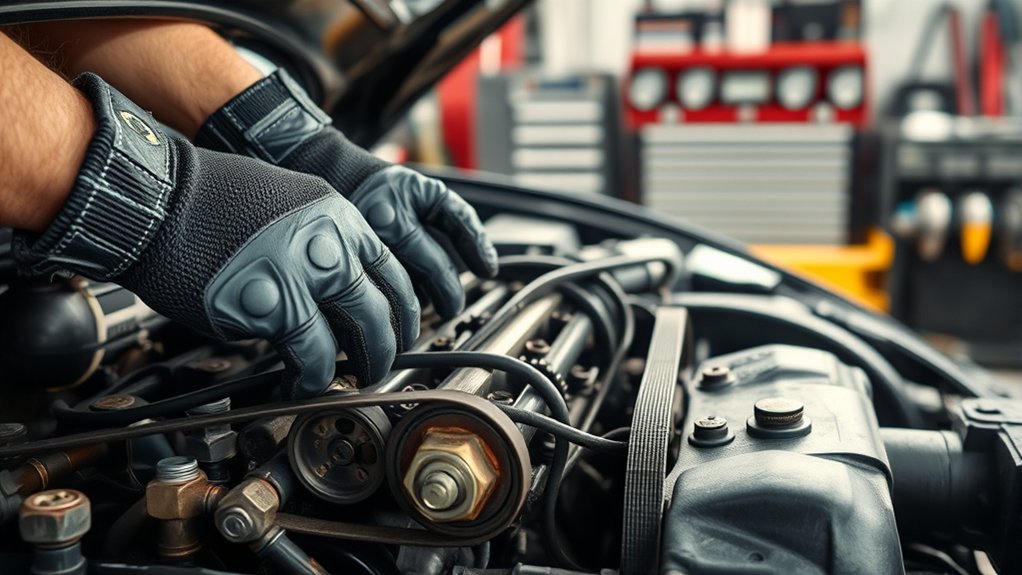
Although engine problems can seem complex, you can spot common issues early by paying attention to unusual sounds, warning lights, and changes in performance. When your engine makes knocking noises or struggles to start, these signs shouldn’t be overlooked. Using basic engine diagnostics tools, you can identify error codes that point to specific problems before they worsen.
You don’t need to be a mechanic to apply effective troubleshooting techniques. Start by visually inspecting belts, hoses, and connections for wear or damage. Listen for irregular engine noises and note any rough idling or decreased power. These clues guide your diagnostics and help you decide if professional repair is needed.
Catching problems early saves you time and money while preventing breakdowns. By staying alert and using straightforward troubleshooting techniques, you guarantee your engine stays in good shape and runs smoothly for longer.
Check and Replace Engine Fluids Regularly
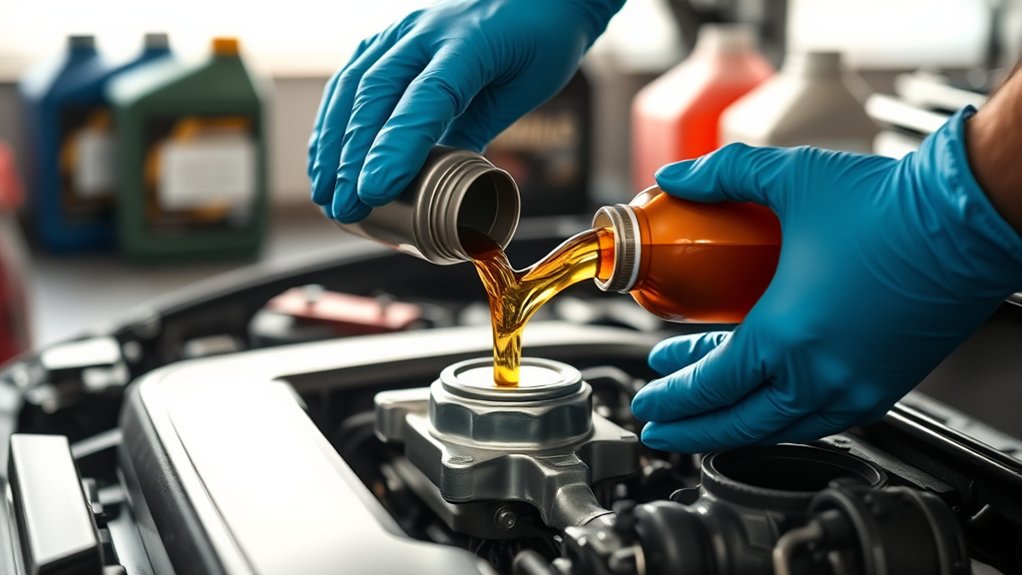
Since your engine relies on fluids to function smoothly, you need to check and replace them regularly to prevent damage and maintain performance. Start by inspecting your engine oil, coolant, brake fluid, and transmission fluid levels.
Regularly check and replace engine fluids like oil, coolant, brake, and transmission for smooth performance and damage prevention.
Pay close attention to oil viscosity; using the right viscosity ensures proper lubrication and prevents engine wear. If the oil feels too thick or thin, it’s time for a change. Also, watch for fluid leakage under your vehicle, which can signal a serious problem. Leaks can lead to low fluid levels, causing overheating or poor engine function.
Substitute fluids according to your vehicle’s maintenance schedule or sooner if you notice contamination or discoloration. Always use manufacturer-recommended fluids to keep your engine running efficiently.
Regular fluid checks and timely replacements help you avoid costly repairs and extend your engine’s lifespan. Don’t overlook this essential task. It’s one of the simplest ways to protect your engine and keep it performing at its best.
Maintain a Clean and Well-Tuned Engine
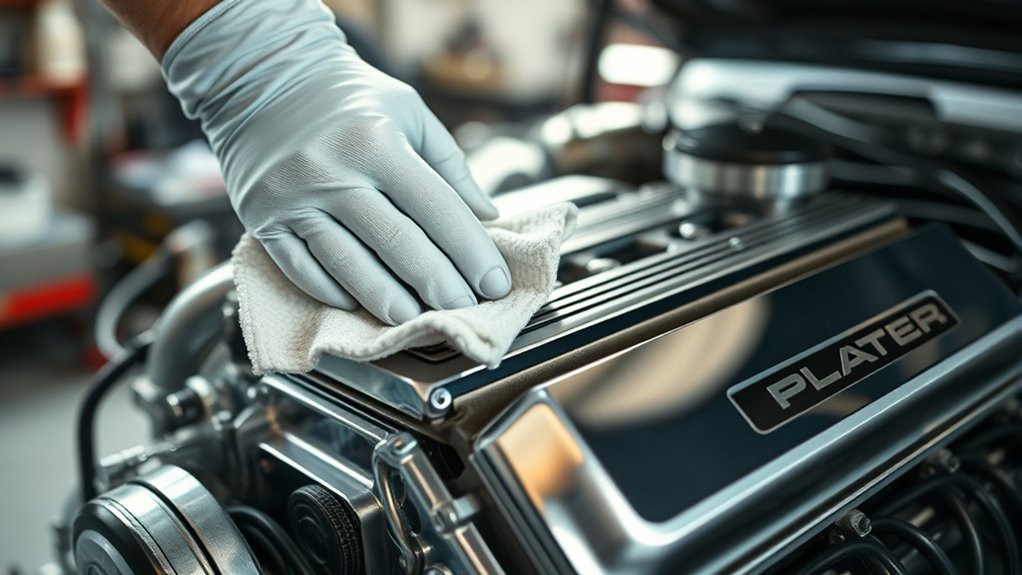
Maintaining a clean and well-tuned engine starts with regular inspections and timely adjustments. Proper engine cleaning prevents dirt buildup that can affect performance, while following tune-up procedures keeps your engine running smoothly. Here’s how you can stay on top of it:
- Clean the engine bay carefully. Use a gentle degreaser and avoid sensitive areas like electrical components. This helps prevent grime from causing overheating or component failure.
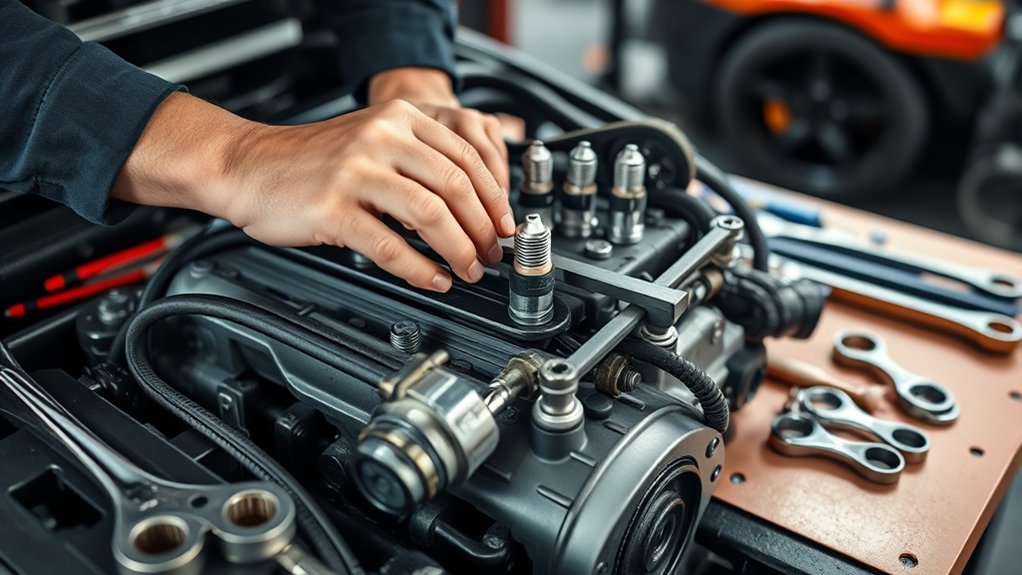
- Replace spark plugs and filters regularly during tune-up procedures. Worn parts reduce efficiency and increase fuel consumption.
- Check and adjust engine timing and idle speed to ensure peak combustion and smooth operation.
Choose the Right Tools and Parts for Engine Repairs
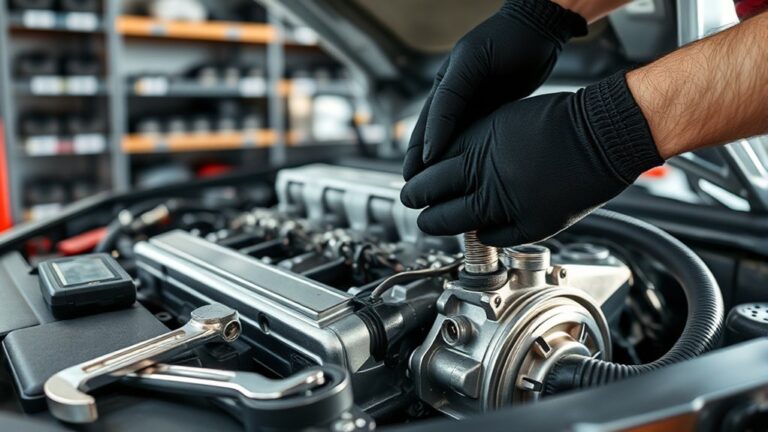
When you tackle engine repairs, choosing the right tools and parts makes all the difference in getting the job done efficiently and correctly. Start by investing in quality diagnostic tools to accurately identify issues without guesswork.
Using OEM or high-quality replacement parts ensures durability and proper fit, reducing the risk of recurring problems. Avoid cheap or incompatible parts that could cause further damage or poor performance.
Here’s a quick guide to essential tools and parts:
| Tool Type | Purpose | Recommended Use |
|---|---|---|
| Diagnostic Tools | Identify engine faults | Use regularly for accurate repair |
| Socket Set | Remove/install components | Essential for most repairs |
| Torque Wrench | Tighten bolts precisely | Prevent over/under-tightening |
| Replacement Parts | Replace damaged parts | Always choose OEM or trusted brand |
| Screwdrivers | General assembly/disassembly | Handy for various tasks |
Selecting the right tools and parts keeps your repairs precise and reliable every time.
Know When to Seek Professional Engine Repair Help
Although DIY repairs can save money, knowing when to call in a professional is essential to avoid worsening engine problems. You might be tempted to push through with DIY troubleshooting, but some issues require expert attention. Here’s when you should seek professional engine repair help:
- Complex engine diagnostics: If your DIY troubleshooting doesn’t identify the problem or if the engine warning lights stay on, it’s time to get professional diagnostics. Modern engines often need specialized tools.
- Persistent or worsening symptoms: Strange noises, smoke, or consistent performance drops mean the issue could be severe. Ignoring these signs can lead to costly damage.
- Safety concerns: If you notice fluid leaks, overheating, or difficulty starting, don’t risk it. Professionals have the experience to fix problems safely and efficiently.
Knowing your limits with engine repairs keeps your vehicle running smoothly and prevents bigger headaches down the road.
Frequently Asked Questions
How Do I Reset the Check Engine Light After Repairs?
To reset the check engine light after repairs, you’ll need to use diagnostic tools like an OBD-II scanner. Connect the scanner to your car’s diagnostic port, turn the ignition on, and follow the reset procedures on the device. It’ll clear the error codes triggering the light.
If you don’t have a scanner, disconnecting the battery for about 15 minutes can sometimes work. But using diagnostic tools is more reliable and precise.
What Engine Oil Viscosity Is Best for Extreme Temperatures?
Oh, sure, just pick any engine oil viscosity ratings and hope for the best because engines love surprises! But seriously, you want oil with temperature compatibility suited for your climate.
For extreme cold, choose low-viscosity oils like 0W-20 that flow easily on startup. In scorching heat, thicker oils such as 15W-50 protect better.
Always check your manufacturer’s specs to match viscosity ratings with your temperature extremes, or your engine might throw a tantrum.
Can Using Synthetic Oil Improve Engine Performance?
Yes, using synthetic oil can improve your engine performance. It flows better at extreme temperatures, reducing engine noise and wear.
Synthetic oil often contains advanced oil additives that help keep your engine cleaner and protect against friction. This means your engine runs smoother and more efficiently.
You’ll notice improved fuel economy and longer engine life when you switch to high-quality synthetic oil with the right additives for your vehicle.
How Often Should I Replace My Timing Belt?
Think of your timing belt replacement like changing the rhythm in a dance. It keeps your engine moving smoothly. You should replace it every 60,000 to 100,000 miles, depending on your car’s engine maintenance schedule.
Ignoring this can cause serious engine damage, so stick to the recommended intervals. By staying on top of timing belt replacement, you guarantee your engine performs reliably and avoids costly repairs down the road.
Are Aftermarket Engine Parts Reliable for Repairs?
Yes, aftermarket engine parts can be reliable if you choose ones with high quality and guarantee manufacturer compatibility. You’ll want to research brands known for durability and check if the parts meet or exceed OEM standards.
Sometimes, aftermarket parts offer better performance or cost savings, but using incompatible parts can cause issues. Always verify compatibility with your engine model to keep your repairs effective and avoid future problems.
Conclusion
By spotting problems early and regularly checking fluids, you’ll keep your engine running smoothly. Staying on top of maintenance with the right tools saves you time and money.
You might think professional help is costly, but imagine avoiding a complete engine failure. That’s a much bigger expense.
Taking these simple steps guarantees your engine stays reliable, so don’t hesitate to invest a little effort now for long-term peace of mind and better engine auto repair.